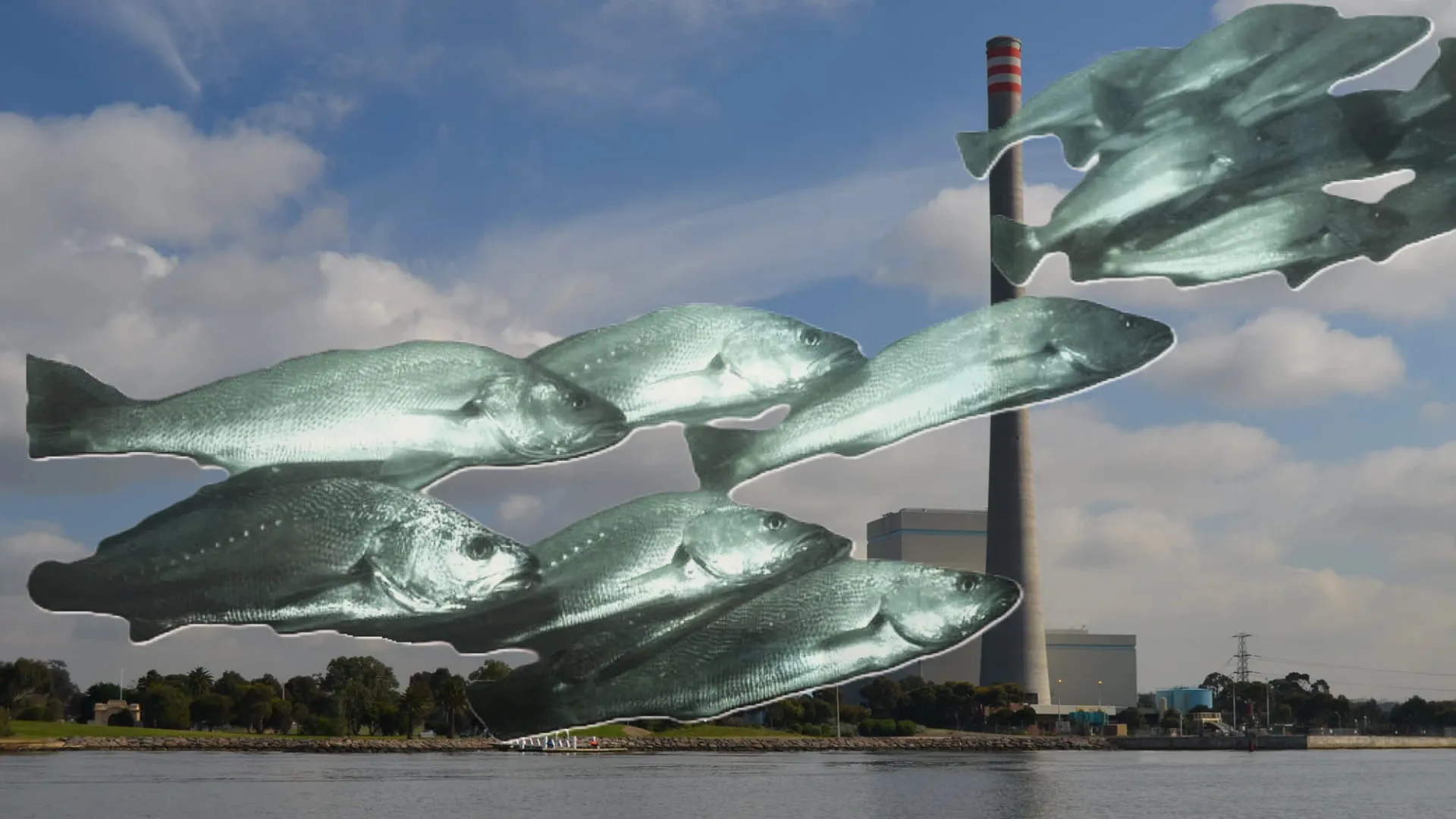
Target Species
Mulloway
Yarra River - The Warmies is one of the best spots for Mulloway fishing in VIC, offering a unique warm-water thermal discharge that attracts baitfish and massive predatory mulloway year-round. This land-based location provides anglers with a realistic chance of landing a trophy fish right in the heart of suburban Melbourne.
The Warmies, located adjacent to the Newport Power Station in Williamstown, is a legendary destination among Victorian anglers. This industrial stretch of water is famous for its thermal discharge channel, which pumps warm water back into the estuary. This artificial temperature boost creates a highly active ecosystem, drawing in massive schools of baitfish such as mullet, tailor, and salmon. Naturally, where there is an abundance of easy prey, the apex predators of the bay follow. Mulloway, often referred to as the ghosts of the estuary, patrol these murky waters, waiting for the perfect moment to strike.
Fishing this location requires a blend of patience, local knowledge, and refined technique. Because of the heavy structure, strong currents, and urban debris, targeting these fish is a true test of an angler’s skill. In this guide, you will learn how to read the water, select the perfect gear, and present baits in a way that even the most cautious silver ghost cannot resist. Whether you are a seasoned local or looking to land your very first mulloway, understanding the unique dynamics of this urban hotspot is the key to success. For more information on targeting this species across different Victorian waterways, check out our detailed species guides.
Getting There
Mulloway
Argyrosomus japonicus
Always check current NSW DPI regulations before fishing. Bag and size limits may change.
Understanding Yarra River - The Warmies: Location Intelligence
The Warmies is a specialized estuarine fishery characterized by a shallow warm-water outlet channel that spills into the deeper, high-current flow of the lower Yarra River. This temperature differential and structural transition create a premier ambush zone for predatory Mulloway.
To successfully target Mulloway at this location, you must first understand the underwater topography and the hydraulic forces at play. The defining feature of this venue is the cooling water outlet from the Newport Power Station. This channel releases water that can be up to 25 degrees Celsius, significantly warmer than the surrounding waters of Hobson’s Bay. When this warm plume meets the colder, saltier water of the Yarra River, it creates a thermal boundary layer. Mulloway are highly sensitive to these temperature changes and will often sit right on the edge of the warm water plume to intercept baitfish that become disoriented by the temperature shift.
The depth profile varies dramatically. The warm water outlet channel itself is relatively shallow, ranging from 2 to 4 metres, with a bottom composed of basalt rocks, silt, and discarded urban debris. As you cast further out toward the main river channel, the depth drops quickly to between 10 and 15 metres. This steep drop-off is a primary highway for cruising mulloway. The bottom here is highly snaggy, featuring old pylons, rocks, and shopping trolleys. While these structures make fishing difficult and lead to lost tackle, they provide the exact structure that Mulloway use to hide from the strong tidal currents.
Water clarity at The Warmies is notoriously low, often with less than half a metre of visibility due to industrial runoff, tidal movement, and river silt. This low-visibility environment actually works to the angler’s advantage. Mulloway possess a highly developed lateral line system that allows them to detect tiny vibrations in the water, meaning they do not rely on sight to hunt. They can easily locate a struggling baitfish or a vibrating lure in pitch-black, muddy water.
The key to unlocking this location is monitoring the power station itself. When the station is actively generating power, the volume of warm water increases, creating a stronger current and a more pronounced thermal edge. Anglers often look for smoke rising from the Newport smokestack as a visual cue that the pumps are running. When the station is quiet, the fishing can slow down, but resident fish can still be found holding deep in the main river channel. For those looking to explore other productive spots in Port Phillip Bay, visit our fishing spots directory.
Location Essentials
When Is the Best Time to Fish for Mulloway at Yarra River - The Warmies?
The best time to fish for Mulloway at Yarra River - The Warmies is during the hour before and after a high tide change at night, dawn, or dusk, particularly when the Newport Power Station is actively discharging warm water.
Mulloway are nocturnal predators that use low-light conditions to ambush prey. At the Warmies, timing is heavily influenced by the Newport Power Station. When the station is operating and discharging warm water, it creates a unique thermal plume that attracts baitfish like mullet and tailor, which in turn draws in the big mulloway. Anglers often look for smoke rising from the power station smokestack or use energy market tracking apps to see if the station is generating power.
Tides are critical. A run-out tide forces baitfish out of the shallower flats and into the main channel, making them easy targets. The absolute peak window is the slack water period, roughly 45 minutes on either side of the high tide turn. During this brief window, the strong currents subside, allowing you to present baits naturally without them being swept into the heavy rock snags along the bank.
Moon phases also play a major role. The lead-up to both the new moon and the full moon offers the strongest tidal movements, which triggers aggressive feeding cycles. Night sessions during a dark new moon are highly prized by local specialists who target trophy fish in the shadows of the surrounding industrial structures.
Mulloway Seasonal Calendar
Tide Times
Optimal Tide
High tide change at night
Tide movement is critical for fish activity. Most species feed actively during tide changes, especially the run-in (incoming) tide.
Detailed hourly tide charts
Official tide predictions
7-day tide calendar
Tide Guide
Best for most species. Fish move in to feed as water rises.
Good for ambush predators. Baitfish get swept out.
Slower bite. Fish less active during slack water.
New/full moon. Bigger tidal range, more fish movement.
Moon Phase & Solunar
Moon phases influence fish feeding behavior. New and full moons create spring tides with stronger currents and increased fish activity.
Best Phases
- New Moon: Peak feeding activity, spring tides, excellent fishing
- Full Moon: Strong tides, night feeding, great for nocturnal species
- 3 Days Either Side: Extended peak period for maximum results
Major/Minor Periods
- Major Periods: Moon overhead/underfoot (2-3 hours)
- Minor Periods: Moon rise/set (1-2 hours)
- Best Times: Major period + dawn/dusk = explosive action
Weather Conditions
Check current conditions before heading out. Wind, swell, and barometric pressure significantly affect fish behavior.
Official forecasts, warnings & radar
Hourly wind speed & direction
Swell height, period & direction
The Smokestack Indicator
Keep an eye on the Newport Power Station smokestack. Local anglers have a saying: “When the stack is blowing, I know where I am going.” The steam discharge means the warm water outlet is active, creating the ideal temperature differential that triggers a feeding frenzy.
What Tackle Do You Need for Mulloway at Yarra River - The Warmies?
To target Mulloway at The Warmies, you need a heavy-duty 9 to 10 foot spinning rod rated at 8 to 15 kilograms, paired with a 4000 to 6000 size reel spooled with 30-pound braid and a heavy 40 to 60-pound fluorocarbon leader to handle the abrasive rock ledges.
The Warmies is a notoriously unforgiving environment. The combination of strong tidal currents, industrial debris, and sharp basalt rock walls means light estuary gear will quickly result in heartbreak. You are not just fighting the fish here; you are fighting the structure.
A longer rod provides the reach and control needed to keep a big fish’s head up and away from the near-shore rocks during the final stages of the fight. Your reel must feature a high-quality, smooth carbon drag system capable of stopping sudden, powerful runs. Spool up with high-visibility braid so you can track your line’s angle in the dark, but always use a long leader of high-abrasion-resistant fluorocarbon.
While some anglers prefer monofilament for its stretch and shock absorption, braid is essential here for detecting subtle bites in the murky water and strong currents. For more tackle basics, see our tackle essentials guide.
Complete Tackle Specifications
| Component | Specification |
|---|---|
| Rod | 9-10ft medium-heavy spin, 8-15kg rating |
| Reel | 4000-6000 spin reel with high-quality carbon drag |
| Main Line | 30lb PE braid |
| Leader | 40-60lb fluorocarbon, 1.2-1.5m length |
| Hooks | 5/0-8/0 snelled circle hooks |
| Sinker | 3-5oz star or pyramid sinker |
| Swivels | Size 4 heavy-duty barrel swivels |
| Rig Type | Running sinker rig or double-snelled live bait rig |
How Do You Rig for Mulloway?
The most reliable rig for Mulloway at The Warmies is a heavy running sinker rig or a double-snelled live bait rig, which allows the fish to take the bait without feeling the resistance of the sinker.
Because Mulloway are notorious for mouthing a bait before fully committing, any unnatural resistance will cause them to drop it instantly. A running sinker rig solves this problem by allowing the line to slide freely through the sinker. Given the high snags at this location, keeping your rig simple is key to minimizing gear loss.
A double-snelled hook arrangement is perfect for presenting larger live baits like mullet or salmon. It ensures that no matter which end the predator attacks first, a hook is positioned to find purchase. For more detailed rigging options, check out our guide on fishing rigs.
Building the Perfect Running Sinker Rig
- 1
Prepare Leader Material
Cut a 1.2-metre length of heavy 50-pound fluorocarbon leader material.
- 2
Tie Snelled Hooks
Snel two 6/0 circle hooks onto the leader, spacing them approximately 10 to 15 centimetres apart depending on bait size.
- 3
Thread Sinker and Bead
Thread a running sinker slider or a hollow core sinker onto your main braid line, followed by a soft plastic bead to protect the knot.
- 4
Connect Swivel
Tie the main line to one end of a heavy-duty size 4 barrel swivel using a Uni knot.
- 5
Attach Leader
Tie the free end of your fluorocarbon leader to the other side of the swivel.
- 6
Adjust Sinker Weight
Select a sinker just heavy enough to hold the bottom against the current; too heavy will cause snags.
- 7
Final Safety Check
Pull firmly on all connections to test the knots and ensure the sinker slides smoothly along the main line.
What Bait Works Best for Mulloway?
The best bait for Mulloway at The Warmies is fresh, live bait such as sea mullet, yelloweye mullet, or small Australian salmon caught directly from the local system.
While artificial lures can be highly effective during daylight hours, fresh bait reigns supreme at night. The water clarity at the Warmies is often very low, sometimes offering less than a foot of visibility. Because of this, Mulloway rely heavily on their lateral line system to detect vibrations and their keen sense of smell to locate food.
A struggling live bait sends out distress signals that act as a dinner bell for nearby mulloway. If live bait is unavailable, fresh dead baits are the next best option. Avoid frozen, pre-packaged baits from service stations; they lack the natural oils and scent profile required to tempt these cautious predators. For more on bait preparation, see our bait guide.
Bait Performance Analysis
| Live Mullet | Fresh Squid | Tailor Fillet | |
|---|---|---|---|
| Effectiveness Rating | Excellent | Very Good | Good |
| Durability on Hook | High | High | Medium |
| Scent Dispersion | Medium | High | Very High |
| Availability | Moderate (requires bait trap) | Easy (local tackle shops) | Easy (catch on site) |
| Best Use Conditions | Strong tidal currents | Slower slack water periods | Dirty water after rain |
Freshness is Everything
If you cannot secure live bait, use fresh fillets of tailor or salmon caught on-site. Scale the fillet but leave the skin on to help hold the hook, and lightly score the flesh to release extra scent into the water column.
How Do You Catch Mulloway at Yarra River - The Warmies?
Catching Mulloway at Yarra River - The Warmies requires precise bait placement near structural edges and extreme patience during the initial bite sequence. Success relies on casting your baits into the warm water current seams and allowing the fish to fully commit to the bait before setting the hook.
Using the right fishing techniques is crucial when targeting these clever predators in such a highly structured environment.
Casting Strategy and Bait Placement
The Warmies is a highly structural environment featuring rocky banks, bridge pylons, and the prominent warm water outlet channel. Your casting strategy must target these transition zones. Cast your live or fresh dead baits near the edges of the warm water plume where it mixes with the cooler river water. This mixing zone is an active hunting ground where baitfish get disoriented by the temperature change.
If you are fishing near the pylons or the rocky drop-offs, cast slightly upstream and let your rig settle naturally. Keep a close eye on your line to ensure the current does not sweep your rig directly into a snag. When fishing the main channel, look for eddies and current breaks behind structural elements where Mulloway sit to conserve energy while waiting for prey.
Bite Detection and Hookset
Mulloway are notorious for mouthing baits before swallowing them. They will often pick up a bait, run a short distance, stop to scale or reposition it, and then run again. Tying strong fishing knots is essential here, as any weakness will be exposed during this process.
If you are using circle hooks, do not strike when you feel the initial run. Leave the reel in free spool with the clicker on, or use a baitrunner reel with light tension. Wait until the line peels off at a steady, rapid pace, then slowly tighten the drag and allow the rod to load up naturally. If you are using traditional J-hooks or snelled suicide hooks, wait for the second sustained run before dropping the rod tip, winding up the slack, and striking firmly to set the hook.
Fighting and Landing Strategies
Once hooked, a large Yarra Mulloway will make a powerful first run toward the nearest structure, which usually means the bridge pylons or the sharp rock walls of the outlet. You must apply firm, constant pressure to turn the fish’s head away from these hazards.
Avoid high-sticking your rod. Keep the rod tip low and use the power of the mid-section to steer the fish. Because the banks at The Warmies can be steep and slippery, never attempt to lift a heavy Mulloway out of the water by the line. Always use a large, long-handled landing net to secure the fish safely.
What Are the Rules for Fishing at Yarra River - The Warmies?
Fishing for Mulloway at Yarra River - The Warmies is subject to strict Victorian fisheries regulations, including a minimum legal size limit of 60 cm and a daily bag limit of 5 fish. Anglers must hold a valid Victorian Recreational Fishing Licence unless exempt, and are strongly encouraged to practice catch and release for these slow-growing estuarine predators.
Before heading out, make sure you check the current rules on the Victorian Fisheries Authority website. It is your responsibility to ensure every fish kept is over the legal minimum length of 60 cm, measured from the tip of the snout to the end of the tail. To ensure you stay safe while fishing the slippery rock walls, read our guide on rock fishing safety before planning your trip.
Critical Safety Considerations
The Warmies features highly slippery rock walls and strong, unpredictable currents from the power station outlet. Always wear high-grip footwear and avoid stepping onto wet, moss-covered rocks. Additionally, the water in this industrial section of the Yarra River contains urban pollutants and heavy metals. The Victorian Environment Protection Authority (EPA) advises strict limits on consuming fish caught from these inner-city waterways.
Conservation Practices
- Use circle hooks to minimise deep hooking and facilitate safe release.
- Support the fish horizontally under the belly when taking photos to avoid damaging internal organs.
- Use a wet towel or brag mat when handling fish on the hot concrete or rocks.
- Revive the fish in the water by holding it upright facing into the current until it swims away strongly.
- Dispose of all old line, bait packaging, and tackle responsibly to protect local birdlife and marine animals.
Your Questions About Mulloway Fishing at Yarra River - The Warmies
What is the best time to fish at Yarra River - The Warmies?
The best time to fish at Yarra River - The Warmies is during the night, specifically around the high tide change and during the cooler months from April to June.
Planning when to fish around these peak fishing hours, especially when the Newport Power Station is actively discharging warm water, will dramatically increase your chances of encountering active Mulloway.
Is Yarra River - The Warmies suitable for beginners?
Yarra River - The Warmies is a challenging location for beginners due to its highly snaggy structure and the advanced techniques required to land Mulloway.
While it is not the most beginner friendly destination, those looking for easy fishing spots can still target smaller species like mullet or flathead along the shallower banks before stepping up to target trophy mulloway.
Do I need a boat to fish at Yarra River - The Warmies?
No, you do not need a boat to fish at Yarra River - The Warmies, as it is one of Melbourne’s premier land-based fishing locations.
The entire rock wall and park area offers excellent shore fishing access, allowing land-based fishing enthusiasts to cast directly into deep, productive channels without the need for watercraft.
Where are the best specific spots at Yarra River - The Warmies?
The best specific spots at The Warmies are directly along the rock wall adjacent to the warm water outlet and near the pylons of the West Gate Bridge.
These local hot spots and fishing marks provide the ideal combination of thermal currents and structural cover where big Mulloway love to ambush passing baitfish.
What size Mulloway can I expect?
Anglers at The Warmies can expect Mulloway ranging from juvenile “soapies” of 45 to 55 cm up to massive trophy specimens exceeding 120 cm.
While the average catch size often sits just under or around the legal limit, the presence of massive bait schools means a genuine trophy fish is always a distinct possibility in these waters.
Is there parking available at Yarra River - The Warmies?
Yes, there is ample free parking available at the Newport Power Station Reserve carpark, located right next to the fishing area.
This convenient access makes it incredibly simple to transport your heavy gear from your vehicle directly to the water’s edge, though you should plan how to get there early during peak periods.
Can I fish at night at Yarra River - The Warmies?
Yes, fishing at night is highly productive at The Warmies and is actually the preferred time to target large Mulloway.
Implementing key night fishing tips, such as using headlamps with red-light modes to preserve your night vision and fishing after dark during a rising tide, will yield the best results.
Where can I buy bait near Yarra River - The Warmies?
There are several excellent bait and tackle shops located in the nearby suburbs of Williamstown, Altona, and Yarraville.
Visiting these local bait shops and tackle stores nearby is highly recommended to pick up fresh local squid, pilchards, or live bait setups before starting your session.
What are the current bag and size limits?
The current Victorian regulations for Mulloway specify a minimum legal size limit of 60 cm and a daily bag limit of 5 fish per person.
Keeping up to date with these strict legal limits ensures the sustainability of the local fishery and helps you avoid heavy fines from fisheries officers who regularly patrol the area.
Is Yarra River - The Warmies family-friendly for fishing?
While the grassy reserve areas are great for families, the steep, slippery rock walls make the immediate water’s edge unsuitable for unsupervised young children.
If you are planning a trip with kids fishing in mind, stick to the safer flat paths and grassy areas, or seek out more family-friendly, safe fishing spots nearby.
What should I bring for a fishing session?
Your essential gear checklist should include heavy-duty rod holders, a long-handled landing net, high-grip footwear, a headlamp, and plenty of spare sinkers due to the snaggy bottom.
Preparing a complete fishing checklist before you leave home ensures you will not be caught short when a big fish finally decides to run.
How crowded does Yarra River - The Warmies get?
The Warmies can become extremely crowded, especially on mild weekend nights, during peak snapper season, or when the power station is actively pumping warm water.
To find quiet fishing times and the best times to avoid crowds, try planning your sessions for mid-week nights, late-night hours, or during cold, overcast winter weekdays.
Latest Fishing Reports
Stay updated with the latest catches, conditions, and hot tips from Yarra River - The Warmies. Check these sources for recent reports filtered by location and species.
Fishraider
Community fishing reports and catch logs
Fishing World
Professional fishing reports and news
Tackle World
Local tackle shop reports and tips
NSW DPI
Official recreational fishing reports
Fishingmonthly
Monthly fishing magazine and reports
Hooked Up
Video fishing reports and tips
Pro Tip: Filter Reports
When browsing reports, search for "Yarra River - The Warmies" or nearby landmarks. Look for reports from the last 7-14 days for the most relevant information. Pay attention to tide times, weather conditions, and successful techniques mentioned.
Share Your Catch
Caught something at Yarra River - The Warmies? Share your success with the community! Upload your catch photos and reports to help other anglers.
Disclaimer: Fishing regulations, bag limits, and access rules can change without notice. Always verify current local restrictions with the Victorian Fisheries Authority before heading out. Ensure you practice safe fish handling and respect the local environment.
Looking for more local angling advice? Explore more fishing spots in the Port Phillip region, learn about other species you can target at this unique location, or brush up on your fundamental skills with our fishing basics guide.
Quick Info
- Location
- Yarra River - The Warmies
- Coordinates
- -37.8100, 144.9600
- Difficulty
- advanced
- Target Species
- Mulloway
Conditions
Check local weather and tide conditions before heading out.