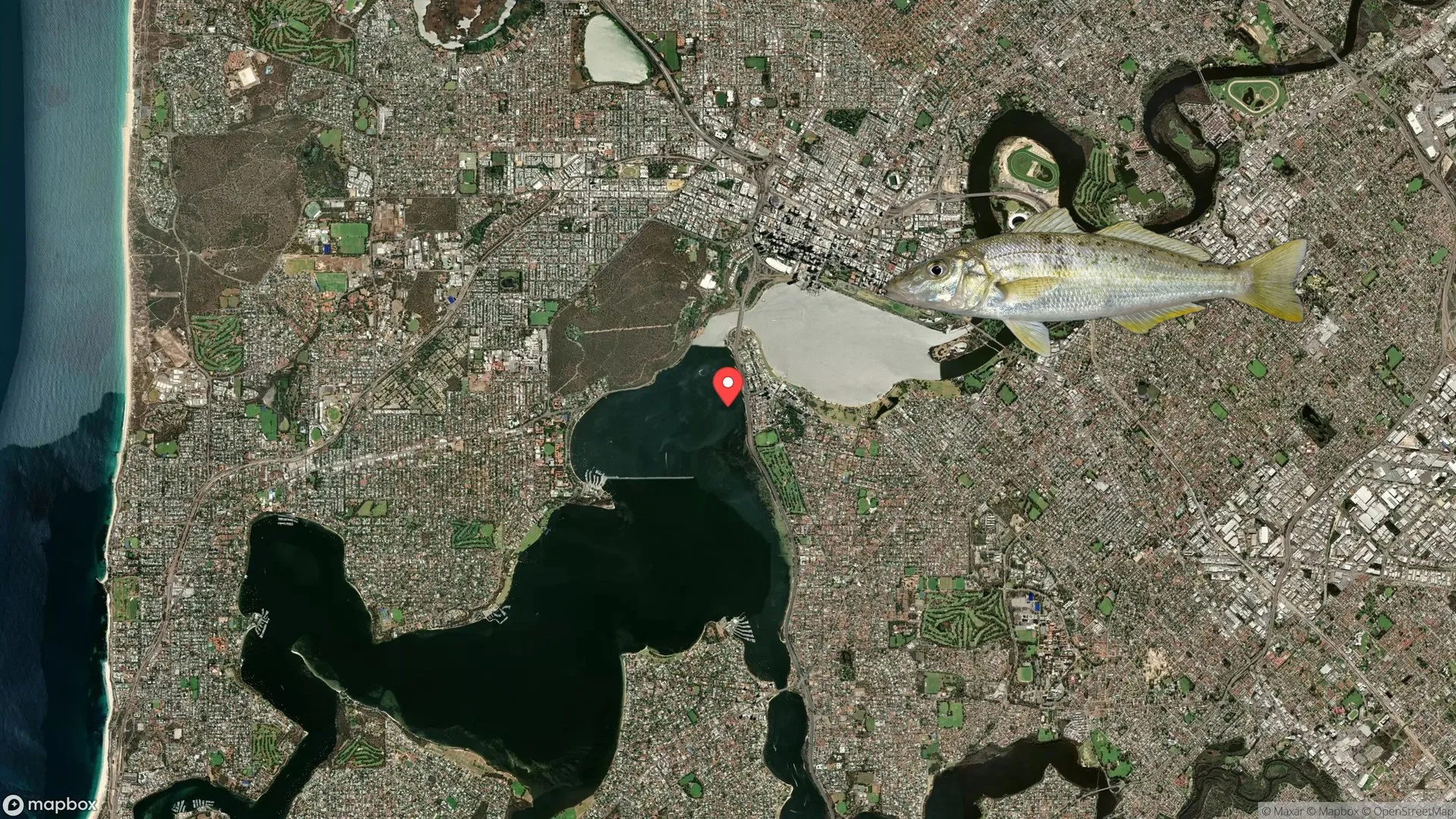
Target Species
Topwater Whiting
Swan River is one of the premier urban locations for Topwater Whiting fishing in WA, offering accessible shallow sand flats where Yellowfin Whiting aggressively hunt surface lures during the summer months.
For decades, the humble Whiting was considered strictly a bottom-feeder, a target for kids with prawns and heavy sinkers. But a revolution has occurred on the flats of Western Australia. The “Topwater Whiting” craze has turned this bread-and-butter species into a genuine light-tackle sportfish. There is nothing quite like the adrenaline rush of seeing a pack of aggressive Whiting shoulder-charging a small surface popper in knee-deep water.
The Swan River, winding its way through the heart of Perth, hosts a healthy population of Yellowfin Whiting (Sillago schomburgkii), the specific species that responds best to surface presentations. Unlike their deeper-dwelling cousins, Yellowfin Whiting patrol the shallow sand flats and weed margins, hunting prawns and worms in water sometimes less than 30cm deep. This behaviour makes them the perfect target for finesse anglers wielding light spin gear and small walk-the-dog lures.
While the Peel-Harvey estuary often gets the limelight for quantity, the Swan River offers quality fish and the convenience of being right on the city’s doorstep. However, it is a fishery that demands respect and technique. Swan River Whiting are educated; they see a lot of boat traffic and pressure. Success here isn’t just about chucking a lure out; it’s about understanding the tides, reading the flats, and mastering the subtle retrieve that triggers a strike.
In this guide, we will break down exactly how to crack the code for Swan River Topwater Whiting. We will cover the specific gear you need to finesse these fish, the exact flats to target, and the seasonal nuances that dictate their feeding windows. Whether you are a seasoned lure fisho or looking to catch your first fish on topwater, this guide will set you up for success.
Getting There
Topwater Whiting
Sillago schomburgkii
Always check current NSW DPI regulations before fishing. Bag and size limits may change.
Understanding Swan River: Location Intelligence
The best places to catch Topwater Whiting in the Swan River are the shallow sand flats and weed margins in the lower to middle reaches, specifically areas like Point Walter, Pelican Point, and the flats around East Fremantle.
To successfully target Topwater Whiting, you need to think less like a bait fisherman and more like a hunter stalking prey. The Swan River is a massive estuarine system, but for this specific technique, 90% of the water is irrelevant. You are looking for the “skinny water”—the shallow flats that heat up quickly and teem with small crustaceans.
Location Essentials
The Topography of the Flats
Yellowfin Whiting are intertidal feeders. In the Swan, they push high up onto the sandbanks as the tide rises. You want to focus your efforts on areas where clean white sand meets patches of seagrass or ribbon weed. These “mottled” bottoms are prime hunting grounds. The weed provides cover for prawns and shrimp, while the sand offers visibility for the Whiting to spot your surface lure silhouetted against the sky.
The lower reaches of the river, from Fremantle upstream to the Narrows Bridge, hold the highest concentration of Yellowfin Whiting suitable for topwater fishing. Areas like Point Walter are iconic for a reason. The massive sandbar that extends into the river creates a perfect ambush point where current accelerates, disorienting baitfish. Similarly, the flats around Pelican Point and Matilda Bay offer vast expanses of wadeable water.
Why Topwater Works Here
It might seem counterintuitive to fish the surface for a species with a downward-facing mouth designed for sifting sand. However, in the shallow water of the Swan River flats, competition for food is fierce. When a prawn flicks across the surface to escape a predator, Whiting will instinctively chase it down.
Topwater lures, particularly small poppers and stickbaits, mimic a fleeing prawn or a distressed baitfish. The “bloop” of a popper or the side-to-side “walk” of a stickbait triggers an aggressive predatory response. In the Swan, where the water can be stained with tannins or stirred up by boat wake, the surface disturbance helps fish locate the lure from a distance.
Depth and Temperature
Depth is the single most critical factor for location selection. If you are casting into water deeper than 1.5 metres, your chances of a topwater strike plummet. The sweet spot is between 30cm and 80cm of water. In this depth, the fish are compressed into a narrow water column, making them hyper-aware of surface activity.
Temperature also plays a massive role. Yellowfin Whiting are a warm-water species. They become significantly more active when the water temperature pushes past 20°C. This is why the shallow flats are so productive—they act as solar panels, warming up faster than the deeper channels. On a hot summer afternoon, the water on the flats can be several degrees warmer than the main channel, drawing fish in like a magnet.
Reading the Water
When you arrive at a spot like Point Walter or East Fremantle, take a moment to observe before you cast. You are looking for:
- Nervous Water: Ripples that move against the wind or current, indicating a school of fish pushing through.
- Prawn Flicks: Tiny splashes on the surface where prawns are skipping to avoid predators.
- Sand Puffs: Small clouds of sand on the bottom where Whiting are digging for worms.
- Structure: Submerged logs, distinct weed lines, or drop-offs where the flat descends into the channel.
The Swan River is a dynamic environment. The best spots shift with the tide and wind. A flat that is barren at low tide might be teeming with life two hours into the flood. Mobility is key—don’t be afraid to wade and cover ground until you find the fish. For more on reading water structure, check out our guide on fishing spots and how to identify productive zones.
When Is the Best Time to Fish for Topwater Whiting at Swan River?
The best time to fish for Topwater Whiting at Swan River is during the summer months, specifically on a rising tide at dawn or dusk when wind is light and water temperatures are warm.
Timing is everything when chasing this species on surface lures. Unlike bait fishing, where scent can draw fish in over time, topwater fishing relies on visual aggression. You need the fish to be hungry and in the right depth of water.
Seasonal Patterns
Summer (December - February): This is the undisputed peak season. The hot weather heats up the flats, metabolisms ramp up, and the river teems with prawns. The “Fremantle Doctor” (the strong afternoon sea breeze) can make surface fishing tough in the late afternoon, so early mornings are often best.
Autumn (March - April): Often the best time for quality fish. The water stays warm, boat traffic eases off, and the wind is usually lighter. Some of the biggest 40cm+ “elbow slappers” are caught in early autumn.
Winter & Spring: Generally poor for topwater. The fish head deeper and become far less aggressive. While you can still hook them on bait, they rarely chase surface lures in cold water.
Topwater Whiting Seasonal Calendar
The Tidal Influence
Tides are the heartbeat of the Swan River estuary. For flats fishing, the rising (incoming) tide is king. As cool, oxygen-rich ocean water pushes into the river, it floods the sandbanks that were dry or too shallow at low tide. Whiting follow this push of water to reach fresh feeding grounds.
- Low to High: The first two hours of the incoming tide are often golden. As the water spreads over the sand, the fish are right on the leading edge.
- High Tide: Good for working the edges of the mangroves or higher up the bank, but the fish can spread out.
- Outgoing Tide: Can still be productive if you target the drains and drop-offs where water (and food) is funneled off the flats back into the main channel.
Tide Times
Optimal Tide
Incoming tide, ideally early morning or late afternoon
Tide movement is critical for fish activity. Most species feed actively during tide changes, especially the run-in (incoming) tide.
Detailed hourly tide charts
Official tide predictions
7-day tide calendar
Tide Guide
Best for most species. Fish move in to feed as water rises.
Good for ambush predators. Baitfish get swept out.
Slower bite. Fish less active during slack water.
New/full moon. Bigger tidal range, more fish movement.
Moon Phase & Solunar
Moon phases influence fish feeding behavior. New and full moons create spring tides with stronger currents and increased fish activity.
Best Phases
- New Moon: Peak feeding activity, spring tides, excellent fishing
- Full Moon: Strong tides, night feeding, great for nocturnal species
- 3 Days Either Side: Extended peak period for maximum results
Major/Minor Periods
- Major Periods: Moon overhead/underfoot (2-3 hours)
- Minor Periods: Moon rise/set (1-2 hours)
- Best Times: Major period + dawn/dusk = explosive action
Weather and Wind
Wind is the enemy of the topwater angler. A chop on the water breaks up the silhouette of your lure and makes it harder for the fish to track. Ideally, you want glassy conditions or a light ripple.
- Dawn Patrol: This is usually the best bet to beat the wind. The window from first light until about 9:00 AM often brings the calmest conditions.
- The Sea Breeze: In Perth, the afternoon sea breeze can be fierce. If it kicks in, try to find a sheltered bay or switch to slightly heavier lures that cast better in the wind.
- Cloud Cover: A bit of cloud can actually extend the bite. In bright, harsh sunlight, Whiting can be spooky in shallow water. Overcast days make them feel safer and more willing to roam.
Weather Conditions
Check current conditions before heading out. Wind, swell, and barometric pressure significantly affect fish behavior.
Official forecasts, warnings & radar
Hourly wind speed & direction
Swell height, period & direction
The Heat Factor
Don’t be afraid to fish in the heat of the day if the wind is low. Unlike many species that shut down at noon, Yellowfin Whiting love the heat. Some of the most explosive sessions happen at 1:00 PM on a 35°C day, provided you can handle the sun!
What Tackle Do You Need for Topwater Whiting at Swan River?
The ideal tackle for Topwater Whiting is a 7ft to 7ft 6in light spin rod rated 1-4kg, paired with a 1000-2500 size reel and spooled with 4-6lb high-quality braid.
Gear choice makes all the difference between a frustrating day of missed strikes and a bag full of tasty Whiting. When fishing the Swan River flats, you’re dealing with a fish that can be surprisingly picky. They have small mouths, sharp eyesight, and a habit of “slapping” at lures instead of swallowing them. So, finesse is the name of the game. You wouldn’t hunt rabbits with a bazooka, and you shouldn’t target Whiting with heavy boat gear.
The Rod: Soft Tips are Non-Negotiable
The most important part of your setup is the rod. You need a rod that’s light, responsive, and, above all, has a soft tip. Whiting often slash at a surface lure several times before hooking up. A stiff, fast-action rod will yank the lure away or pull the hooks out of their delicate mouths during the fight.
Look for a rod in the 6ft 10in to 7ft 6in range. The extra length helps cast tiny 3-5 gram lures a long way—key when wading shallow flats and needing to cover ground without spooking the school. A rating of 1-3kg or 2-4kg is ideal. You want the rod to bend deeply even with a small fish on; this “cushion” stops hook pulls when the Whiting thrashes on the surface.
The Reel: Light and Smooth
Balance matters. A 1000, 2000, or compact 2500 size spinning reel is perfect. Since you’ll be casting hundreds of times in a session, a heavy reel will tire your wrist and ruin the “walk-the-dog” action of your lure.
A smooth drag is essential. While Whiting aren’t known for blistering runs like Trevally, they do surge when they spot the angler. Because you’re using tiny hooks and light leaders, a sticky drag can mean broken knots or straightened hooks. Set your drag fairly loose—just enough to set the hook, but light enough to give line if a 40cm “elbow slapper” decides to bolt.
Line and Leader: The Invisible Link
Forget mono main lines; braid is essential. The lack of stretch in braid lets you work the lure with subtle action and feel the faintest “tick” of a fish checking out your lure. Go as light as you dare. PE 0.4 to PE 0.6 (roughly 4lb to 8lb) is what Swan River locals use. This thin line cuts through the wind and gives maximum casting distance with micro-lures.
For leader material, fluorocarbon is usually better than mono for its resistance to the Whiting’s raspy teeth and sandy bottom. But some anglers prefer mono for surface lures because it floats, while fluorocarbon sinks and can pull the nose of a tiny popper under. If you use fluorocarbon (which is less visible), keep your leader around a rod length (2 metres) and go with a light breaking strain of 4lb to 6lb. If you’re getting bitten by blowfish or small tailor, you might go to 8lb, but expect fewer bites.
For more tackle basics, see our tackle essentials guide to understand the differences between braid and mono in depth.
Complete Tackle Specifications
| Component | Specification |
|---|---|
| Rod | 7'0" - 7'6" Light Spin, 1-4kg rating, Fast/Moderate Action |
| Reel | 1000 - 2500 size spin reel, shallow spool preferred |
| Main Line | 4lb - 6lb high-quality PE braid (PE 0.4-0.6) |
| Leader | 4lb - 6lb Fluorocarbon or Monofilament (1.5m length) |
| Lures (Hardbody) | 50mm - 70mm Surface Poppers & Stickbaits (Clear colours) |
| Hooks | Size 10-14 Trebles or Size 8-10 Assist Hooks |
| Clips | Size 00 or 000 Snap Clips (keep it tiny) |
| Polaroids | Amber or Copper lens for spotting fish on sand flats |
How Do You Rig for Topwater Whiting?
The best rig for Topwater Whiting is a simple braid-to-leader connection using a Double Uni or FG knot, finishing with a loop knot to the lure to maximise its swimming action.
Rigging for Topwater Whiting is refreshingly simple, but the devil is in the details. Because the lures are so small and light, any unnecessary bulk in your rigging will kill the action. A heavy snap swivel or a bulky knot can turn a dancing prawn imitation into a lifeless piece of plastic.
The Connection Knot
Your connection between the braid main line and the leader needs to be slim. Bulky knots will catch in the small guides of a light spin rod, reducing casting distance and causing frustration.
- The FG Knot: This is the gold standard. It is the slimmest and strongest connection, passing through guides silently.
- The Double Uni Knot: Easier to tie, especially if you need to re-rig while wading in the river. It’s perfectly adequate for 4lb line, though slightly bulkier than the FG.
The Lure Connection: Loop Knots vs. Clips
Directly tying your leader to the lure with a Loop Knot (Lefty’s Loop) is the best way to ensure your lure walks freely. The loop allows the lure to pivot and swing side-to-side without the friction of a tight knot choking the action.
If you prefer to change lures quickly (switching colours is often necessary in the Swan), use the smallest snap clip you can find. We are talking Size 00 or 000. Avoid swivels at the lure end entirely; they are too heavy and will sink a small popper.
The “Assist Hook” Upgrade
Here is a secret that separates the experts from the casuals: Swap your rear treble hook for small assist hooks.
Whiting have small mouths and often “headbutt” the lure. Treble hooks can sometimes pull free during the fight. Small assist hooks (size 8 or 10), which swing freely on a short cord, are sucked in much easier and hold incredibly well. They also damage the fish less, making release easier.
Building the Perfect Topwater Whiting Setup
- 1
Measure Your Leader
Pull off about a rod length (1.8m - 2m) of 4lb-6lb fluorocarbon leader material. Don't go too short; clear water demands stealth.
- 2
Connect Braid to Leader
Tie your main line to the leader using a Double Uni Knot (6 turns each side) or an FG knot if you are proficient. Wet the knot with saliva before tightening to prevent friction burn.
- 3
Trim the Tags
Cut the tag ends of your knot as close as possible. Long tags will catch on your rod guides during the cast.
- 4
Select Your Lure
Choose a 50-70mm surface lure. In the Swan River, clear or 'ghost' prawn patterns are usually the most productive starting point.
- 5
Remove Factory Hooks (Optional)
Using split ring pliers, remove the rear treble hook. This is the perfect time to upgrade to high-quality chemically sharpened hooks if the stock ones are dull.
- 6
Attach Assist Hooks (Pro Tip)
Attach a pair of size 8 or 10 'micro' assist hooks to the rear split ring. These trailing hooks result in a much higher hook-up rate for short-striking Whiting.
- 7
Tie the Loop Knot
Tie the leader to the lure's tow point using a Lefty's Loop knot. Ensure the loop is small (about 5-8mm diameter) to allow the lure to swing freely.
What Bait Works Best for Topwater Whiting?
While surface lures like the Bassday Sugapen or small poppers are the primary tools for “topwater” fishing, live bloodworms or fresh river prawns fished unweighted are the best organic baits for sight-casting in shallow water.
When we talk about “Topwater Whiting,” we are almost exclusively talking about using artificial lures to trigger a reaction bite. However, there are days in the Swan River when the fish are present but refuse to commit to a surface lure. In these scenarios, having a backup plan—or knowing exactly what your lure is trying to copy—is crucial.
Lures: The Artificial “Bait”
In the world of topwater, your lure is the bait. You are trying to imitate a fleeing King Prawn or a School Prawn skipping across the surface.
- Stickbaits (Walk-the-Dog): These are generally the most effective lure style for the Swan. Lures like the Bassday Sugapen 70F or ZipBaits Skinny Pop are legendary. The side-to-side sliding action mimics a prawn cruising the flats.
- Poppers: These have a cupped face that spits water. They are excellent when there is a bit of chop on the water, as the noise helps fish locate the lure. However, in calm conditions, a loud popper can sometimes spook wary Swan River Whiting.
- Colours: In the Swan River, clear/translucent colours are king. Patterns often called “Ghost Prawn,” “Clear Tiger,” or “Beer Bottle” work best because they allow light to pass through, creating a realistic silhouette. Solid colours can look unnatural in clear shallow water.
Organic Bait: The Backup Plan
If the topwater bite shuts down, or if you want to target Whiting in the shallows without lures, unweighted baiting is a deadly technique that bridges the gap. This involves sight-casting a natural bait to cruising fish in the same shallow water you would use lures.
- Live River Prawns: The ultimate bait. Catch them yourself with a drag net in the same area you are fishing. Hook them lightly through the tail so they can flick naturally.
- Bloodworms: Expensive and hard to find, but Whiting finds them irresistible.
- Tube Worms: Often found encrusted on rocks or jetty pylons in the Swan. A great free bait option.
Bait & Lure Performance Analysis
| Surface Stickbait | Small Popper | Fresh Prawn | |
|---|---|---|---|
| Effectiveness Rating | 9/10 (High Activity) | 8/10 (Choppy Water) | 10/10 (All Conditions) |
| Durability | Excellent (Hardbody) | Excellent | Poor (One fish per bait) |
| Visual Excitement | High (Surface strikes) | High (Splashes/Bloops) | Low (Sub-surface) |
| Best Conditions | Glassy to light ripple | Windy/Choppy surface | When lures are refused |
| Target Technique | Walk-the-dog retrieve | Pop-pause retrieve | Unweighted sight cast |
Scenting Your Lures
Even though you are fishing reaction lures, scent matters. Smearing a small amount of Sax Scent (Gold Prawn) or Pro-Cure on the belly of your hardbody lure can make a huge difference. It often convinces a fish that is following the lure to take that final commit bite rather than turning away at the last second.
How Do You Catch Topwater Whiting at Swan River?
To catch Topwater Whiting at Swan River, use a continuous “walk-the-dog” retrieve with small surface lures over shallow sand flats, ensuring you speed up—never stop—when fish show interest to trigger their competitive instinct.
Catching Yellowfin Whiting on surface lures is a visual game that mixes finesse with aggression. Unlike bait fishing where you wait for the fish to find you, topwater fishing means actively hunting the school and sparking a reaction. The Swan River flats bring a unique challenge: the water is often crystal clear, and the fish are wary. Success comes from mastering your casting, your retrieve rhythm, and your hookset.
Casting Strategy and Stealth
The first rule on the flats is stealth. Whiting have sharp lateral lines and can feel the pressure waves from a wading angler long before they see you.
- The Wading Approach: Move slowly. Shuffle your feet instead of lifting them to reduce splashing. Try to position yourself with the sun in your face, so your shadow falls behind you, not over the fish you’re after.
- Fan Casting: Don’t just cast straight ahead. Picture a clock face and cast from 9 o’clock to 3 o’clock. This way you cover every part of the flat.
- Distance is Key: Long casts matter. A 7ft rod lets you throw a 4g lure 30–40 metres. That distance keeps your presence away from the lure, making fish less suspicious.
- Wind Management: Use the wind to your advantage. Casting with the wind at your back boosts distance and keeps your braid tight, giving you better feel for the lure. If you’re casting into the wind, lower your cast angle to punch the lure through the breeze.
The “Walk-the-Dog” Retrieve
The best retrieve for Swan River Whiting is the “walk-the-dog” action. This zigzag move copies a prawn darting across the surface.
- Rod Position: Point your rod tip down toward the water, around a 45-degree angle.
- The Cadence: Use your wrist to twitch the rod tip in rhythm while reeling steadily. Twitch-wind, twitch-wind, twitch-wind.
- The Action: The lure should dart left-right-left-right. It doesn’t need big sweeps; a tight, frantic zigzag often works better for Whiting.
- Speed: Start at a medium pace. If the water’s choppy, slow down so the lure stays on top. If it’s glassy calm, a faster, more erratic retrieve can spark a strike before the fish inspect the lure too closely.
The “Pack Attack” and the Golden Rule
This is the most important part of the technique. When Whiting spot a surface lure, they often charge in a group. You’ll see a “V-wake” pushing water behind your lure.
- The Golden Rule: NEVER STOP WINDING.
- The Trigger: If a fish hits and misses, or you see them following, your gut might tell you to pause the lure (like you would for Bream). Don’t do it. A still prawn looks dead, and Whiting will lose interest fast.
- The Speed Up: Instead of pausing, speed up your retrieve a little. This makes the lure look like it’s escaping and fires up the “competitive jealousy” in the school. The fish will rush each other to grab it first.
Bite Detection and Hookset
Whiting have small, slightly downward-facing mouths. They often “slap” or “kiss” the lure a few times before getting hooked.
- Feel vs. Sight: You’ll usually see the splash before you feel the weight. Don’t strike on the splash. Wait until the rod tip loads up with the fish’s weight.
- The Soft Strike: When you feel the weight, just lift the rod firmly. Don’t make a wild “bass master” strike. A hard jerk can pull the small hooks out of their soft mouths or yank the lure from the pack if the first fish misses.
- Fighting the Fish: Keep your rod tip low to the side. Whiting love to thrash and jump on the surface. Keeping the rod low changes the line angle and makes them less likely to leap, cutting the chance of losing the hook.
What Are the Rules for Fishing at Swan River?
In the Swan River, Yellowfin Whiting (and other nearshore whiting species) have a minimum size limit of 220 mm and a combined daily bag limit of 30 fish per angler.
The Swan River is a shared recreational resource, and its health depends on responsible stewardship by anglers. The Department of Primary Industries and Regional Development (DPIRD) enforces strict regulations to ensure sustainable fish stocks. Ignorance of the law is not an excuse, so it’s vital to stay up to date.
Bag and Size Limits (West Coast Bioregion)
- Yellowfin Whiting (Sillago schomburgkii) & Sand Whiting:
- Minimum Size: 220 mm (22 cm).
- Daily Bag Limit: 30 (combined species limit) in the West Coast Bioregion.
- Note: While King George Whiting are rare in the shallow river flats, if you do hook one, the minimum size is 280 mm (28 cm).
Conservation Practices
- Catch and Release: While Whiting are excellent table fish, topwater fishing can be highly productive. Consider releasing fish that are just over the line (22–24cm) and only keeping the bigger ones (28cm+) for a feed.
- Barbless Hooks: We strongly recommend crushing the barbs on your treble hooks or switching to barbless singles. This makes unhooking fish much faster—getting you back in the water for the next cast—and reduces harm to undersized fish.
- Handling: Whiting have a protective slime coat. If you plan to release a fish, try to unhook it in the water or use wet hands. Avoid dragging them onto dry, hot sand, which can strip their slime and lead to infection.
Critical Safety Considerations
- The Cobbler (Estuary Catfish): This is the number one hazard for waders in the Swan River. Cobbler have venomous spines in their dorsal and pectoral fins. They blend perfectly into the weed and sand. Always do the “Stingray Shuffle”—slide your feet along the bottom rather than stepping. If stung, immerse the area in hot water (as hot as you can stand) to break down the protein-based toxin.
- Drop-offs: The sandbars at Point Walter and Pelican Point can end suddenly. The water might go from knee-deep to 5 metres deep in a single step. Always wear polarized sunglasses to spot the colour change of deep water, and watch for strong currents on the outgoing tide.
- Boat Wake: The Swan is a busy commercial and recreational waterway. Large ferries and cruisers can throw unexpected wakes that wash up high on the sandbanks. Keep an eye on the channel to avoid getting swamped.
For the official and most current regulations, always consult the WA Fisheries Regulations or download the Recfishwest app.
Your Questions About Topwater Whiting Fishing at Swan River
What is the best time to fish at Swan River?
The best time to fish is early morning (dawn to 9:00 AM) or late afternoon (4:00 PM to dusk) during the summer months, specifically on an incoming tide. Fishing during these peak times lets you dodge the intense midday heat and the strong afternoon sea breeze (the "Fremantle Doctor") that can ruin surface presentations. Plus, whiting are most confident in the shallows under low light, making them more likely to chase topwater lures.
Is Swan River suitable for beginners?
Yes, the Swan River is exceptionally suitable for beginners, offering safe, flat, and accessible wading spots with minimal hazards compared to ocean rock fishing. The river gives a great introduction to lure casting. Spots like Matilda Bay have grassy banks and gentle slopes, making them ideal for kids or new anglers to practice without the risk of waves or slippery rocks. It's a very forgiving fishery for those learning to handle light tackle.
Do I need a boat to fish at Swan River?
No, you do not need a boat; in fact, shore-based wading is often more effective for Topwater Whiting than fishing from a boat. Wading lets you sneak up on fish from the shallow side, casting into slightly deeper water or along the bank. Boats often draw too much water to reach the "skinny" flats (30cm depth) where the best topwater action happens, and the noise of a hull hitting the water can spook the school.
Where are the best specific spots at Swan River?
The best specific spots are the sand flats around Point Walter, East Fremantle (near the Stirling Bridge), Pelican Point, and the lower reaches near the Stirling Bridge. These hot spots share common features: clean white sand mixed with weed patches and access to deep water channels. Point Walter is especially famous for its long sandbar that stretches far into the river, creating a natural feeding lane for whiting on the moving tide.
What size Topwater Whiting can I expect?
You can expect an average catch size of 25cm to 30cm, but the Swan River is known for producing trophy "elbow slappers" over 40cm. While the average fish gives a solid fight on light gear, it's the chance of a true trophy that brings serious anglers back. A 40cm+ Yellowfin Whiting is a strong fish that will pull drag and fight hard for its size.
Is there parking available at Swan River?
Yes, there is plenty of public parking at most major fishing locations, including Point Walter Reserve and Matilda Bay Reserve. Access is generally excellent, with car parks close to the water's edge. But popular spots can fill up fast on summer weekends, so arriving early helps secure a spot and gets you on the water for the prime dawn bite.
Can I fish at night at Swan River?
Yes, you can fish at night, though topwater lures are usually less effective than bait fishing with fresh prawns after dark. For night fishing tips, switch to unweighted live prawns or bloodworms. Whiting feed actively at night, but they rely more on scent and vibration in the dark rather than sight, making surface lures tougher for them to track.
Where can I buy bait near Swan River?
You can buy bait at tackle stores in Fremantle, Myaree, and various service stations along Canning Highway and Stirling Highway. Visiting dedicated tackle stores nearby is better than gas stations, as they stock the right surface lures (like Bassday Sugapens) and fresh bait needed to succeed, not just generic frozen packs.
What are the current bag and size limits?
The minimum size limit for Yellowfin Whiting is 220mm, and the daily bag limit is 30 (combined with other nearshore species) in the West Coast Bioregion. Regulations are strictly enforced by fisheries officers who patrol the river regularly. It's important to carry a measuring gauge and correctly identify your catch, as telling apart Yellowfin Whiting and other species like King George Whiting (which has a bigger size limit) is key.
Is Swan River family-friendly for fishing?
Yes, the Swan River is incredibly family-friendly, featuring calm waters, sandy beaches, playgrounds, BBQs, and nearby facilities like playgrounds and BBQs. Locations like Point Walter are perfect for kids fishing. The water is shallow and safe for wading (with supervision), and the grassy foreshores give the family a great place to relax while you work the flats.
What should I bring for a fishing session?
Essential gear includes a light spin combo, a box of surface lures, polarized sunglasses, sunscreen, and a pair of wading booties or old sneakers. Your fishing checklist should also include a pair of pliers for removing hooks and a small landing net. A floating wading basket or shoulder bag is handy to keep your gear dry while you're standing in the river.
How crowded does Swan River get?
The river can get quite busy on summer weekends and public holidays, particularly with recreational boaters and jet skis. To find quieter fishing times, try weekdays or the "dawn patrol" window (5:00 AM - 8:00 AM). Not only will you have calmer water and far less boat traffic, but the whiting are also far less spooked, making them much more willing to chase a surface lure across the flats.
Latest Fishing Reports
Stay updated with the latest catches, conditions, and hot tips from Swan River. Check these sources for recent reports filtered by location and species.
Fishraider
Community fishing reports and catch logs
Fishing World
Professional fishing reports and news
Tackle World
Local tackle shop reports and tips
NSW DPI
Official recreational fishing reports
Fishingmonthly
Monthly fishing magazine and reports
Hooked Up
Video fishing reports and tips
Pro Tip: Filter Reports
When browsing reports, search for "Swan River" or nearby landmarks. Look for reports from the last 7-14 days for the most relevant information. Pay attention to tide times, weather conditions, and successful techniques mentioned.
Share Your Catch
Caught something at Swan River? Share your success with the community! Upload your catch photos and reports to help other anglers.
Disclaimer: Fishing regulations can change. Always verify current size and bag limits with the WA Department of Primary Industries and Regional Development before fishing.
Ready to explore more? Check out our other fishing spots in the area, or learn about other species you might encounter on the flats. If you are new to the sport, our fishing basics guide is a great place to start.
Quick Info
- Location
- Swan River
- Coordinates
- -31.9750, 115.8450
- Difficulty
- intermediate
- Target Species
- Topwater Whiting
Conditions
Check local weather and tide conditions before heading out.