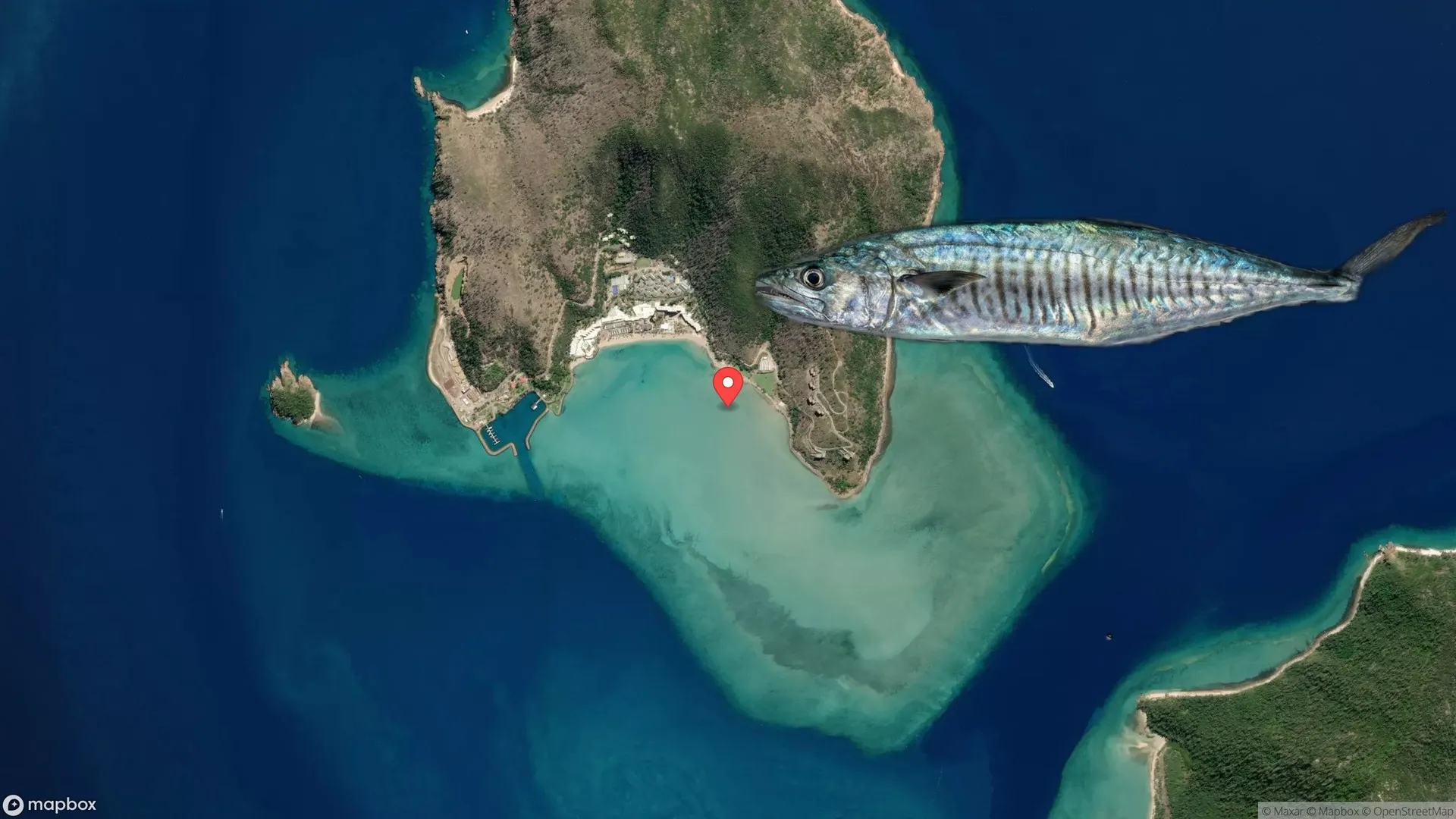
Target Species
Spanish Mackerel
Introduction
There are few sounds in the world of saltwater angling that ignite the adrenaline quite like the initial run of a Spanish Mackerel. The reel screams, the rod buckles, and the line disappears into the blue at a rate that seems impossible. For anglers in Queensland, targeting these razor-toothed speedsters at Hayman Island in the Whitsundays has become a rite of passage, offering some of the most explosive pelagic action available on the coast.
Hayman Island is one of the best spots for Spanish Mackerel fishing in QLD, offering accessible pelagic action for boat anglers and consistent runs of trophy-sized fish during the mackerel season from May to October.
Located within reach of the metro coastline, Hayman Island serves as a magnet for pelagic species due to its unique underwater topography and the way it intercepts the nutrient-rich currents. While often overshadowed by more distant locations, this spot holds a dedicated following of locals who know that when the water temperature hits that magical 22°C mark, the “Spaniards” arrive in force. Whether you are trolling high-speed bibbed minnows, floating out whole baits under a balloon, or casting stickbaits into surface bust-ups, the fishing here can be world-class.
This guide is designed to cut through the noise and provide you with actionable, local intelligence. We won’t just tell you that the fish are there; we will explain the specific structural elements that hold them, the exact tide phases that trigger the bite, and the rigging nuances that prevent bite-offs from those infamous serrated teeth. From understanding the seasonal migration patterns in the Whitsundays to selecting the perfect leader material that balances stealth with durability, we cover every aspect required to land a trophy.
For those new to the sport, Spanish Mackerel (Scomberomorus commerson) are formidable opponents. They are not just fast; they are intelligent predators that can slash a bait in half without finding the hook if your presentation isn’t perfect. This guide will help you refine your approach, ensuring that your next trip to Hayman Island results in a full esky rather than just a story about the one that got away.
Getting There
Spanish Mackerel
Scomberomorus commerson
Always check current NSW DPI regulations before fishing. Bag and size limits may change.
Understanding Hayman Island: Location Intelligence
To consistently catch Spanish Mackerel at Hayman Island, you need to look beyond the surface and understand the complex marine environment that lies beneath the waves. This spot isn’t just a random point on the map; it’s a dynamic ecosystem where structure, current, and baitfish come together to create a prime hunting ground for apex predators.
Location Essentials
The Bathymetry and Structure
Hayman Island sits among the stunning coral reefs of the Whitsundays, typical of the Great Barrier Reef Marine Park. The key to finding mackerel here is spotting the “pressure points”—places where current hits a vertical or near-vertical ledge, pushing nutrient-rich water upward. This upwelling lifts plankton and baitfish toward the surface, drawing in schools of slimy mackerel, yellowtail scad, and herring. Where the bait gathers, Spanish Mackerel won’t be far behind.
The most reliable zones are reef edges where depth changes quickly—say, dropping from 12 metres to 25 metres. Spanish Mackerel are cruising hunters; they patrol these contour lines, using the structure like a wall to corner bait. Anglers who troll their lures tight along these drop-offs, instead of drifting aimlessly over flat reef, usually see more strikes.
Seasonal Water Movements
In Queensland’s Whitsundays, Spanish Mackerel presence peaks during the cooler months from May to October when water temperatures are optimal. The East Australian Current influences baitfish movements along the reef, creating ideal conditions for mackerel hunting. At Hayman Island, the season really kicks off when sea temps settle around 22-24°C.
When the current runs strong, you’ll often see clear “current lines” or temperature breaks on the surface—smooth patches of water carrying weed or debris. These lines act as highways for pelagics. If you find a temp break where the water jumps a degree or two, or a visible current line meeting reef structure at Hayman Island, you’ve found the sweet spot.
Bait Aggregation
Knowing your local bait makes a big difference. At Hayman Island, huge schools of Scaly Mackerel and Yellowtail Scad (Yakkas) gather around high-relief pinnacles. Spanish Mackerel often sit deep during the day, lurking under bait balls, then charge up through them when they decide to feed.
Your sounder is your best mate here. You’re not just watching for big predator arches—you’re scanning for tight, jittery bait balls. If the bait on your screen looks
fractured or bunched hard against the bottom, it usually means predators are on the hunt above. A solid “brick” of bait is safe; a broken-up, scattered school is under attack.
When Is the Best Time to Fish for Spanish Mackerel at Hayman Island?
The prime season for Spanish Mackerel at Hayman Island runs from late autumn through spring (May to October), with the most productive fishing happening during the low-light windows of dawn and dusk when water temperatures are optimal around 22-24°C.
Timing is everything when chasing pelagics. Unlike bottom fish that might feed steadily through a tide, Spanish Mackerel are high-octane hunters that need specific cues to fire up. Knowing these cues is what turns a quiet day into a red-hot session.
Seasonal Patterns and Water Temperature
In Queensland’s Whitsundays, Spanish Mackerel are present year-round but fishing peaks during the cooler months. The best action at Hayman Island typically runs from May through October when water temperatures are optimal and baitfish are abundant. While summer months can still produce fish, the winter mackerel season is when serious anglers target trophy-sized specimens.
As autumn arrives and mornings turn crisp, high-pressure systems often bring easterly winds. These “glass-off” mornings are gold for local mackerel hunters. Calm water makes it easier to spot bust-ups and diving birds—clear signs that mackerel are feeding hard.
Spanish Mackerel Seasonal Calendar
The Solunar Influence: Dawn, Dusk, and Tide
Spanish Mackerel are visual hunters. Their big eyes pick up the flash of baitfish scales in the water. That’s why light changes—dawn and dusk—are peak times. The 30 minutes before sunrise and the hour after are often called “magic hour.” During this window, mackerel push bait toward the surface, using the dim light to their advantage while staying hidden in the darker water below.
Tide Times
Optimal Tide
Rising tide, specifically the 2 hours leading up to high water
Tide movement is critical for fish activity. Most species feed actively during tide changes, especially the run-in (incoming) tide.
Detailed hourly tide charts
Official tide predictions
7-day tide calendar
Tide Guide
Best for most species. Fish move in to feed as water rises.
Good for ambush predators. Baitfish get swept out.
Slower bite. Fish less active during slack water.
New/full moon. Bigger tidal range, more fish movement.
Moon Phase & Solunar
Moon phases influence fish feeding behavior. New and full moons create spring tides with stronger currents and increased fish activity.
Best Phases
- New Moon: Peak feeding activity, spring tides, excellent fishing
- Full Moon: Strong tides, night feeding, great for nocturnal species
- 3 Days Either Side: Extended peak period for maximum results
Major/Minor Periods
- Major Periods: Moon overhead/underfoot (2-3 hours)
- Minor Periods: Moon rise/set (1-2 hours)
- Best Times: Major period + dawn/dusk = explosive action
Tidal movement matters just as much. Flat, still water rarely brings good mackerel action. You want moving water to bunch up the bait. At Hayman Island, a rising tide is usually best—it pushes clean, oceanic water over the reef. The middle of the tide, when flow is strongest, is ideal for trolling, as the current forces baitfish to fight the stream, making them easy prey.
Slack tide—the short pause between high and low—can kill the bite for trolling, but it’s often the best time to drop deep baits or jigs, since no current lets you drop straight down with control.
Weather Conditions
Check current conditions before heading out. Wind, swell, and barometric pressure significantly affect fish behavior.
Official forecasts, warnings & radar
Hourly wind speed & direction
Swell height, period & direction
The Barometer Factor
Spanish Mackerel often feed hard just before a cold front hits. If the barometer’s dropping fast, get out there. The fish feel the pressure shift coming and will often feed heavily before the weather turns rough.
What Tackle Do You Need for Spanish Mackerel at Hayman Island?
You need a 10-15kg overhead or spin outfit that can hold 300m of line, paired with a high-speed reel to handle the blistering initial runs of Spanish Mackerel.
When a 15kg Spanish Mackerel hits a lure at 40km/h, the impact is violent. If your gear has a weak link, this fish will find it. The tackle needed for Hayman Island must strike a balance: it’s got to be heavy enough to stop a powerful first run but light enough to fish all day without wearing you out.
Rod and Reel Selection
For trolling, an overhead setup is usually the go-to. A 6-7ft rod rated for 10-15kg line gives you the power to turn a fish’s head. The reel should be a solid overhead (lever drag is great for fine-tuning drag) with room for at least 300 metres of line. Don’t skimp on capacity; a big Spaniard can burn off 100 metres in seconds.
For casting stickbaits or spinning from a drifting boat, a reliable spin reel in the 5000-8000 size range works best. Match it with a 7-8ft rod rated PE 3-5. The key feature for the spin reel is a high gear ratio (6.0:1 or faster). When a mackerel charges toward the boat—a common move—you’ve got to reel hard to keep the line tight.
For more tackle basics, see our tackle essentials guide.
Line and Leader
Braid (PE) is standard for main lines because it’s thin and has low stretch, helping lures dive deeper and cast farther. A 30lb to 50lb braid will do the job.
The leader is where opinions split: Wire or Mono? Spanish Mackerel have razor-sharp, interlocking teeth that slice through monofilament in a flash.
- Trolling: Single-strand wire is strongly recommended. It’s thinner than multi-strand and cuts through the water better, letting lures swim true.
- Casting: Heavy fluorocarbon (60-80lb) can work if the fish are cautious, but you risk bite-offs. If using wire for casting, go with a short (10cm) piece of titanium wire, which stays flexible and resists kinking.
Complete Tackle Specifications
| Component | Specification |
|---|---|
| Trolling Rod | 6-7ft Overhead, 10-15kg rating, fast action |
| Trolling Reel | Overhead Lever Drag, size 15-20, 300m+ capacity |
| Spin Rod | 7-8ft Graphite, PE 3-5 rating, casting weight 40-100g |
| Spin Reel | Size 6000-8000, High Gear Ratio (6.2:1+) |
| Main Line | 30-50lb quality 8-strand braid |
| Trolling Leader | 44lb-58lb Single Strand Wire (Mason or similar) |
| Casting Leader | 80lb Fluorocarbon or 40lb Titanium Wire |
| Swivels | Size 2-4 quality ball bearing swivels (black) |
How Do You Rig for Spanish Mackerel?
The most effective rig is a ganged hook setup on single-strand wire, built to hold a whole Garfish or Gardie, so the bait swims naturally while protecting the line from teeth.
Rigging for Spanish Mackerel is part craft, part instinct. The bait needs to look real enough to trick a sharp-eyed predator, but be tough enough to survive the “mackerel mauling.” The most trusted rig at Hayman Island is the Chin-Weighted Gang Rig for trolling whole baits like Garfish.
The Importance of the Haywire Twist
With single-strand wire, knots won’t hold. You’ve got to use a Haywire Twist. Wrap both ends together for 3-4 turns, then make 3-4 tight “barrel wraps” with the tag end around the main wire. This join is stronger than the wire itself and won’t slip under pressure.
Building the Trolling Rig
This rig works best for trolling dead baits at 4-7 knots. The chin weight keeps the bait swimming upright and just below the surface, while the gang hooks help you hook up even on short strikes.
Building the Perfect Garfish Trolling Rig
- 1
Select Your Wire
Cut a 60cm length of 44lb or 58lb single-strand wire. Make sure there are no kinks in the wire.
- 2
Attach the Front Hook
Thread the wire through the eye of the top hook in a set of 3 x 5/0 gangs. Secure it with a Haywire Twist.
- 3
Add the Chin Weight
Slide a chin weight (weighted skirt or lead head) onto the wire and down over the shank of the top hook of the gang. This weight acts as a keel.
- 4
Rig the Bait
Line up the hooks alongside the bait. Push the first hook through the eyes or hard part of the head. Place the other hooks through the body, keeping the bait straight.
- 5
Secure the Beak
Use a small copper wire or bait spring (often attached to the chin weight) to tightly bind the beak of the Garfish to the main wire. This stops the mouth from flaring and creating drag.
- 6
Add Attraction (Optional)
Slide a pink or lumo squid skirt down the wire to sit over the chin weight. It adds flash and helps stop the bait from washing out.
- 7
Test the Swim
In the water beside the boat, run the rigged bait at 4 knots. It should swim with a slight shimmy but not spin. If it spins, re-rig it.
What Bait Works Best for Spanish Mackerel?
The most effective baits for Spanish Mackerel are whole Garfish (Gardies) or Wolf Herring rigged on gangs for trolling, while live Yellowtail Scad (Yakkas) are superior for slow trolling or drifting over reef structure.
While lures work well, there are times when Spanish Mackerel lock onto one type of bait and ignore anything artificial. On those days, picking the right bait is what gets you hooked up. At Hayman Island, freshness is everything—mackerel have sharp eyes and a keen nose, and a limp, faded bait won’t even get a look.
The Hierarchy of Baits
Not all baits are equal. Off the QLD coast, Garfish rule for trolling thanks to their sleek shape. But when you’re holding station or drifting slowly, live baits can’t be beaten.
Bait Performance Analysis
| Whole Garfish | Live Yakka | Whole Mulie | Wolf Herring | |
|---|---|---|---|---|
| Effectiveness Rating | 5/5 (Excellent) | 5/5 (Excellent) | 3/5 (Good) | 4/5 (Very Good) |
| Durability on Hook | High (when rigged) | Moderate | Low (Soft) | High |
| Scent Dispersion | Moderate | High (Vibrations) | High | Moderate |
| Availability | High (Tackle Shops) | Catch yourself | Very High | Specialty Shops |
| Best Use Conditions | High-speed trolling (5-7 knots) | Slow trolling or drifting | Floating in a berley trail | Targeting trophy size fish |
The “Match the Hatch” Philosophy
When fishing Hayman Island, check what the fish are spitting up when you land them. If they’re full of small anchovies, a big Wolf Herring might get snubbed. On the flip side, if they’ve been eating large squid, a tiny metal slice could go unnoticed.
The Straightness Rule
The single most important thing when trolling dead baits is straightness. If your Garfish has even a slight curve, it will spin like a propeller. That looks fake to mackerel, and worse, it’ll twist your line into a bird’s nest in minutes. Always swim-test your bait beside the boat before letting it back. If it spins, re-rig it.
How Do You Catch Spanish Mackerel at Hayman Island?
To catch Spanish Mackerel, troll bibbed minnows or rigged baits at 5-8 knots along the 15-25m depth contours, or cast high-speed metal slices and stickbaits into surface feeding frenzies.
Catching Spanish Mackerel is an active game that means reading the water and adapting. While some anglers just set a spread and hope, the top crews at Hayman Island are always on the move, hunting for fish.
Trolling Strategy: The Spread
Trolling is the best way to find scattered fish. A standard spread uses three lines:
- Short Corner (Deep): A deep-diving minnow (5-8m) run close to the boat (20-30m back). This sits in the prop wash and grabs the attention of aggressive fish drawn to the boat’s wake.
- Long Corner (Mid-Depth): A rigged Garfish or medium diver set further back (40-50m).
- Shotgun (Surface): A skirted lure or surface-skipping Garfish way behind (60-80m). This one’s for the cautious fish hanging back from the boat.
Speed is Key: Spanish Mackerel love fast. Troll between 6 and 8 knots. If you’re getting follows but no bites, speed up. It fires up a reaction strike—the fish sees the lure pulling away and attacks without thinking.
Casting: The High-Speed Burn
When you see birds diving or surface bust-ups, that’s mackerel pushing bait up. Approach from upwind, cut the motor, and drift in quietly.
- The Lure: Go for metal slices (40-60g) or sinking stickbaits.
- The Retrieve: Cast past the school, let it sink 2-3 seconds, then wind as fast as you can. You can’t out-crank a mackerel. That frantic, fleeing action is pure temptation.
The Strike and The Fight
A Spanish Mackerel strike is unforgettable—a blistering run that can burn 100 metres of line in seconds.
- Don’t Strike: When trolling, don’t strike. The boat’s forward motion and your drag will set the hook. A hard strike can tear the hooks free from their soft mouth.
- Keep Moving: Stay in gear for 10-15 seconds after hook-up. This keeps line tight and often draws a second bite on another lure.
- The “Green” Fish: Mackerel often do a U-turn back toward the boat, giving you slack. Wind like mad! When they spot the boat, they’ll usually take off again in a wild second burst. That’s when most are lost. Keep your drag smooth and let them run.
For more on handling these situations, read our guide on fishing techniques.
What Are the Rules for Fishing at Hayman Island?
In Queensland, Spanish Mackerel are subject to strict size and bag limits; the minimum legal size is 75cm with a possession limit of 1 fish per person (or 2 per boat with 2+ fishers, effective July 2023). Seasonal closures also apply. Always verify current rules with Queensland Fisheries.
Fishing at Hayman Island puts you in Queensland waters within the Great Barrier Reef Marine Park, where fisheries are tightly managed to protect fish stocks and coral ecosystems. Not knowing the rules won’t get you off the hook, and fines or gear seizure are real risks.
Critical Regulations (QLD)
- Size Limit: Spanish Mackerel have a minimum size limit of 75cm total length. This ensures the fish has matured and spawned at least once.
- Possession Limit: The in-possession limit is 1 fish per person, or 2 fish per boat with two or more recreational fishers on board (effective from 1 July 2023).
- Closed Seasons: Seasonal closures apply in certain areas. Check current closures for the Whitsundays region before fishing.
- Marine Park Zones: Hayman Island is within the Great Barrier Reef Marine Park. Check for sanctuary zones where fishing is prohibited.
For the latest rules, always check our regulations guide or the official Queensland Fisheries website.
Critical Safety Considerations
- Razor Teeth: Spanish Mackerel teeth are like surgical scalpels. Never put your fingers near their mouth, even when they look dead. Use long-nose pliers or a de-hooker.
- Gaffing Hazard: When gaffing a thrashing mackerel, be extremely careful. A missed gaff shot can result in the fish swinging hooks into the angler or the inflatable tubes of the boat.
- Slippery Decks: Mackerel have a protective slime and bleed profusely. Wash your deck immediately after landing a fish to prevent slipping accidents.
Conservation and Catch Care
Spanish Mackerel don’t survive well after release if they’re tired or bleeding badly. If you plan to keep one:
- Bleed it straight away: Cut the throat latch to sever the artery. This makes the meat taste much better.
- Get it iced down: Mackerel flesh spoils fast in the heat. Pop the fish into an ice slurry as soon as you can.
- Only take what you need: These fish give plenty of fillets. Stick to what you’ll eat fresh—frozen mackerel loses quality over time.
Your Questions About Spanish Mackerel Fishing at Hayman Island
What is the best time of year to fish for Spanish Mackerel at Hayman Island?
The peak season is from May to October when water temperatures are optimal around 22-24°C and baitfish are abundant in the Whitsundays. You might hook the odd fish during summer, but the main run kicks in during the cooler months. June through September are known as the "golden months" in the Whitsundays, when the fish are biggest and the bite is most reliable. These months also bring calmer winter weather, making it easier to reach offshore grounds.
Is Hayman Island suitable for beginners?
Hayman Island is an intermediate difficulty location; while the fishing techniques can be learnt quickly, the offshore environment and the requirement for a boat make it less suitable for absolute novices without an experienced skipper. If you're new to fishing, diving straight into chasing 15kg pelagics offshore can be a handful. Boat handling, knot tying (wire twists), and safety awareness take time to master. But if you go out with a charter or a seasoned mate, getting onto fish is doable for anyone who can hold a rod.
Do I need a boat to fish at Hayman Island?
Yes, Hayman Island is an offshore location that requires boat access. You will need either your own vessel or to book a charter to reach the productive fishing grounds around the island.
Quick Info
- Location
- Hayman Island
- Coordinates
- -20.0600, 148.8900
- Difficulty
- intermediate
- Target Species
- Spanish Mackerel
Conditions
Check local weather and tide conditions before heading out.