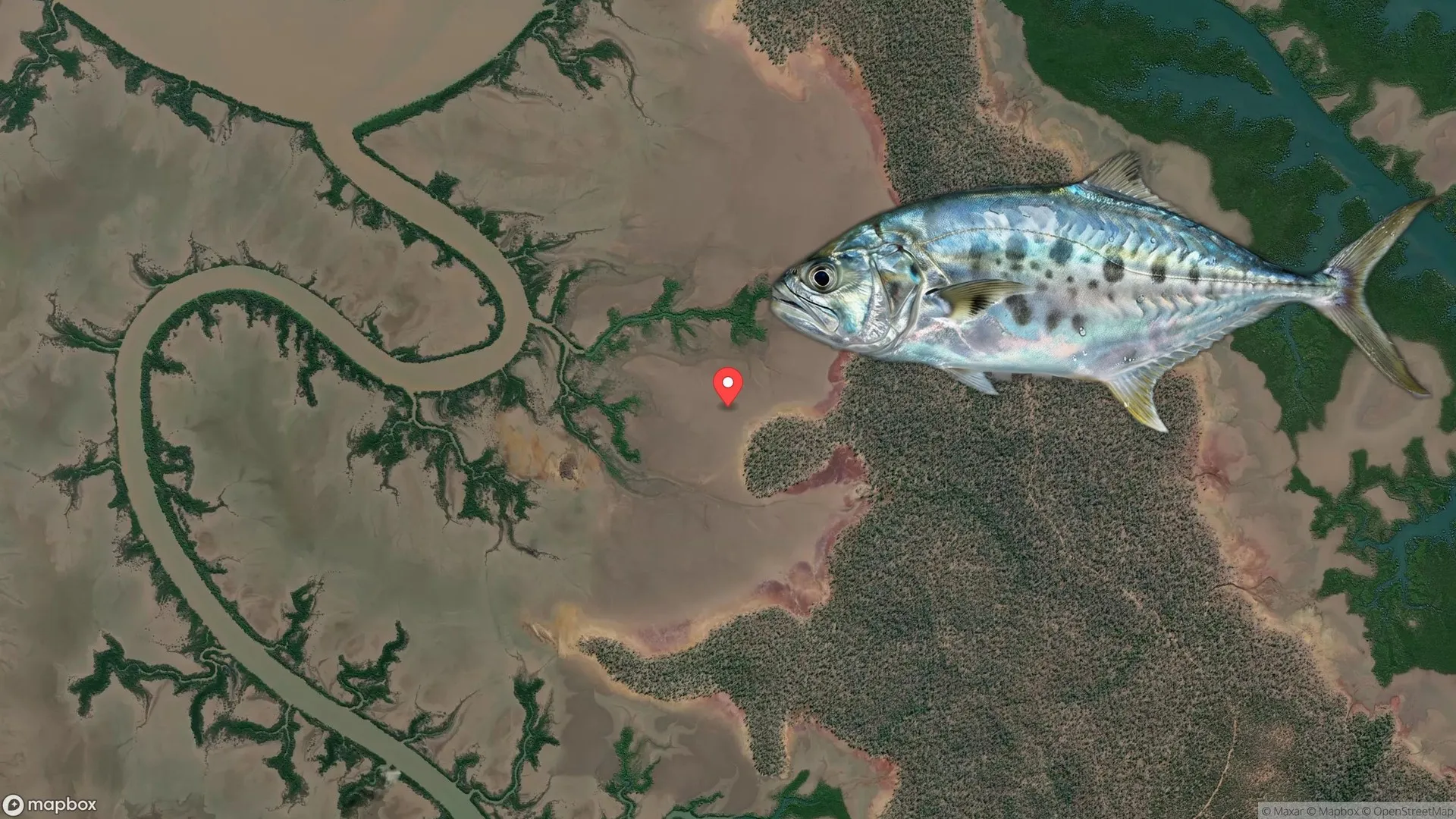
Target Species
Queenfish
Introduction
Raglan Creek is a premier destination for Queenfish in Central Queensland, offering anglers explosive surface action along mangrove edges and deep channel bends where tidal currents concentrate bait.
Nestled in the intricate waterways of the Fitzroy River delta near Port Alma, Raglan Creek represents the quintessential Central Queensland estuary experience. It isn’t just another muddy creek; it is a high-octane highway for predatory pelagics that push deep into the system on the making tide. Among these predators, the Queenfish (often called “Queenie” or “Skinny”) reigns supreme as the aerial acrobat of the estuary. For anglers who crave the visual thrill of a surface strike followed by a series of gill-rattling jumps, Raglan Creek offers a unique arena where you can target these silver slabs in relatively calm waters compared to the open bay.
What makes Raglan Creek particularly special for Queenfish is its diverse structure. Unlike open beaches where Queenfish roam aimlessly, the fish here are structure-oriented, patrolling defined beat lines along rock bars, creek mouths, and pressure points created by the massive tidal run of the region. This predictability allows savvy anglers to target them with precision rather than hope. Whether you are flicking surface poppers at first light or drifting live baits along the drop-offs, the creek provides a dynamic fishery that changes hour by hour with the tide.
In this guide, you will learn exactly how to dissect Raglan Creek’s tidal movements to predict where Queenfish will be feeding. We will move beyond generic advice and drill down into the specific techniques that work in these turbid waters, from selecting lures that create the right sonic vibration to rigging live baits that stay in the strike zone despite the ripping current. If you are ready to experience the adrenaline of a metre-long Queenfish cartwheeling behind your boat, Raglan Creek is the place to be.
Getting There
Queenfish
Scomberoides commersonnianus
Always check current NSW DPI regulations before fishing. Bag and size limits may change.
Understanding Raglan Creek: Location Intelligence
Raglan Creek’s mix of strong tidal flow, plenty of baitfish (prawns and mullet), and complex structure makes it ideal ambush country for Queenfish.
To successfully fish Raglan Creek, you first need to understand the raw power of the environment. This system is part of the greater Fitzroy Delta, meaning it faces big tidal swings—often over four or five metres. This huge movement of water drives the whole ecosystem. For Queenfish, the current is everything. They’re smart, energy-saving hunters that use the flow to knock baitfish off balance, so you’ll rarely find them in flat, still water. They want moving water, and Raglan Creek delivers it in spades.
The Anatomy of the Creek
Raglan Creek has steep, muddy banks lined with mangroves, broken up by rock bars and deep scour holes on the bends. The water is usually murky, typical of a macrotidal estuary, which shapes how Queenfish hunt. They rely on their lateral lines to feel vibrations before switching to sight for the final strike.
Key Structural Features:
- Current Seams: Where the main flow meets a back-eddy or a tributary outflow, you’ll see a “seam” or visible line in the water. Queenfish patrol these seams hard. They sit on the slower side of the current, waiting for prawns and mullet to get washed out of the drains and into the main channel.
- The Rock Bars: Several submerged rock bars act like speed bumps for the tide. As water surges over them, it creates pressure waves and upwellings. Baitfish get caught in the churn, and Queenfish hold just behind the structure or right in the wave, picking off stunned prey.
- Mangrove Drains: On the falling tide (especially the last two hours), water drains from the salt flats and mangrove forests. These drains blast concentrated bait into the main creek. A well-timed cast into the mouth of a drain as it empties often draws an instant bite.
Depth and Temperature Dynamics
While Queenfish are often seen feeding on top, in Raglan Creek they use the full water column. Channel depths range from 2 metres to over 10 metres in the deep bends. During the heat of the day, especially in summer, bigger Queenfish drop into cooler, deeper holes, often sitting under schools of bait. But during the “golden hours” of dawn and dusk, or under thick cloud cover, they move right into the shallows, sometimes hunting in less than a metre of water along the mudflats.
The best water temperature for Queenfish here is between 24°C and 28°C. When the water dips below 20°C in winter, their metabolism slows, and they turn picky—often needing slower lures or live bait to get a bite. On the flip side, in peak summer, oxygen levels in the shallow areas can drop, pushing fish toward deeper, better-oxygenated channels near the mouth.
Location Essentials
Why Queenfish Are Here
The main draw is the endless supply of bait. Raglan Creek is loaded with banana prawns and diamond scale mullet. During wet season run-off (usually late summer to early autumn), the creek flushes nutrients into the system, sparking a prawn explosion. This “jelly prawn” and banana prawn run sends Queenfish into a feeding frenzy. You’ll often hear them “boofing” on the surface—a sharp sound made when the fish inhale prey and air at once. Learning to spot that sound is key to finding active schools.
On top of that, the creek gives shelter from rough ocean conditions while keeping the high salinity Queenfish love. They’re not freshwater fish, so they stick to the middle and lower reaches where salt levels are near seawater, rarely heading as far upstream as Barramundi might during freshwater flows.
Reading the Birds
In Raglan Creek, birds are your best early warning. Terns and sea eagles don’t hover for nothing. If you see a tern dipping toward the surface, even without a splash, it’s tracking a predator pushing bait up. Move quietly toward the bird—there’s almost always a school of Queenfish or Trevally below.
When Is the Best Time to Fish for Queenfish at Raglan Creek?
The best time to target Queenfish at Raglan Creek is during the first two hours of the incoming tide at dawn or dusk, when clean ocean water moves into the system and predators work the current lines for bait.
Timing your trip to Raglan Creek isn’t about the clock—it’s about the tide chart. In the macro-tidal Fitzroy Delta, water movement rules everything. If the water’s not flowing, the fish usually aren’t feeding. But not all moving water is equal, especially for a visual hunter like the Queenfish.
The Tidal Influence
The “Clean Water Line” is the golden zone when fishing Raglan Creek. Because the system is naturally muddy, Queenfish often wait for the incoming tide to bring a surge of cleaner, saltier water from Keppel Bay. This edge between dirty creek water and clearer ocean water is a top hunting spot. Queenfish cruise this colour change, using the murky side to blindside bait caught in the cleaner flow.
The Making Tide (Incoming): This is usually the best tide for Queenfish here. As the tide floods in, it pushes baitfish up against mangrove roots and rock walls. The Queenfish follow close behind. The window from low tide turnover through the first three hours of the flood is often red-hot.
The Falling Tide (Outgoing): While the run-out is famous for Barramundi at the drains, it can be tough for Queenfish as mud washes in and water clarity drops fast. Still, the start of the outgoing tide can be solid around the creek mouth and deeper channel markers near Port Alma. As water begins to drain, bait gets forced from the mangroves, and Queenfish set up at the mouths of major drains to intercept the flow.
Dawn, Dusk, and Solar cues
Queenfish can be caught all day, but their surface action really kicks off in low light.
- Dawn: The “grey light” just before sunrise is prime for topwater lures. Wind is usually light, making it easier to spot surface ripples and nervous bait.
- Dusk: Much like dawn, the late afternoon bite can be fierce. As the sun hits the horizon, Queenfish lose caution and move into shallow water to feed.
- Mid-day: If you’re fishing under bright sun, the fish will likely be deep. Swap out surface lures for deep divers, vibes, or weighted live bait dropped into the deeper holes (6–10 metres) on the bends.
Seasonal Patterns
Raglan Creek fishes well all year, but the fish change their habits with the seasons.
- Autumn (March - May): This is probably the peak. Wet season runoff has settled, prawns are fat, and water temps are steady. Big schools of Queenfish move in to feed up.
- Winter (June - August): Water clears up, but fish slow down. You can still hook big “hoodlums” in winter, but they might not chase fast lures. Live bait rules in the cooler months.
- Spring (September - November): As water warms, so does their aggression. This lines up with the pre-wet season build-up—humidity rises and storm fronts roll through. The pressure drops from these storms can spark wild feeding runs.
Queenfish Seasonal Calendar
Tide Times
Optimal Tide
Incoming tide, specifically the first 2 hours of the push
Tide movement is critical for fish activity. Most species feed actively during tide changes, especially the run-in (incoming) tide.
Detailed hourly tide charts
Official tide predictions
7-day tide calendar
Tide Guide
Best for most species. Fish move in to feed as water rises.
Good for ambush predators. Baitfish get swept out.
Slower bite. Fish less active during slack water.
New/full moon. Bigger tidal range, more fish movement.
Moon Phase & Solunar
Moon phases influence fish feeding behavior. New and full moons create spring tides with stronger currents and increased fish activity.
Best Phases
- New Moon: Peak feeding activity, spring tides, excellent fishing
- Full Moon: Strong tides, night feeding, great for nocturnal species
- 3 Days Either Side: Extended peak period for maximum results
Major/Minor Periods
- Major Periods: Moon overhead/underfoot (2-3 hours)
- Minor Periods: Moon rise/set (1-2 hours)
- Best Times: Major period + dawn/dusk = explosive action
Weather Conditions
Check current conditions before heading out. Wind, swell, and barometric pressure significantly affect fish behavior.
Official forecasts, warnings & radar
Hourly wind speed & direction
Swell height, period & direction
The Neap Tide Advantage
While big tides move bait, the massive spring tides in the Fitzroy region (up to 5m variance) can turn Raglan Creek into a mud slurry. Neap tides (smaller variation between high and low) often mean clearer water and cleaner flow. If you’re throwing lures, aim for the days around the Quarter Moons (Neaps) for better visibility.
What Tackle Do You Need for Queenfish at Raglan Creek?
A 7-foot medium-heavy spin rod paired with a 3000-4000 size high-speed reel, spooled with 20-30lb braid and a 40lb fluorocarbon leader, is the ideal versatile setup for Queenfish at Raglan Creek.
Gearing up for Queenfish means balancing finesse with stopping power. These fish are famous for their wild jumps and fast first runs, but unlike Mangrove Jack or Grouper, they don’t usually bulldog you into structure. They tend to head for open water. Still, because you’re fishing a creek full of snags, rock bars and strong tides, you can’t afford to go too light.
The Rod: Length and Taper
A rod between 7-foot and 7-foot-6 works best. That extra length helps you cast far, which matters when schools are feeding 40 metres from the boat.
- Action: Go for a “Fast” or “Extra Fast” action. The tip stays sensitive for working poppers and stickbaits, while the lower section powers up quickly to turn big fish.
- Rating: A 4-8kg or 5-9kg line rating hits the sweet spot. It’s still fun on the little “rats”, but strong enough to steer a metre-long fish in current.
The Reel: Speed is Critical
This is where most anglers get it wrong. You need a reel with a high gear ratio (6.0:1 or higher).
- Why speed matters: Queenfish often charge straight at the boat after hooking up. If you can’t wind fast enough to keep line tight, the hook can shake loose mid-air. A slow reel will cost you fish.
- Drag: A smooth drag is essential. Queenfish dart and change direction hard. A sticky drag means broken leaders or pulled hooks.
Line and Leader
- Main Line: 20lb to 30lb high-quality PE braid. Braid helps you set the hook at range and cuts through Raglan Creek’s strong tidal flow.
- Leader: This is where many fall short. Queenfish have rough, sandpaper-like skin and tiny rasping teeth. During the fight, the leader rubs against their body. Light leaders fray fast. Use 30lb to 50lb Fluorocarbon. Fluoro beats mono here—it’s tougher against scrapes and sinks quicker, keeping your lure or bait in the strike zone.
Complete Tackle Specifications
| Component | Specification |
|---|---|
| Rod | 7'0" - 7'6" Graphite Spin, 5-9kg rating |
| Reel | 3000-4000 size, High Gear Ratio (6.2:1+) |
| Main Line | 20-30lb PE Braid (8-strand preferred) |
| Leader | 30-50lb Fluorocarbon (min 1.5m length) |
| Hooks (Live Bait) | 5/0 - 7/0 Inline Circle Hooks |
| Hooks (Lure Retrofit) | Replace trebles with 3/0 Inline Singles |
| Sinker | Running Ball Sinker (Size 2-4 depending on current) |
| Swivels | Size 4-6 Black Crane Swivels (high strength) |
| Rig Type | Running Sinker Rig (Live Bait) or Loop Knot (Lures) |
How Do You Rig for Queenfish?
The most effective rig for live baiting Queenfish is a simple running sinker rig using a 5/0 circle hook and a 1.5-metre fluorocarbon leader, while lure anglers should use a loop knot to maximise the lure’s action.
Rigging for Queenfish in Raglan Creek comes down to simplicity. Clunky rigs with extra bits (beads, clips, swivels) can spook these sharp-eyed fish or tangle in the current. Your aim is a natural bait drift or a free-swimming lure.
The Live Bait Rig
When fishing deep bends or drifting live mullet along mangrove edges, the “Running Sinker Rig” is your go-to. It lets the bait move freely while staying deep in the strike zone.
Building the Perfect Live Bait Rig
- 1
Select Your Leader
Cut a 1.5 to 2-metre length of 40lb fluorocarbon leader. The extra length protects against the Queenfish's rough skin and tail scutes during the fight.
- 2
Thread the Sinker
Slide a small ball sinker (size 2 or 3) directly onto your main braid line. Keep it light—you want the bait to drift naturally, not anchor to the bottom.
- 3
Attach the Swivel
Tie a high-quality size 6 black crane swivel to the end of your main line using a Uni Knot or FG Knot. This stops the sinker from sliding down to the hook.
- 4
Connect the Leader
Tie your fluorocarbon leader to the other end of the swivel. Ensure your knot is perfect; a sloppy knot will fail under the shock of a Queenfish strike.
- 5
Tie the Hook
Attach a 5/0 to 7/0 inline circle hook to the end of the leader. Use a Lefty's Loop knot here if you want the bait to have maximum freedom of movement.
- 6
Hook the Bait
For live mullet, pin them lightly through the top lip or the cartilage of the nose. For prawns, hook them through the tail segment so they flick naturally in the current.
- 7
Check Drag Settings
Before casting, check your drag. It should be firm but yield under a sharp pull. Too tight, and you'll pull the hook; too loose, and you won't get a hookset.
The Lure Connection
If you’re casting lures, skip the snap swivel if possible. A snap adds weight to the lure’s nose, killing its action. Instead, tie on with a Lefty’s Loop Knot or a Rapala Knot. These loops let the lure move freely, giving poppers a better “bloop” and stickbaits a wider “walk-the-dog” wiggle.
What Bait Works Best for Queenfish?
Live Banana Prawns and Diamond Scale Mullet are the top choices for Queenfish in Raglan Creek, though surface poppers and metal slugs work great as artificial options when the fish are on the feed.
In the murky waters of Raglan Creek, scent and vibration matter just as much as how the bait looks. While Queenfish will eat a range of things, they often key in on one bait type, especially during the prawn run.
Live Bait vs. Dead Bait
Let’s be honest: Live bait is far better than dead bait for Queenfish. A dead prawn on the bottom will grab you Catfish and Stingrays. A live prawn darting in mid-water fires up a Queenfish’s hunting instinct. If you’re stuck with dead bait, make sure it’s fresh (not frozen) and keep it moving—lift and drop the rod tip to mimic life.
Bait Performance Analysis
| Live Prawns | Live Mullet | Surface Poppers | Metal Slugs | |
|---|---|---|---|---|
| Effectiveness Rating | 10/10 (Elite) | 9/10 (Excellent) | 8/10 (Visual) | 7/10 (Reaction) |
| Durability on Hook | Low (One hit only) | High (Very tough) | High (Reusable) | Indestructible |
| Attraction Method | Movement & Scent | Vibration & Flash | Noise & Splash | Speed & Flash |
| Availability | Seasonal (Cast net) | High (Cast net) | Tackle Store | Tackle Store |
| Best Use Conditions | Calm water & Drains | Strong current & Deep holes | Low light & Surface busts | Long distance casting |
The 'Pop' Technique
If you’re using live prawns and the bite slows down, try the “Pop” technique. Rig the prawn under a small, weighted float. Every 10 seconds, give the rod a sharp jerk to make the float “pop” on the surface. This noise sounds like a predator strike, often bringing Queenfish in to check it out—and they’ll spot your prawn hanging below.
How Do You Catch Queenfish at Raglan Creek?
To catch Queenfish, cast surface lures or live baits near current lines and structure, using a fast, jerky retrieve to spark reaction strikes from these aggressive hunters.
Catching Queenfish is all about action. Unlike sitting back with a bait for Bream, you’re chasing the predator. Success in Raglan Creek comes down to three stages: The Presentation, The Strike, and The Fight.
1. Presentation and Casting Strategy
Queenfish are drawn to movement and noise.
- Lure Fishing: Hitting the exact spot matters less than keeping the lure active. Cast past your target—the bust-up or the snag—and work the lure back through it.
- Topwater: Try a “walk-the-dog” retrieve with stickbaits or a “bloop-pause-bloop” with poppers. The pause is key—Queenfish often hit the lure the second it stops.
- Metals/Plastics: If they’re not chasing surface lures, let a metal slug or soft plastic vibe sink for 3–5 seconds, then rip it back with a high-speed burn. Queenfish love a fast chase. If you think you’re winding too fast, wind faster.
- Live Baiting: Drift your boat with the tide along the mangrove edges. Cast your live bait at a 45-degree angle uptide and let it drift back naturally. Keep your bail arm open and your finger on the line to feel the “tick-tick” of a nervous prawn before the strike.
2. The Bite and Hookset
Queenfish strikes are explosive but can be messy.
- The “Slap”: Often, a Queenfish will slap a surface lure with its tail or body to stun it first. If you see a splash but no weight, don’t stop winding. Speed up! The fish thinks the lure is hurt and fleeing.
- The Circle Hook Method: If you’re using live bait with circle hooks, don’t strike. When the fish runs, just lift the rod tip firmly and start winding. The circle hook will find the corner of the jaw. A hard strike will yank the hook right out.
3. Fighting and Landing
Once hooked, the fun starts.
- The Aerial Show: Queenfish will leap again and again. When the fish jumps, “bow to the king”—lower your rod tip to give slack. If the line’s tight when the fish lands or shakes its head mid-air, your leader might snap or the hook could pull free.
- The Death Circles: As the fish tires and gets close, it’ll turn sideways and use its deep body to fight the current, swimming in tight circles. Stay calm. Keep steady pressure, but don’t rush it.
- Landing: Never lift a Queenfish by the line. Use a landing net. If you plan to let it go (which is best—table quality is just average), keep it in the water if you can. Their scales are fine and they lose slime fast. Support the belly if you lift it for a photo; never hang it by the jaw.
What Are the Rules for Fishing at Raglan Creek?
Raglan Creek falls under Queensland tidal regulations, requiring anglers to follow specific size and bag limits for Queenfish, while also staying alert for crocodiles in the area.
Fishing in Central Queensland means respecting both government rules and nature’s realities. Ignoring either can land you a fine or put you in real danger.
Queensland Fisheries Regulations
Raglan Creek is tidal water. As of the latest update, the general regulations for Queenfish in Queensland are:
- Size Limit: Minimum legal length is usually 50cm.
- Bag Limit: A possession limit of 5 per person.
- Note: These rules change. Always check before you fish.
- Closed Seasons: There is no specific closed season for Queenfish, but keep in mind the Barramundi closed season (usually Nov 1 - Feb 1) if you’re fishing here, as you can’t target Barramundi during this time.
For the most up-to-date rules, always check the Queensland Department of Agriculture and Fisheries website.
Conservation Practices
Queenfish are awesome sportfish but are often seen as poor to fair table fare because of their dry, firm flesh.
- Catch and Release: We strongly recommend catch and release for this species to help protect the fishery.
- Barbless Hooks: Try crushing the barbs on your trebles. It makes unhooking these thrashing fish safer for both you and the fish.
- Handling: Queenfish are delicate out of water. Keep handling time short so they swim off strong.
Critical Safety Considerations: Crocodiles
Raglan Creek is prime Crocodile Habitat.
The Fitzroy Delta has a high density of Estuarine Crocodiles.
- No Shore Fishing: It’s highly recommended to fish ONLY from a boat. Walking the banks or wading is extremely dangerous.
- Boat Safety: Be careful when retrieving lures or netting fish near the surface. Don’t lean over the side.
- Camping: If camping nearby, stay well back from the water’s edge (at least 50m) and never clean fish at the water’s edge.
Your Questions About Queenfish Fishing at Raglan Creek
What is the absolute best time to fish Raglan Creek?
The absolute best time is during the Spring (September to November) on a making tide at dawn. This window brings warming water temperatures that fire up fish activity, along with the clearest water of the year. The pre-wet season build-up often sparks aggressive surface feeding, making it the top time for lure anglers.
Is Raglan Creek suitable for beginners?
Yes, Raglan Creek is suitable for beginners provided they have access to a boat, as the techniques (trolling or drifting live bait) are straightforward to pick up. However, boat handling skills matter due to strong tidal currents. Beginners should avoid the main channel during peak flow and stick to edgewater areas where the current is easier to manage.
Do I need a boat to fish at Raglan Creek?
Yes, a boat is essentially mandatory for safe and effective fishing at Raglan Creek due to the high crocodile risk and limited shore access. While there is a boat ramp, the banks are muddy, steep, and lined with mangroves, making land-based fishing nearly impossible and highly unsafe. A tinny (3.5m+) is enough for the creek, but a larger boat is needed
Quick Info
- Location
- Raglan Creek
- Coordinates
- -23.6300, 150.8700
- Difficulty
- intermediate
- Target Species
- Queenfish
Conditions
Check local weather and tide conditions before heading out.