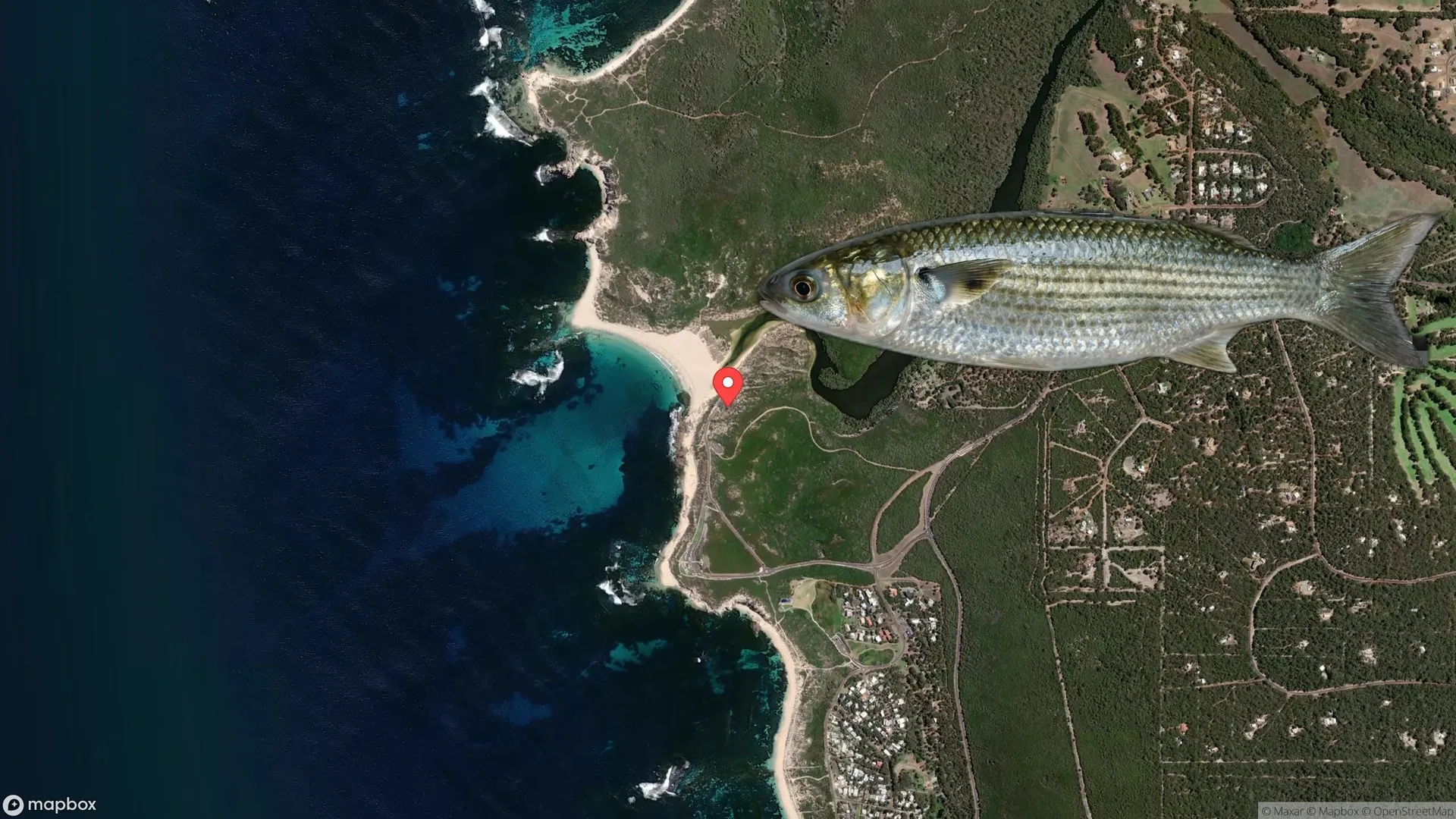
Target Species
Mullet
Margaret River is one of the top spots for Mullet fishing in WA, offering easy estuary banks and big schools of Sea Mullet that love the nutrient-rich waters near the river mouth. The mix of shallow sand flats and deep river pools makes it ideal for targeting these fussy feeders on light tackle.
While the Margaret River region is famous for its premium wines and world-class surf breaks, local anglers know it holds another kind of treasure in its estuary system. The humble Mullet, often seen as just bait elsewhere, grows to impressive sizes here and gives a real sport fishing challenge. Catching them isn’t just about tossing a line in; it takes finesse, patience, and knowing the river’s unique flow.
The river itself is a beautiful spot to spend a session. Lined by coastal heath and tall Karri forests further upstream, the water shifts from clear ocean flows at the mouth to tannin-stained pools inland. For serious anglers, this place offers a real test. Mullet here have seen plenty of bait and can be super spooky in the clear shallows. Success comes from using the right burley trail, fine-tuning your rig to be nearly invisible, and picking the best time of day.
Whether you’re a holidaymaker wanting to fish with the kids or a keen estuary angler after fresh fillets, the Margaret River mouth and lower stretches deliver solid action. In this guide, we’ll show you how to find the schools, what rigs work best in the local current, and how to fool these cautious fish into biting.
Getting There
Mullet
Mugil cephalus
Always check current NSW DPI regulations before fishing. Bag and size limits may change.
Understanding Margaret River: Location Intelligence
The Margaret River estuary offers a great mix of sandy bottoms, weed beds, and detritus-rich mud that Mullet feed on, and the seasonal opening of the sandbar lets fresh stocks of Sea Mullet move in from the ocean.
To catch Mullet here, you need to know the river layout and how the fish move through it. The Margaret River is an intermittently open and closed lake or lagoon (ICLL) system. That means for much of the year, especially late summer and autumn, a sandbar often builds across the mouth, cutting off the river from the Indian Ocean. When the bar is closed, water levels rise and the system turns into a calm lake. When the bar breaks—usually with the first heavy winter rains—the system flushes out and tidal flow returns.
Mullet adapt well to both conditions, but their behaviour shifts with water levels and salinity.
The River Mouth Zone (Prevelly)
The area just behind the beach berm is the go-to spot for Sea Mullet (Mugil cephalus). Here, the water is usually clearest, and you can often sight-cast to moving schools. The bottom is mostly sand with patches of seagrass. When the bar is open, the incoming tide brings clean ocean water into this zone, along with schools of Yellow-eye Mullet and bigger Sea Mullet.
The standout feature here is the drop-off. The river cuts channels through the sand flats. Mullet cruise the edges of these channels, waiting for food to be stirred up by current or wind. Fishing the “lip” where the shallow sand meets the deeper channel is often the most effective tactic.
The Middle Reaches
As you head upstream from the mouth toward the rowing club and beyond, the bottom shifts from marine sand to a mix of sand and silt. This is prime feeding ground. Mullet are detritivores—they sift through the mud for organic matter. You’ll often see “mud clouds” where a school is feeding hard on the bottom.
In this stretch, banks are lined with reeds and tea trees. Overhanging cover gives shade, and on bright days, fish will stay close to these darker pockets. A kayak or small tinny helps you reach spots that are tough to get to from shore due to thick vegetation, though there are a few cleared areas along the trails that work well for bank fishing.
Rotary Park and Upper Reaches
Closer to town, at Rotary Park, the river is narrower and feels more like a true river. The water here is often darker from tannins leaching out of the surrounding bush. Mullet do come this far up, but they’re usually resident fish—darker in colour and extra cautious. This spot is perfect for a quick session if you’re staying in town, though the fish may be a bit smaller than the ocean-run ones near the mouth.
Location Essentials
When Is the Best Time to Fish for Mullet at Margaret River?
The best time to fish for Mullet at Margaret River is during the early morning (dawn) or late afternoon (dusk), especially in the autumn months when big schools of Sea Mullet gather near the river mouth for their spawning run.
Timing your session at Margaret River is less about checking the clock and more about reading the light. Mullet are famously visual feeders with sharp eyesight. In the clear waters of the Margaret River estuary—particularly around the mouth—they can spot a heavy leader or sloppy cast from metres away. That’s why low-light periods are your best chance.
The Magic of Dawn and Dusk
The “golden hours” of dawn and dusk matter for two key reasons. First, the low sun angle hides your gear. A leader that stands out at midday blends in as the light fades. Second, Mullet feel safer in dimmer light. Schools that stay in deep, dark channels by day often move onto shallow sand flats to feed once the sun drops.
If you’re fishing the river mouth, an early start just before first light usually pays off. You can set up your burley trail before the small “pickers” (nuisance fish like blowies or tiny trumpeter) become active. The peace of a Margaret River morning, with mist rising off the water and the distant roll of the surf, is something special on its own.
Tidal Influence and the Sandbar
The tide makes a big difference, but how it affects fishing depends entirely on whether the river mouth is open or closed.
When the Bar is Open: When the river flows into the ocean, typically from late winter through summer, tides control the action. An incoming tide (flood tide) is usually best. It brings clean, oxygen-rich seawater into the system, waking up the fish and carrying in tiny food particles. Rising water also lets Mullet reach shallow banks and weed beds that were exposed at low tide. Aim to fish the two hours before high tide and the first hour of the run-out.
When the Bar is Closed: In late summer and early autumn, the bar often shuts. The river turns into a still lagoon, and tides no longer matter. Here, wind direction takes over. A light sea breeze (westerly or south-westerly) creates a ripple on the surface. That chop breaks up light, making it harder for fish to see your line. A “glass-out” (perfectly calm water) looks nice, but makes Mullet skittish and tough to hook. If it’s flat, stick to dawn or dusk; if there’s a ripple, you can often catch them all day.
Seasonal Movements
Mullet are around year-round, but their habits change with the seasons. The famous “Mullet Run” happens in Autumn (March to May). This is when big Sea Mullet form huge schools, getting ready to head out to sea to spawn. These fish are often heavy, oily, and in top condition. They hang around the river mouth waiting for the right moment to leave, giving you a great shot at a solid bag.
Spring is another hot period, especially for Yellow-eye Mullet, which are smaller but keen feeders. Winter can be patchy; heavy rain can flush the river with fresh water, pushing the saltwater-loving Mullet down to the mouth or right out to sea.
Mullet Seasonal Calendar
Tide Times
Optimal Tide
Incoming tide (high tide -2 to +1 hours)
Tide movement is critical for fish activity. Most species feed actively during tide changes, especially the run-in (incoming) tide.
Detailed hourly tide charts
Official tide predictions
7-day tide calendar
Tide Guide
Best for most species. Fish move in to feed as water rises.
Good for ambush predators. Baitfish get swept out.
Slower bite. Fish less active during slack water.
New/full moon. Bigger tidal range, more fish movement.
Moon Phase & Solunar
Moon phases influence fish feeding behavior. New and full moons create spring tides with stronger currents and increased fish activity.
Best Phases
- New Moon: Peak feeding activity, spring tides, excellent fishing
- Full Moon: Strong tides, night feeding, great for nocturnal species
- 3 Days Either Side: Extended peak period for maximum results
Major/Minor Periods
- Major Periods: Moon overhead/underfoot (2-3 hours)
- Minor Periods: Moon rise/set (1-2 hours)
- Best Times: Major period + dawn/dusk = explosive action
Weather Conditions
Check current conditions before heading out. Wind, swell, and barometric pressure significantly affect fish behavior.
Official forecasts, warnings & radar
Hourly wind speed & direction
Swell height, period & direction
The Wind Advantage
Don’t curse the wind at Margaret River! A 10-15 knot breeze creating a chop on the water is ideal for Mullet. It breaks up your silhouette and hides your line. If the water is glass-calm, you’ll need to use lighter fluorocarbon (4lb) and cast much further to get a bite.
What Tackle Do You Need for Mullet at Margaret River?
The ideal tackle for Mullet at Margaret River is a light 2-4kg spin outfit, made up of a 7-9ft rod with a soft tip and a 2500 size reel spooled with 6-8lb braid or straight monofilament.
Gear choice is where plenty of anglers go wrong. They grab the same heavy “all-rounder” combo they use for Salmon or Snapper, then wonder why they’re not getting bites. Mullet have small mouths and feed by suction. They don’t grab bait—they suck it in gently. If they feel resistance from a stiff rod tip or thick line, they’ll drop it straight away.
The Rod: Length and Action
A longer rod gives you a real edge in the Margaret River estuary. A 9ft to 10ft rod rated for 2-5kg line is spot on. The extra length helps in two ways:
- Casting Distance: It lets you throw light, unweighted baits or small floats a long way, keeping you clear of wary schools.
- Line Control: It helps lift the line off the water and manage it over weed patches or current lines.
The action should be slow to medium. You need a “soft” tip that cushions the take. Mullet have tender mouths; a fast, stiff rod can easily pull the hook free during the fight.
The Reel and Main Line
A 2500 to 3000 size spinning reel works best. It doesn’t need to be top shelf, but the drag must run smoothly. Mullet are strong fighters and will make fast dashes when hooked in shallow water. A sticky drag means lost fish or snapped leaders.
For main line, there are two common approaches:
- Braid (PE): 6lb to 8lb braid gives you feel and casting range. But it has no stretch, so you’ve got to be light-handed. Always use a long leader.
- Monofilament: Straight 6lb quality mono is a solid pick for Mullet. It floats (mostly), has natural give to handle head shakes, and is less obvious than braid. For newcomers, straight mono is often the smarter bet at Margaret River.
The Critical Component: Leader
If you’re using braid, your leader is the key to success. Stick with Fluorocarbon. It sinks (so it stays near the bait) and is nearly invisible underwater thanks to its similar refractive index to water.
- Strength: 4lb to 6lb is ideal. In murky water, you can bump up to 8lb.
- Length: Use a long leader—minimum one rod length (2-3 metres)—to keep the visible braid well away from the bait.
For more tackle basics, see our tackle essentials guide.
Complete Tackle Specifications
| Component | Specification |
|---|---|
| Rod | 9-10ft light estuary spin, 2-5kg rating, slow/medium taper |
| Reel | 2500-3000 size spin reel with smooth drag system |
| Main Line | 6-8lb high-quality braid or 6lb monofilament |
| Leader | 4-6lb 100% Fluorocarbon (essential for clear water) |
| Hooks | Size 8-12 long shank or panfish hooks (Mustad 4540.5 or similar) |
| Floats | Pencil floats or small quill floats (sensitive is better) |
| Split Shot | Assorted sizes (B, BB) to balance the float |
| Swivels | Size 12-14 micro rolling swivels (black) |
How Do You Rig for Mullet?
The most effective rig for Mullet in the Margaret River estuary is a sensitive float rig, which keeps the bait just clear of the weed and gives you a clear view of their light, cautious bites.
While you can catch Mullet on a running sinker rig (bottom fishing), the float rig works better in the Margaret River for a few solid reasons. The river bottom is often weedy or silty, and a bait sitting on the bottom can vanish into the gunk. A float rig holds the bait at eye level where the fish are feeding and shows those tell-tale “lift” bites that Mullet are famous for.
The “Estuary Pencil Float” Rig
This rig is built for sensitivity. You want the float to sit barely above the surface, so even the lightest tap pulls it under.
Building the Perfect Mullet Float Rig
- 1
Attach the Float
Slide a pencil float or quill float onto your main line. Secure it with float stops or silicone tubing. Ensure it can slide up and down so you can adjust the depth.
- 2
Add the Micro Swivel
Tie a Size 12 or 14 micro swivel to the end of your main line using a Uni Knot or Improved Clinch Knot. This prevents line twist and acts as a stopper for the float.
- 3
Attach the Leader
Tie a 40-60cm length of 4lb-6lb fluorocarbon leader to the other end of the swivel. Keep this relatively short to prevent tangling during the cast.
- 4
Tie the Hook
Tie a Size 10 or 12 long-shank hook to the end of the leader. A chemically sharpened hook is vital for penetrating the Mullet's hard, bony mouth corners.
- 5
Weight the Float
This is the critical step. Add small split shot sinkers to the leader (or main line above the swivel) until the float is 'cocked'. The float should be submerged so only the top 1-2cm is visible (the red or orange tip). This minimizes resistance when the fish takes the bait.
- 6
Test the Rig
Drop the rig in the shallow water to check the buoyancy. If it sinks, remove a split shot. If it floats too high, add more weight.
- 7
Final Adjustments
Adjust the depth of the float by sliding the stop up or down. Start with the bait about 30cm off the bottom.
What Bait Works Best for Mullet?
The single most effective bait for Mullet at Margaret River is fresh white bread, kneaded into a dough or “pudding” that stays put on the hook, though maggots and small river prawns can also get results.
Mullet are mainly grazers and detritus feeders, which makes bait choice different from chasing predators like Tailor or Salmon. You’re not trying to imitate a fleeing baitfish; you’re offering a soft, easy snack that looks like a free meal.
The Bread and Butter (Literally)
Bread is the go-to bait for Mullet, no question. But just hooking a bit of crust won’t cut it for the bigger, wiser Sea Mullet. You need to make a bread dough or “pudding.”
- Take a slice of fresh, plain white bread.
- Trim off the crusts.
- Dampen it slightly with water (river water works best).
- Knead it in your hand until it turns into a sticky, putty-like ball.
- Pinch off a pea-sized piece and mould it around the hook, covering the barb completely.
Natural Baits
If the fish are shy or small pests are stealing your bread, natural baits can make all the difference.
- Maggots (Wogs): Tough on the hook and full of protein. Thread 2-3 onto a small hook.
- River Prawns: If you can scoop up some tiny shrimp from the weed beds near the river mouth, they’re deadly. Use them live and unweighted.
- Algae/Weed: Some seasoned locals use the green, stringy algae from rocks, wrapping it around the hook (“green weed” fishing), just like Luderick anglers do.
Bait Performance Analysis
| Bread Dough | Maggots | River Prawn | |
|---|---|---|---|
| Effectiveness Rating | 5/5 (Excellent) | 4/5 (Very Good) | 3/5 (Good) |
| Durability on Hook | Low - falls off easily | High - stays on well | Medium |
| Scent Dispersion | High - creates a trail | Low | Medium |
| Availability | High - Supermarket | Medium - Tackle shops | Low - Catch your own |
| Best Use Conditions | Calm water, burley trail | Fast current, pickers present | Targeting larger trophy fish |
The Secret Sauce: Bread Burley
You won’t catch Mullet consistently without burley. Mix 2 cups of breadcrumbs with water and a splash of tuna oil until it’s a sloppy mess. Chuck a small handful in every 5–10 minutes. This gets the school worked up into a feed, making them less wary and more likely to grab your bait by mistake.
How Do You Catch Mullet at Margaret River?
To catch Mullet at Margaret River, start a bread-based burley trail to draw the school in, then cast a lightly weighted float rig past the fish and slowly retrieve it into the feeding zone.
Catching Mullet is an art that sits somewhere between fly fishing and coarse fishing. It takes observation, stealth, and good timing. Once you’ve picked your spot (usually near the river mouth or a drop-off on the flats) and got your gear rigged, here’s how to make it happen.
1. Establishing the Zone
Before you cast a line, begin your burley trail. Toss small handfuls of your bread mix into the current. You want a steady, fine trail of crumbs, not big chunks that fill them up too fast. Watch the water closely. Within 15–20 minutes, you should see flashes of silver or ripples as the Mullet move in. If nothing shows after 30 minutes, shift locations.
2. The Stealth Cast
Mullet spook easy from a splash. Do not cast right into the school. Instead, pitch your float rig 5 to 10 metres past the feeding fish or to the side. Gently reel the float back into the strike zone. This avoids the “plop” that sends them scattering.
If you’re sight casting on the flats (and polarized sunglasses are a must), look for “nervous water”—patches of ripples moving against the wind or current. Cast just ahead of the leading fish and let the bait drift naturally into their path.
3. The Bite and Strike
This is where most newcomers miss out. Mullet don’t hit hard. They suck the bait in and spit it out a few times to test it.
- The Sign: Watch your float like a hawk. It might not dive—it could just tilt, wobble, or lift slightly (a “lift bite”).
- The Strike: Be quick but light. At the first odd movement or dip, lift the rod tip with a short, sharp flick of the wrist. Don’t heave like you’re hooking a shark; you’ll pull the tiny hook right out of their soft mouth. A crisp, short lift is all it takes.
4. The Fight
Once hooked, a 40cm+ Sea Mullet will surprise you with its speed. They’re strong and often jump.
- Keep the rod tip up to cushion the head shakes.
- Ease your drag a touch. If they bolt near the bank, a tight drag will snap your light leader.
- Use a landing net. Never try to lift a decent Mullet by the line—the hook will tear free. Slide the net under them head-first.
For more on handling fish properly, check our fishing techniques guide.
What Are the Rules for Fishing at Margaret River?
Fishing at Margaret River follows Western Australian Department of Primary Industries and Regional Development (DPIRD) rules, with a typical bag limit of 30 Mullet per angler (mixed species), but always confirm current rules before you go.
The Margaret River is a special place, and keeping it healthy matters for future sessions. While Mullet are common, there are clear rules to make sure we don’t take too many.
Key Regulations (WA)
- Bag Limits: As of the latest update, the daily bag limit for Mullet (Sea and Yellow-eye together) falls under the “Nearshore/Estuarine” group. The usual limit is 30 fish per person, but this can change.
- Size Limits: There’s currently no minimum size for Sea Mullet or Yellow-eye Mullet in WA, but smart anglers let fish under 25cm go so they can grow and breed.
- Recreational Fishing from Boat Licence (RFBL): If you’re fishing from a powered boat, you must have a valid RFBL. Shore fishing doesn’t need a licence unless you’re using a throw net (which has its own gear rules).
- Netting: Throw nets are allowed but must meet set mesh size and drop length rules. Haul netting is mostly banned in South West rivers—check the Margaret River zones to be sure.
For the latest rules, always check the state fisheries regulations.
Conservation and Ethics
- Take Only What You Need: Just because you can take 30 doesn’t mean you should. Mullet go soft fast—only keep what you’ll eat fresh or smoke within a day or two.
- Respect the River: The banks are fragile. Stick to formed paths to stop erosion.
- Rubbish: The river mouth gets busy with tourists. Pack out all used line, bait bags, and stray hooks.
Critical Safety Considerations
- Unstable River Mouth: When the sandbar opens, the outgoing current can be extremely strong. Do not try to wade across the mouth on an outgoing tide. The sand shifts fast and can act like quicksand.
- Slippery Rocks: The limestone ledges near the river mouth and Surfers Point are slick when wet. Wear rock shoes or boots with solid grip.
- Snakes: In summer and autumn, Dugites and Tiger Snakes turn up in the dunes and bush tracks leading to fishing spots. Stomping your feet usually warns them off, but keep an eye out.
Your Questions About Mullet Fishing at Margaret River
What is the absolute best time to fish at Margaret River?
The absolute best time to fish is during the autumn months (March to May) at dawn or dusk, when the large "ocean-run" Sea Mullet enter the estuary to spawn. While you can catch fish year-round, the autumn run offers the highest density of large fish. If you are looking for peak fishing hours, plan your trip around the sunrise. The wind is usually lighter, the water is calmer, and the fish are less skittish than in the middle of the day.
Is Margaret River suitable for beginners?
Yes, Margaret River is beginner-friendly, offering safe and accessible shore-based spots at the river mouth and Rotary Park that are perfect for learning estuary skills. However, catching Mullet specifically can be technically challenging for a complete novice due to their subtle bite. It is a great place to learn, but beginners might find it easier to target Whiting or Bream in the same waters first, as they are more aggressive biters.
Do I need a boat to fish at Margaret River?
No, you do not need a boat; the Margaret River is an excellent land-based fishery with extensive access along the river mouth, Prevelly banks, and town jetties. In fact, shore fishing is often more productive for Mullet as you can stalk the banks quietly. Kayaks are popular for reaching the middle reaches, but for the main Mullet schools near the mouth, a pair of waders or just standing on the sand is all you need.
Where are the best specific spots at Margaret River?
The best spots are the River Mouth at Prevelly for Sea Mullet, and the deeper pools near the Rowing Club for Yellow-eye Mullet. The sandbar area near the mouth is excellent during incoming tides.
Quick Info
- Location
- Margaret River
- Coordinates
- -33.9718, 114.9877
- Difficulty
- intermediate
- Target Species
- Mullet
Conditions
Check local weather and tide conditions before heading out.