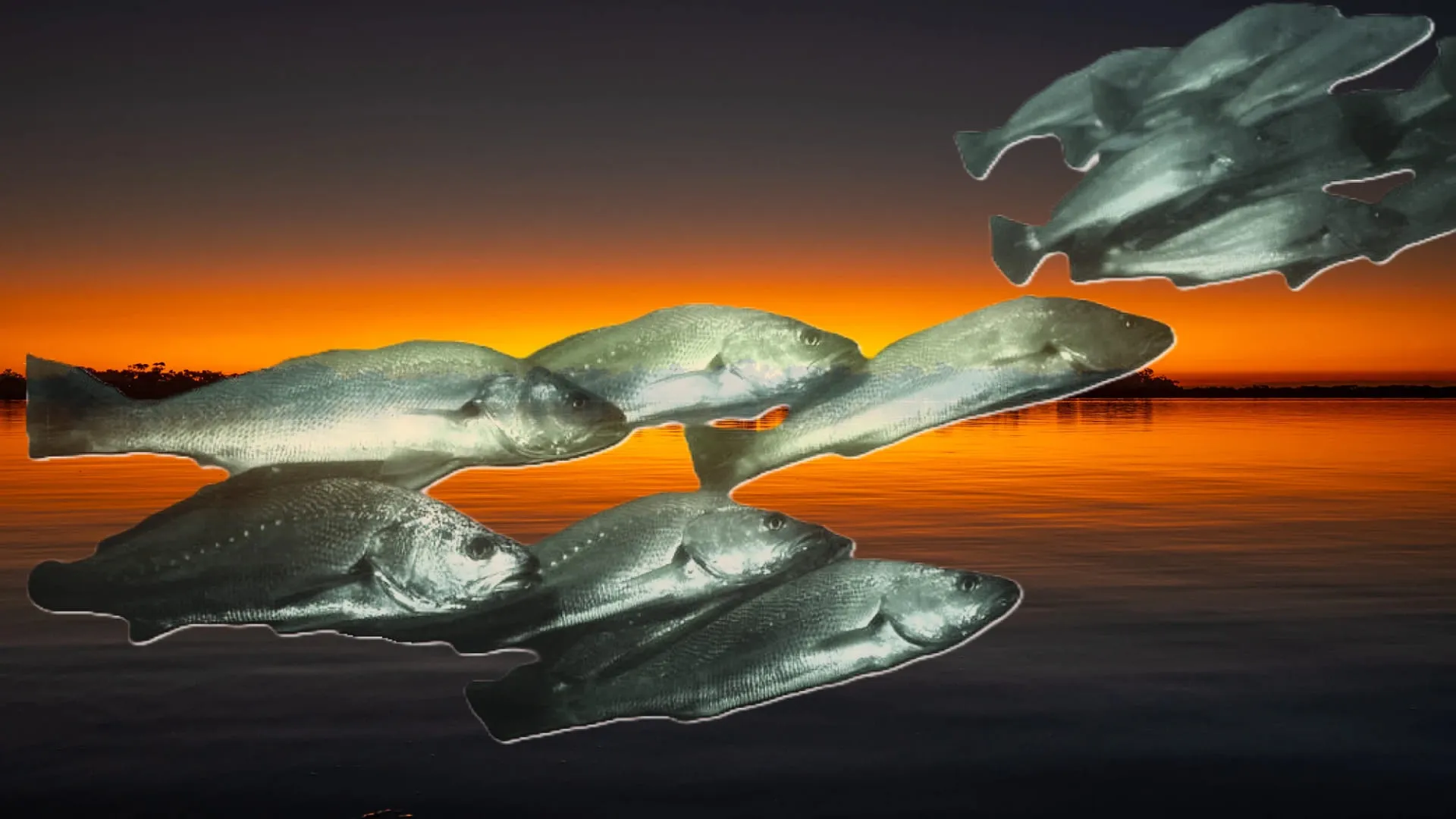
Target Species
Mulloway
Mulloway fishing at Mallacoota Inlet is one of the premier angling experiences in Victoria, offering a pristine estuarine environment where massive silver ghosts patrol deep channels and rocky drop-offs. Anglers targeting this iconic species benefit from minimal commercial pressure and a rich bait profile that supports a healthy, resident population of trophy-sized fish.
Tucked away in the far eastern corner of Victoria, Mallacoota Inlet is a legendary wilderness fishery. Surrounded by the Croajingolong National Park, this sprawling estuary system consists of the Bottom Lake, the Top Lake, and the narrow, winding channel that connects them, simply known as The Narrows. While the system is famous for its trophy dusky flathead and yellowfin bream, it is the enigmatic Mulloway that represents the pinnacle of local angling achievements.
These powerful, chrome-plated predators enter the estuary to feed on the abundant schools of sea mullet, tailor, and estuary perch. For the dedicated angler, Mallacoota offers a rare chance to hook into a genuine metre-plus fish in relatively sheltered waters. Whether you are casting large soft plastics along deep rock walls, drifting live baits through high-flow channels, or presenting fresh squid from a land-based platform, this guide will help you decode the habits of Mallacoota’s most prized sportfish.
To make the most of your trip, it helps to understand the local layout. Land-based anglers have excellent access to key structures, while boat and kayak fishers can explore the vast reaches of the upper and lower lakes. Before you pack your heavy spin gear, explore our detailed fishing spots directory to see how Mallacoota fits into the broader Victorian coastal landscape, and check our species guides to learn more about the other estuary targets you might encounter while chasing the mighty mulloway.
Getting There
Mulloway
Argyrosomus japonicus
Always check current NSW DPI regulations before fishing. Bag and size limits may change.
Understanding Mallacoota Inlet: Location Intelligence
To successfully target Mulloway in Mallacoota Inlet, you must first understand the complex underwater topography of this unique dual-lake system. Unlike simpler river estuaries, Mallacoota is a dynamic environment where massive volumes of water squeeze through tight channels, creating distinct feeding zones, thermal layers, and ambush points that Mulloway use to their advantage.
The system is divided into the Bottom Lake, which is highly tidal and directly influenced by the ocean entrance, and the Top Lake, which is a larger, deeper basin fed by the Genoa and Wallagaraugh rivers. Connecting these two massive bodies of water is The Narrows, a deep, high-flow highway that acts as a natural bottleneck. This specific stretch of water is a legendary hot spot for mulloway. The steep rocky banks, underwater ledges, and deep holes in The Narrows provide the perfect structure for Mulloway to shelter from the main current while waiting to ambush passing baitfish.
Depth is a critical factor when hunting these fish. While they will move into shallow flats under the cover of complete darkness to hunt prawns and small mullet, during the day and low-light periods they hold in the deeper sections of the inlet. Look for holes ranging from 5 to 8 metres deep, particularly where the current deflects off solid rock structures or clay banks. The deeper sections towards the entrance of the inlet, near the main sand spit and the rock walls, are also highly productive, especially when ocean-going bait schools are pushed inside on a clean, incoming tide.
For land-based anglers, Mallacoota offers several highly accessible vantage points that put you within casting distance of deep water. Captains Point, the Mallacoota Wharf, and the Slipway Jetty are all renowned land-based locations where Mulloway are regularly caught. These structures provide immediate access to the deeper channels where fish patrol. Boat and kayak anglers have the added advantage of being able to sound out fish holding close to the bottom in the deeper basins of the Bottom Lake, using side-imaging sonar to locate individual fish or small schools holding near bait schools.
Scientific data suggests that the Mulloway population in Victoria faces very little commercial pressure, with less than three tonnes landed by commercial fisheries over the last twenty years. This makes estuaries like Mallacoota incredibly resilient, allowing resident fish to grow to trophy proportions. However, because they are a slow-growing, long-lived species, understanding their movement patterns and respecting the local environment is essential for sustaining this top fishery.
Location Essentials
When Is the Best Time to Fish for Mulloway at Mallacoota Inlet?
The best time to fish for Mulloway at Mallacoota Inlet is during the low-light hours of dawn, dusk, and into the dark of night, particularly when these times align with a high tide change. This combination of darkness and moving water gives these cautious predators the confidence to leave their deep-water sanctuaries and hunt in the shallower channels.
To consistently find success on this species, you must align your sessions with specific environmental triggers. Mulloway are notorious for their nocturnal feeding habits. While daytime catches do occur, especially in highly discoloured water after heavy rain, the vast majority of trophy fish are taken under the cover of darkness. The transition periods of dawn and dusk are prime times to have a bait or lure in the water, as baitfish become active and Mulloway capitalise on their superior low-light vision.
Tidal movement is the single most critical factor in estuary systems like Mallacoota. The “magic window” for targeting these fish is the period spanning one hour before the high tide to one hour after the high tide. During this slack-water period, the current slows down, allowing Mulloway to patrol the edges of sandbanks and channel drop-offs without fighting heavy flows. The incoming tide also pushes clean, highly oxygenated ocean water into the lower lake, bringing with it schools of baitfish like mullet and tailor.
Moon phases play a massive role in Mulloway behaviour. The four days leading up to the full moon and the four days following the new moon are widely considered the peak lunar cycles. During these periods, the larger tides create stronger water movement, which stirs up nutrients and triggers a feeding frenzy among local bait species. If you can align a new moon night with a high tide occurring right at dusk, you have the absolute best conditions for a successful session.
Weather patterns also dictate success. Overcast, gloomy days with a dropping barometric pressure often trigger active feeding during daylight hours. Conversely, bright, windless days with high pressure usually force the fish deep into the dark holes of the Narrows, where they will remain highly inactive until nightfall.
Mulloway Seasonal Calendar
Tide Times
Optimal Tide
High tide slack water, especially when coinciding with dawn or dusk.
Tide movement is critical for fish activity. Most species feed actively during tide changes, especially the run-in (incoming) tide.
Detailed hourly tide charts
Official tide predictions
7-day tide calendar
Tide Guide
Best for most species. Fish move in to feed as water rises.
Good for ambush predators. Baitfish get swept out.
Slower bite. Fish less active during slack water.
New/full moon. Bigger tidal range, more fish movement.
Moon Phase & Solunar
Moon phases influence fish feeding behavior. New and full moons create spring tides with stronger currents and increased fish activity.
Best Phases
- New Moon: Peak feeding activity, spring tides, excellent fishing
- Full Moon: Strong tides, night feeding, great for nocturnal species
- 3 Days Either Side: Extended peak period for maximum results
Major/Minor Periods
- Major Periods: Moon overhead/underfoot (2-3 hours)
- Minor Periods: Moon rise/set (1-2 hours)
- Best Times: Major period + dawn/dusk = explosive action
Weather Conditions
Check current conditions before heading out. Wind, swell, and barometric pressure significantly affect fish behavior.
Official forecasts, warnings & radar
Hourly wind speed & direction
Swell height, period & direction
The Storm Surge Advantage
Plan your sessions immediately after a heavy summer downpour. The fresh water pushing down from the Genoa and Wallagaraugh rivers discolours the upper reaches, forcing baitfish down towards the entrance. Mulloway will congregate along the dirty-water line, using the muddy water as cover to ambush disoriented bait. This is one of the few times you can reliably catch large fish in shallow water during the middle of the day.
What Tackle Do You Need for Mulloway at Mallacoota Inlet?
To successfully land Mulloway at Mallacoota Inlet, you need a versatile outfit that balances casting distance with enough low-down power to stop large fish from reaching structural hazards. A 7 to 9 foot medium-heavy spinning rod paired with a 4000-size reel is the ideal all-round setup for both bait and lure fishing in this estuary.
Selecting the correct gear is vital because Mulloway are incredibly powerful sportfish that will exploit any weakness in your tackle. In the tight confines of the Narrows or around the bridge pylons, a hooked fish will immediately head for the nearest structure to bust you off.
Your rod choice should depend on your preferred fishing style. For casting soft plastics and vibes, a fast-action 7 foot to 7 foot 6 inch graphite rod rated at 4 to 8 kilograms offers the sensitivity required to feel subtle bites while retaining the backbone needed for a solid hookset. If you are bait fishing from the shore at spots like Captains Point or the main wharf, a longer 9 foot rod rated at 6 to 10 kilograms will help you cast heavy sinkers and large baits into the deeper channels.
Your reel must have a high-quality, silky-smooth drag system. Mulloway are famous for their blistering first run, which can easily strip 50 metres of line in seconds. A reel with a jerky drag will cause sudden spikes in tension, leading to pulled hooks or snapped leaders.
Braid is the standard choice for main line due to its thin diameter and lack of stretch, which provides excellent sensitivity and casting distance. A high-quality 8-carrier braid in the 20 to 30 pound class is perfect. Your leader is the most critical link in the chain. Mulloway have highly abrasive mouths and will often rub your line against rocks or pylons during the fight. Always use a premium fluorocarbon leader between 20 and 40 pound strength, depending on the amount of structure nearby.
For more tackle basics, see our tackle essentials guide to understand how to balance your outfits for different estuary species.
Mallacoota Inlet Mulloway Tackle Specifications
| Component | Specification |
|---|---|
| Lure Rod | 7ft to 7ft 6in graphite, fast action, rated 4-8kg |
| Bait Rod | 9ft fiberglass or composite, medium-heavy, rated 6-10kg |
| Spinning Reel | 3000 to 4000 size with minimum 7kg of smooth carbon drag |
| Main Line | 20lb to 30lb high-quality 8-carrier PE braid |
| Leader Material | 20lb to 40lb fluorocarbon (use heavier leader around rock walls) |
| Bait Hooks | 5/0 to 8/0 circle hooks or snelled suicide hooks |
| Lure Hooks | Heavy-duty 3X strong treble hooks or single inline hooks for vibes |
| Swivels | Size 4 to 6 heavy-duty crane swivels to prevent line twist |
How Do You Rig for Mulloway?
The most effective rig for targeting Mulloway in Mallacoota Inlet is the running sinker rig, which allows the fish to pick up the bait and run without feeling any unnatural resistance. This is crucial because these fish are highly suspicious and will immediately drop a bait if they feel the weight of a heavy sinker.
When constructing your rig, simplicity and strength are the key principles. Because Mulloway often mouth a bait before swallowing it, any tension on the line can spook them. By using a running sinker setup, the main line slides freely through the weight, giving the fish the freedom to move off and fully swallow the hook.
For live baiting, a double-snelled hook rig is the best choice. This setup uses two hooks tied in tandem on a single leader, allowing you to present larger baits like live mullet or tailor perfectly straight. The top hook goes through the nose or upper lip of the bait, while the bottom hook is lightly pinned near the tail. This ensures that no matter how the Mulloway attacks the bait, it will find a hook point.
If you are new to tying these connections, you can read our detailed guide on fishing knots to master the snell knot and the Uni-to-Uni knot for joining your braid to your leader.
Building the Best Mulloway Running Sinker Rig
- 1
Thread the Sinker Slide
Thread a plastic sinker slide or a small rolling swivel onto your main braid line. This ensures the line can slide completely free of the weight.
- 2
Add a Buffer Bead
Slide a soft rubber bead onto the main line below the sinker slide. This bead acts as a shock absorber, protecting your knot from being damaged by the heavy sliding weight.
- 3
Tie on the Swivel
Tie your main line to one end of a heavy-duty size 4 rolling swivel using a Palomar knot or an improved clinch knot.
- 4
Prepare the Leader
Cut a 1.2 to 1.5 metre length of 30-pound fluorocarbon leader. A longer leader allows the bait to swim more naturally in the current.
- 5
Snell the Hooks
Snell two 6/0 suicide hooks onto the end of the leader, spacing them approximately 10 to 15 centimetres apart depending on the size of your bait.
- 6
Connect Leader to Swivel
Tie the open end of your fluorocarbon leader to the remaining eye of the rolling swivel using a Uni knot.
- 7
Attach the Weight
Clip a snapper lead or ball sinker to the sinker slide. Choose the lightest weight possible that will hold the bottom in the current flow.
For alternative rigging options, including setups for different water depths, check out our complete guide on fishing rigs.
What Bait Works Best for Mulloway?
The absolute best bait for Mulloway at Mallacoota Inlet is a fresh, live bait natural to the system, with live sea mullet, yelloweye mullet, and fresh squid being the top performers. These baits emit strong lateral line vibrations and natural scents that Mulloway simply cannot resist.
While artificial lures are highly effective, live baiting remains the most consistent method for targeting large, trophy-sized fish. Mulloway are apex predators that prefer to hunt active, living prey. A struggling baitfish sends out distress signals that can draw predators from a long distance in the dark.
When collecting bait in Mallacoota, focus on the shallow flats and weed beds around the main wharf or the bottom lake. You can easily catch fresh mullet using a fine-mesh cast net (where permitted), a bait trap, or by fishing with tiny hooks under a float using bread dough. Live tailor are also exceptional bait and can be caught by trolling small metal slugs or soft plastics around the entrance.
If live bait is unavailable, fresh dead bait is the next best option. The key word here is fresh. Frozen, store-bought bait is highly ineffective for Mulloway, as it lacks the natural oils, firm texture, and strong scent profile of a freshly caught specimen. A fresh squid caught in the lower lake on a squid jig, or a freshly butterflied tailor fillet, will often outfish live bait on certain nights.
To learn more about gathering and preserving your own bait, check out our detailed bait guide.
Mulloway Bait Performance Comparison
| Live Mullet | Fresh Squid | Live Tailor | Fresh Butterflied Mullet | |
|---|---|---|---|---|
| Effectiveness | Outstanding | Excellent | Outstanding | Very Good |
| Durability | Excellent (hardy bait) | Moderate (picks from crabs) | High | High |
| Scent Profile | Moderate | Very High | High | Very High |
| Ease of Capture | Easy (using bread bait) | Hard (requires night jigging) | Moderate (requires trolling) | Easy |
| Best Situation | Deep channels and fast current | Slack water and sandy bottoms | Targeting trophy-sized fish | Dirty water sessions after rain |
The Butterflied Bait Trick
When using fresh dead bait like mullet or tailor, try “butterflying” the fish. Cut the fillets away from the backbone starting from the tail towards the head, but leave them attached at the head. Remove the backbone completely. This leaves the head intact for secure rigging, while the two loose fillets flutter irresistibly in the current, releasing a massive scent trail down the channel.
How Do You Catch Mulloway at Mallacoota Inlet?
Catching Mulloway at Mallacoota Inlet requires a patient approach, focusing on precise bait placement near deep-water structures and a slow, deliberate hookset. Success relies on understanding their cautious feeding habits and keeping your presentation as natural as possible.
To consistently land these silver ghosts, you must master three distinct phases of the pursuit: casting strategy, bite detection, and the final fight. Each phase requires focus and a refined touch, as Mulloway are easily spooked and highly suspicious of unnatural movements.
Casting Strategy and Bait Placement
When fishing the deep channels of The Narrows or the drop-offs around Captains Point, your casting angle is critical. Always cast your bait or lure slightly up-current. This allows the presentation to sink naturally to the bottom as it drifts into the strike zone.
If you are using live bait like mullet or yellowtail, use just enough weight to keep the bait near the bottom without pinning it completely in place. A bait that can swim naturally with the current is infinitely more attractive to a cruising predator. For land-based anglers fishing from the Mallacoota Wharf or the Slipway Jetty, cast your baits parallel to the structure rather than straight out into the channel. Mulloway love to patrol the edges of these structures, using the shadows and pylons to ambush passing prey.
Bite Detection and the Hookset
The Mulloway bite is legendary for being incredibly frustrating. Unlike a snapper that hits hard and runs immediately, a Mulloway will often pick up the bait, hold it in its mouth, and slowly swim away. This is known as the “first run.”
During this initial phase, you will feel a series of light taps or a slow, steady draw on the line. Do not strike yet. If you strike now, you will simply pull the bait out of the fish’s mouth.
If you are using circle hooks, leave the reel in gear with a light drag. Allow the fish to run until the line tightens fully and the rod begins to load up. The circle hook will slide to the corner of the mouth and set itself. If you are using traditional J-hooks, leave the reel in free spool with the clicker on. Let the fish run for several seconds, wait for it to pause and then start its second, more purposeful run. At this point, close the bail arm, wind up the slack, and lift the rod firmly to set the hook. For more tips on mastering this process, read our guide on fishing techniques.
Fighting and Landing the Fish
Once hooked, a Mulloway will make a powerful, sustained run towards the nearest structure. Keep your rod tip high to absorb the violent headshakes and let your reel’s drag do the work. Mulloway have relatively soft, soapy mouths, meaning that excessive drag pressure can easily tear the hook free.
Keep a steady, moderate pressure on the fish. If the fish heads towards the pylons or rocks, gently guide it away by applying side pressure with the rod rather than locking up the drag.
As the fish tires and nears the boat or the shore, avoid the temptation to lift its head out of the water. Lifting the head will cause the fish to thrash violently, which is when most trophy fish are lost. Keep the fish fully submerged and slide it gently into a large, soft-mesh landing net.
What Are the Rules for Fishing at Mallacoota Inlet?
The rules for fishing at Mallacoota Inlet dictate a minimum legal size of 60 centimetres for Mulloway, with a daily bag limit of 5 fish per person. Anglers must hold a valid Victorian Recreational Fishing Licence unless they qualify for an exemption.
Staying compliant with local laws is essential for protecting this iconic fishery. The Victorian Fisheries Authority strictly enforces these limits to ensure the long-term sustainability of the species.
Current Victoria Regulations
Before you wet a line, make sure you have purchased your Victorian Recreational Fishing Licence online or from a local tackle shop. The current limits for Mulloway are:
- Minimum Size Limit: 60 cm (measured from the tip of the snout to the end of the tail)
- Daily Bag Limit: 5 fish per person
It is your responsibility to stay informed about any seasonal closures or temporary changes. Always check the official regulations page before planning your trip.
Conservation Practices
While the legal bag limit is five fish, ethical anglers often practice catch and release, especially when encountering large breeding females.
- Release Large Fish: Mulloway over one metre are the primary breeders in the system. Releasing these giants ensures the future of the Mallacoota fishery.
- Use Circle Hooks: Circle hooks significantly reduce the chance of gut-hooking, ensuring a much higher survival rate for released fish.
- Minimize Air Exposure: Keep the fish in the water while preparing your camera, and always support its weight horizontally under the belly when lifting it for a quick photo. Never hold a heavy Mulloway vertically by the gills.
Critical Safety Considerations
Mallacoota Inlet is a beautiful but dynamic environment that presents several unique hazards for anglers:
- Strong Tidal Currents: The entrance channel can experience incredibly fast and dangerous water movement, especially on a falling tide. Never attempt to swim or wade in these areas.
- Slippery Rocks: The rock ledges around Captains Point can become extremely slick with algae and spray. Wear high-grip footwear and exercise extreme caution. For more on staying safe on the rocks, see our rock fishing safety guide.
- Wildlife Hazards: Snakes, including Eastern Browns, are common along the bush tracks leading to remote shoreline spots. Wear sturdy boots and watch your step. Additionally, local seals and dolphins are known to steal hooked fish. Keep your hands clear if a seal targets your catch.
Your Questions About Mulloway Fishing at Mallacoota Inlet
What is the best time to fish at Mallacoota Inlet?
The best time to fish for Mulloway at Mallacoota Inlet is during the low-light hours of dawn and dusk, particularly when they coincide with a high tide change. Night sessions are also highly productive, as these fish use the cover of darkness to hunt.
Planning your trip around these peak fishing hours will greatly increase your chances of success. The hour before and after the high tide is the prime window, as the slower water movement allows Mulloway to patrol the channel edges more easily.
Is Mallacoota Inlet suitable for beginners?
While Mallacoota Inlet offers plenty of easy fishing spots for beginners targeting flathead and bream, targeting Mulloway is generally considered an advanced pursuit. These fish are highly finicky and require specialized techniques to hook and land.
If you are new to the sport, it is a good idea to practice your skills on easier species first. You can learn the basics of rigging and bait presentation by reading our tackle basics guide before stepping up to the challenge of chasing mulloway.
Do I need a boat to fish at Mallacoota Inlet?
You do not need a boat to fish at Mallacoota Inlet, as there are several excellent land-based fishing locations that offer direct access to deep water. Shore-based anglers regularly land quality fish from the main wharves and rock points.
Land-based fishing is highly popular here. Spots like the Mallacoota Wharf, the Slipway Jetty, and the rocky shoreline around Captains Point allow you to present baits directly into the path of cruising Mulloway without needing a watercraft.
Where are the best specific spots at Mallacoota Inlet?
The Narrows is widely recognized as the premier hot spot for Mulloway within the Mallacoota Inlet system. This deep, constricted channel connects the bottom and top lakes, creating a natural highway for migrating fish.
Other highly productive fishing marks include the deep holes near the main wharf, the drop-offs around Captains Point, and the deeper sections of the channel closer to the ocean entrance.
What size Mulloway can I expect?
The average catch size for Mulloway in Mallacoota Inlet ranges from 60 to 80 centimetres, which represents healthy, active school-sized fish. However, trophy fish exceeding one metre are caught here every season.
These larger, mature fish are often referred to as “metrey” mulloway. Landing one of these giants requires heavy tackle, perfect knot strength, and a lot of patience.
Is there parking available at Mallacoota Inlet?
Yes, there is ample parking available close to all the main fishing access points, including the main wharf, the public boat ramps, and the foreshore reserves. Most of these parking areas are free to use. How to get there: Simply follow the main road into the Mallacoota township, where clear signage will direct you to the various waterfront parking areas and boat launching facilities.
Can I fish at night at Mallacoota Inlet?
Night fishing is highly recommended for Mulloway, as these predators become much more active and confident under the cover of darkness. They will move into shallower waters to feed, making them easier to target from the shore.
When planning an after-dark session, make sure to bring a reliable headlamp, dress warmly, and focus on using fresh, highly scented baits to help the fish locate your offering in the dark.
Where can I buy bait near Mallacoota Inlet?
You can purchase fresh bait, tackle, and ice from several local bait shops and service stations located directly within the Mallacoota township. These local stores also offer excellent up-to-date advice on where the fish are biting.
For the best results, try to catch your own live bait, such as mullet or yellowtail, using a bait net or a light bait jig around the local jetties before you begin your main fishing session.
What are the current bag and size limits?
The current legal limits for Mulloway in Victorian waters are a minimum legal size of 60 centimetres and a daily bag limit of 5 fish per person. Any fish under this size must be returned to the water immediately.
These regulations are strictly enforced by local fisheries officers. Always measure your catch carefully from the tip of the snout to the end of the tail to ensure you are fully compliant with the law.
Is Mallacoota Inlet family-friendly for fishing?
Yes, Mallacoota Inlet is an exceptionally family-friendly destination, offering safe fishing spots with easy access, flat grassy banks, and nearby public amenities. The main wharf area is perfect for kids and beginners.
While the kids might not have the patience for the long waits required for Mulloway, they can have a ball catching bream, flathead, and trevally from the safety of the jetty.
What should I bring for a fishing session?
Your essential fishing checklist for a Mallacoota session should include a medium-heavy rod outfit, a selection of sinkers, fresh leader material, a sharp bait knife, a high-quality landing net, and warm, windproof clothing.
Because the weather in East Gippsland can change quickly, bringing layers of warm clothing and wet weather gear is always a smart move, especially for long night sessions.
How crowded does Mallacoota Inlet get?
Mallacoota Inlet can become very busy during the peak summer holidays and Easter long weekends, but you can easily find quiet fishing times by targeting the cooler autumn and winter months.
If you want to avoid the crowds, plan your trips for mid-week sessions during the shoulder seasons. The fish are often less spooky during these quieter periods, leading to better catch rates.
Latest Fishing Reports
Stay updated with the latest catches, conditions, and hot tips from Mallacoota Inlet. Check these sources for recent reports filtered by location and species.
Fishraider
Community fishing reports and catch logs
Fishing World
Professional fishing reports and news
Tackle World
Local tackle shop reports and tips
NSW DPI
Official recreational fishing reports
Fishingmonthly
Monthly fishing magazine and reports
Hooked Up
Video fishing reports and tips
Pro Tip: Filter Reports
When browsing reports, search for "Mallacoota Inlet" or nearby landmarks. Look for reports from the last 7-14 days for the most relevant information. Pay attention to tide times, weather conditions, and successful techniques mentioned.
Share Your Catch
Caught something at Mallacoota Inlet? Share your success with the community! Upload your catch photos and reports to help other anglers.
Disclaimer: Fishing regulations, bag limits, and access points can change over time. Always verify current local rules with the Victorian Fisheries Authority before heading out on the water. Ensure you practice safe fishing habits, wear appropriate safety gear, and respect the local environment.
Ready to plan your next adventure? Explore more fishing spots in the region, discover other species in our species guides, or brush up on your skills with our tackle basics guide.
Quick Info
- Location
- Mallacoota Inlet
- Coordinates
- -37.5560, 149.7550
- Difficulty
- advanced
- Target Species
- Mulloway
Conditions
Check local weather and tide conditions before heading out.