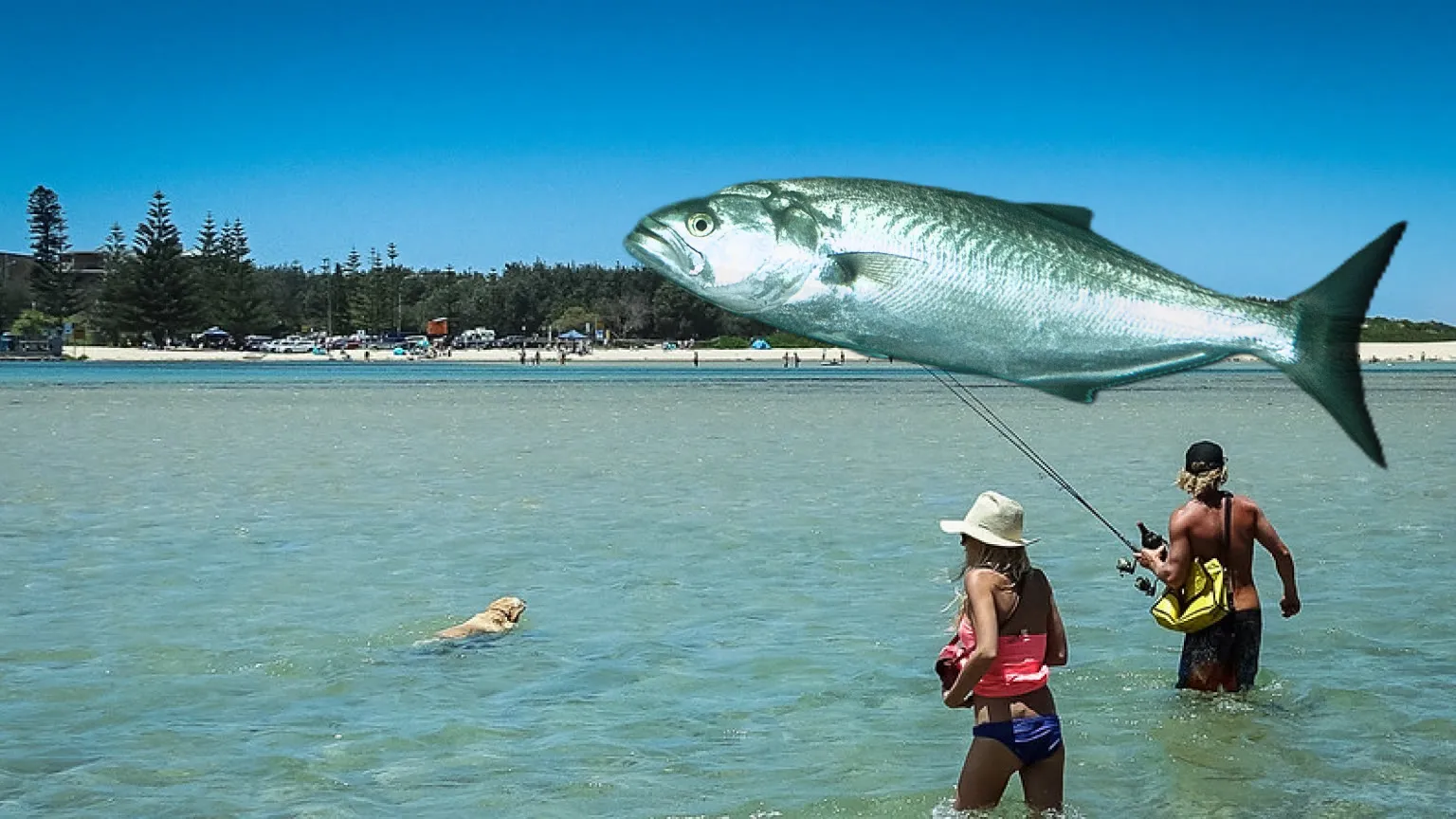
Target Species
Tailor
Lakes Entrance is one of Victoria’s most reliable tailor spots, with fish pushing into the entrance channel on fast-flowing tides. Anglers can target them from both the rock walls and the surf beaches using metal lures or fresh bait. Most Victorian tailor are chopper-grade fish under 55 cm rather than the large greenbacks caught in Queensland and Western Australia.
When the cool autumn winds start blowing across the Gippsland Lakes, a special breed of angler heads to the water’s edge. They are not looking for the standard estuary species. Instead, they are chasing a shadow in the wash, a silver flash with a set of razor-sharp teeth and an attitude to match. This is the tailor, a fast, ocean-roaming predator built for speed and aggression, often hunting in tight packs and leaving a trail of chopped baitfish in its wake. Be realistic about size: the vast majority of tailor caught in Victoria are under 55 centimetres, and the deep-backed greenbacks that anglers chase in Queensland and Western Australia are genuinely rare this far south. What Lakes Entrance offers instead is consistency and accessibility, with hard-fighting chopper tailor available to shore-based anglers for much of the year.
Lakes Entrance is the premier destination in Victoria to target these hard-fighting sportfish. The unique geography of the region, where the massive Gippsland Lakes system empties into the wild waters of Bass Strait, creates a nutrient-rich highway that baitfish cannot resist. Where the bait goes, the tailor follow. Whether you are casting heavy metal lures into the foaming breakers of the Ninety Mile Beach or drifting a pilchard along the deep channel currents near Bullock Island, the action can be fast and furious.
This guide shares the local knowledge, precise rigging methods, and seasonal secrets required to consistently land these magnificent fish. If you want to test your gear and your reflexes, there is no better arena than this coastal gateway.
Getting There
Tailor
Pomatomus saltatrix
Always check current NSW DPI regulations before fishing. Bag and size limits may change.
Understanding Lakes Entrance: Location Intelligence
To successfully target Tailor at Lakes Entrance, you must first understand the hydraulic forces that shape this environment. The entrance itself is a man-made channel cut through the sand dunes, designed to keep the vast inland lake system open to the ocean. This narrow opening acts as a giant funnel. During an incoming tide, millions of litres of clean, cold saltwater rush into the estuary, carrying baitfish, squid, and hungry predators along with it.
The primary structure here consists of two massive stone training walls that line the entrance channel. These rock walls create intense eddies, pressure waves, and deep scoured holes that reach depths of up to eight metres. Tailor use these structures as ambush points. They sit in the slower water behind the rocks, waiting for the ripping current to sweep disoriented garfish, mullet, or pilchards past their noses.
Further inside the system, the channel splits into several arms, including Cunninghame Arm and the Hopetoun Channel. While the smallest school fish will push deep into these shallow sandy reaches, the better tailor prefer to stay close to the deeper, highly aerated water near the entrance and the front beaches.
On the ocean side, the surf beaches stretch out as far as the eye can see. Here, the tailor patrol the deep gutters and holes that form close to the shoreline. These gutters are easily identified by areas of darker, calmer water situated between the breaking waves on the outer sandbars. The presence of white water spilling into these deeper pockets creates a perfect canopy of foam, allowing the tailor to hunt in the shallows without being spotted by birds of prey or larger sharks.
Understanding the relationship between the tide, the wind, and the underwater terrain is the key to finding these fish. If you can locate a deep gutter on the surf beach that aligns with a strong incoming tide during the low-light hours of dawn or dusk, you are in the prime zone for a memorable session.
Location Essentials
When Is the Best Time to Fish for Tailor at Lakes Entrance?
The best time to fish for Tailor at Lakes Entrance is during the low-light windows of dawn and dusk, especially when these periods coincide with the last two hours of a run-in tide. These conditions bring cool, clean ocean water and schools of baitfish into the channels, triggering aggressive feeding runs from large tailor.
To consistently target tailor, you must align your sessions with specific environmental triggers. While school-sized tailor can be caught throughout the day in the deeper channels, the better fish are highly light-sensitive and prefer to hunt under the cover of darkness or during twilight.
The hour before sunrise and the hour after sunset are the absolute peak windows. During these times, tailor lose their wariness and patrol the shallow edges of the channels, the edges of sandbars, and the fast-flowing water around the rock walls.
Tidal Influence on Feeding Behaviour
Tidal movement is the single most important factor when fishing the entrance. The sheer volume of water moving through the narrow channel creates a natural feeding bottleneck.
- The Run-In Tide: This is the prime tide for land-based and boat anglers. As clean, high-salinity ocean water pushes into the system, it carries large schools of blue bait, anchovies, and garfish. Tailor follow this bait closely. Focus your efforts on the last two hours of the incoming tide when the water clarity is at its peak.
- The Run-Out Tide: While more difficult to fish due to the strong current and floating weed, the first hour of the run-out tide can be highly productive at the mouth of the entrance. Large tailor sit in the eddy currents behind the rock walls, waiting for injured baitfish to be flushed out of the lake system.
- Slack Water: Generally quiet for tailor, though it can be a good time to cast large metal lures into the deeper holes without having to fight the sweeping current.
Night Fishing and Moon Phases
Do not pack up when the sun goes down. Night fishing for tailor is highly productive, particularly during the warmer months. Bright, moonlit nights, especially those leading up to and just after a full moon, are exceptional. Tailor are visual predators, and the extra moonlight helps them silhouette baitfish swimming near the surface. During these night sessions, casting surface poppers or slow-rolling shallow-running minnows along the shallow flats of Cunninghame Arm can produce spectacular surface strikes.
Weather and Barometric Pressure
Tailor are highly sensitive to barometric pressure. A steady or rising barometer above 1015 hPa is ideal. When a high-pressure system settles over East Gippsland, tailor feed actively and will strike at a wider variety of offerings. Conversely, a sudden drop in pressure ahead of a cold front will often shut the bite down completely, forcing the fish to hold deep in the channels where they become highly sluggish.
Tailor Seasonal Calendar
Moon Phase & Solunar
Moon phases influence fish feeding behavior. New and full moons create spring tides with stronger currents and increased fish activity.
Best Phases
- New Moon: Peak feeding activity, spring tides, excellent fishing
- Full Moon: Strong tides, night feeding, great for nocturnal species
- 3 Days Either Side: Extended peak period for maximum results
Major/Minor Periods
- Major Periods: Moon overhead/underfoot (2-3 hours)
- Minor Periods: Moon rise/set (1-2 hours)
- Best Times: Major period + dawn/dusk = explosive action
Weather Conditions
Check current conditions before heading out. Wind, swell, and barometric pressure significantly affect fish behavior.
Official forecasts, warnings & radar
Hourly wind speed & direction
Swell height, period & direction
The Barometer Rule
Always check the weather station before heading out. If the barometer is rising past 1015 hPa, pack your gear and get to the water. Tailor feed with absolute frenzy during these pressure spikes, often pushing bait right up against the rock walls.
What Tackle Do You Need for Tailor at Lakes Entrance?
To target Tailor at Lakes Entrance, you need a medium-heavy 9 to 10-foot spinning rod rated at 6 to 10 kilograms, paired with a 4000-size reel loaded with 20-pound braid and a heavy 30-pound fluorocarbon leader. This setup provides the casting distance required to reach the channels while offering enough pulling power to keep large fish away from structure.
Tailor are incredibly hard-fighting fish, famous for their aerial acrobatics, blistering runs, and razor-sharp teeth. If you fish too light, you will find yourself constantly retying rigs after being snipped off. If you fish too heavy, you will struggle to cast the lighter baits and lures that these fish prefer. Finding the right balance is essential.
Rod and Reel Selection
For land-based angling around the rock walls and jetties, a 9 to 10-foot rod is the perfect compromise. It gives you the use needed to cast heavy metal slices into the teeth of an incoming tide, and the length helps you steer a big fish around the sharp rocks when landing them. If you prefer to fish the surf beaches like Eastern Beach, you will need to step up to a 12 to 13-foot surf casting rod to clear the shore breaker.
Your reel needs to have a high retrieve ratio (at least 6.0:1) and a smooth, reliable drag system. Tailor often strike a lure and swim directly toward you, so you must be able to recover line quickly to keep tension on the hook. A 4000-size spinning reel with a carbon fibre drag system is ideal.
Line and Leader Configuration
Braid is highly recommended as your main line. Its thin diameter allows for longer casts, and the lack of stretch gives you instant feedback when a tailor takes a swipe at your offering. Spool up with 20 to 30-pound high-quality braid.
For more tackle basics, see our tackle essentials guide.
Your leader choice is critical. Tailor have triangular, razor-sharp teeth that can slice through standard monofilament like butter. While some anglers use wire leaders, these can drastically reduce your bite rate in the clear water of Lakes Entrance. Instead, use a 1.5-metre length of 30 to 40-pound fluorocarbon leader. Fluorocarbon is highly abrasion-resistant and nearly invisible underwater.
If you find yourself getting bitten off repeatedly, switch to a short 10-centimetre bite leader of 50-pound fluorocarbon, or use long-shank hooks that keep the line away from the fish’s mouth. Always use black swivels on your rigs; tailor are attracted to shiny brass swivels and will often bite them, cutting your entire rig free.
Complete Tackle Specifications for Lakes Entrance Tailor
| Component | Specification |
|---|---|
| Rod (Estuary/Channel) | 9-10ft graphite spin, medium-heavy action, 6-10kg rating |
| Rod (Surf Beach) | 12-13ft graphite surf caster, 8-15kg rating, fast action |
| Reel | 3000-4000 size spinning reel with high-speed retrieve (6.0:1 or faster) |
| Main Line | 20-30lb high-quality PE braid (multi-colour or high-visibility) |
| Leader | 30-40lb fluorocarbon leader (1.5m length), tough and abrasion-resistant |
| Hooks | 3/0 to 5/0 long-shank baitholder or snelled suicide hooks |
| Swivels | Size 4-6 matte black rolling swivels (avoid shiny brass or silver) |
| Sinker | 2-4oz star or pyramid sinkers for surf; 1-3oz snapper leads for channels |
How Do You Rig for Tailor?
The most reliable rig for targeting Tailor at Lakes Entrance is a three-hook snelled gang rig on a heavy fluorocarbon leader, which allows you to present a whole pilchard naturally while protecting your line from the fish’s sharp teeth. This setup ensures that no matter where the tailor strikes the bait, they will find a hook point.
When bait fishing in the fast-flowing waters of Lakes Entrance, your rig needs to hold the bottom while presenting your bait in a natural, appealing manner. The two best rigs for this style of fishing are the traditional ganged pilchard rig and the heavy-duty Paternoster rig.
The ganged hook rig is the undisputed king of tailor baits. By linking three or four hooks together, you create a stiff backbone that prevents the bait from spinning in the strong current. It also ensures that when a tailor chops the tail off your bait, they are instantly hooked.
For detailed information on tying these connections, check out our guides on fishing rigs and fishing knots.
Building the Best Ganged Pilchard Rig
- 1
Select Your Hooks
Lay out three 4/0 long-shank hooks. Ensure the eyes are large enough to pass the point of the next hook through easily.
- 2
Gang the Hooks
Insert the point of the first hook through the eye of the second hook. Use a pair of pliers to gently close the eye of the second hook around the shank of the first, ensuring they can still pivot freely.
- 3
Repeat for the Third Hook
Connect the third hook to the second hook in the same manner. You now have a flexible chain of three hooks.
- 4
Prepare the Leader
Cut a 1.2-metre length of 40-pound fluorocarbon leader material. Avoid using wire unless the bite is incredibly thick and aggressive.
- 5
Tie to the Top Hook
Attach your leader to the eye of the top hook using a secure Uni knot or a heavy-duty Palomar knot.
- 6
Add a Black Swivel
Tie a matte black rolling swivel to the opposite end of the leader. This prevents line twist caused by the bait rotating in the strong tidal currents.
- 7
Rig the Bait
Insert the top hook through the eyes of a fresh pilchard, the middle hook through the body, and the bottom hook near the tail. The bait should sit perfectly straight.
What Bait Works Best for Tailor?
Fresh blue pilchards and oily mullet fillets are the best baits for Tailor at Lakes Entrance, as they release a strong scent trail that draws fish from deep within the fast-flowing channels. Using fresh, local bait ensures the flesh is firm enough to stay on the hook in heavy currents.
Tailor are highly visual predators, but they also rely heavily on their sense of smell to track down prey in turbid or fast-moving water. Oily, bloody baits that release a strong slick are highly effective.
Top Bait Choices for Lakes Entrance
- Blue Pilchards: The absolute gold standard. Tailor cannot resist a whole pilchard presented on a gang rig. The oil and scales of a pilchard create a brilliant flash and scent trail under the water. Buy IQF (Individually Quick Frozen) pilchards, as they are firmer and hold the hook much better than block-frozen bait.
- Sea Mullet: A highly underrated bait for tailor. Mullet is incredibly oily and has a tough, leathery skin that makes it highly resistant to pickers like crabs and small silver trevally. Cut mullet into long, thin strips that flutter in the current to mimic an injured baitfish.
- Garfish: Tailor love garfish. They are a natural prey item in the Gippsland Lakes. Rig them whole on a gang rig or use them as troll baits behind a boat.
- Blue Bait: Excellent for smaller school tailor, but they tend to be too soft for the better fish, often flying off the hook during heavy casts.
For more tips on selecting and preparing your offerings, read our bait guide.
Bait Performance Analysis for Lakes Entrance Tailor
| Whole Pilchard | Mullet Strip | Fresh Garfish | |
|---|---|---|---|
| Effectiveness Rating | Excellent | Very Good | Excellent |
| Durability on Hook | Moderate | Excellent | Good |
| Scent Dispersion | Very High | High | Moderate |
| Availability | Excellent | Good | Fair |
| Best Use Conditions | Dusk/Dawn in main channels | Strong currents and overnight sessions | Daytime trolling or clear water |
The Pilchard Offal Trick
When bait fishing from the rock walls, do not throw your leftover pilchard heads and tails into the water randomly. Instead, chop them into tiny pieces and drop them directly at your feet. The current will carry this fine berley down the rock wall, creating a scent highway that leads the tailor straight to your hooked bait.
How Do You Catch Tailor at Lakes Entrance?
To catch Tailor at Lakes Entrance, you must target active feeding zones like channel edges, gutters, and wash areas using a combination of precise casting, active bait presentation, and fast lure retrieves. Success relies on finding schooling fish and keeping your bait or lure in their strike zone during key tide changes.
Mastering the right fishing techniques is what separates the casual angler from those who consistently land trophy tailor. These fish are highly visual, aggressive predators, meaning your presentation must look natural, active, and enticing.
Casting Strategy and Bait Placement
When fishing from the beach or the rock walls, your casting strategy should focus on structural transitions. Do not just cast as far as you can into the open ocean. Instead, look for the dark, deeper water of gutters, the edges of sandbars, and the white water where waves break over structure.
If you are using bait, cast your rig slightly up-current from your target zone. This allows the weight and bait to drift naturally into the deeper gutter or channel, mimicking a washed-out baitfish. Keep a semi-taut line as the rig drifts so you can feel any sudden taps.
For lure anglers, cast past the area where you suspect the fish are holding. Retrieve the lure rapidly through the strike zone. Tailor are triggered by speed, and a fast-moving metal slice or surface popper mimicking a fleeing garfish or pilchard will often provoke a violent reaction strike.
Bite Detection and Hookset
Tailor do not nibble. Their bites are usually sudden, hard, and aggressive.
If you are fishing with bait using traditional suicide hooks, you will feel a couple of sharp tugs followed by a heavy run. Strike firmly to set the hook into their hard, bony jaws. If you are using circle hooks, do not strike at all. When you feel the rod load up, simply wind quickly to let the hook slide to the corner of the mouth and set itself.
When casting lures, the strike is unmistakable. The rod will suddenly bend double, and the reel will scream. Keep winding through the hit to ensure the trebles find a secure hold.
Fighting and Landing Strategies
Once hooked, a tailor will put up a spectacular fight, often leaping completely out of the water to shake the hook. This is the most common moment to lose a fish.
To prevent the hook from pulling during these aerial acrobatics, keep your rod tip low, close to the water level, and maintain constant tension. Never allow any slack in the line. The sharp teeth and shaking head of a tailor can easily wear through a leader if the line goes slack.
When landing a large tailor from the beach, use the incoming waves to slide the fish up onto the wet sand. Avoid lifting a heavy fish directly by the line, as this often results in a busted leader or a torn mouth. If you are fishing from the rock walls, always use a long-handled landing net to secure your catch safely.
What Are the Rules and Safety Precautions for Fishing at Lakes Entrance?
Fishing for Tailor at Lakes Entrance requires strict adherence to Victorian fisheries regulations, including a minimum legal length of 23 cm and a daily bag limit of 20 fish. Safety is paramount, especially when navigating the strong tidal currents of the entrance or fishing the exposed ocean beaches.
Before wetting a line, it is vital to understand the local rules and environmental conditions. Lakes Entrance is a dynamic marine environment where conditions can change in minutes, making preparation and safety awareness essential.
Critical Safety Considerations at Lakes Entrance
The entrance channel features incredibly strong tidal currents that can easily sweep experienced swimmers and boats off course. When fishing from the rock walls or surf beaches, watch for rogue waves and changing swell conditions. Always wear a life jacket when rock fishing or boating, and keep a close eye on the incoming tide to avoid getting stranded. For emergency assistance, contact VIC Emergency on 000.
Current State Regulations
To keep our fisheries healthy, you must follow the rules set by the Victorian Fisheries Authority. You can find detailed information on the official fishing regulations page.
- Minimum Legal Length: 23 cm from the tip of the snout to the fork of the tail.
- Daily Bag Limit: 20 tailor per person.
- Licensing: A Victorian Recreational Fishing Licence is required for most anglers under 70 and over 18 years of age.
Limits verified August 2026 against the Victorian Fisheries Authority tailor (skipjack) rules. Regulations can change, so always confirm the current limits with the VFA before your trip.
Conservation Practices
Practising good stewardship ensures that future generations can enjoy targeting these magnificent sportfish.
- Use Circle Hooks: When bait fishing, circle hooks reduce the chance of gut-hooking, making catch-and-release much safer for the fish.
- Wet Your Hands: Always wet your hands or use a damp cloth before handling fish you plan to release to protect their protective slime layer.
- Dispatch Quickly: If you plan to keep your catch, dispatch the fish humanely using the iki jime method or a swift blow to the head, then bleed them immediately in ice slurry.
- Avoid Shiny Swivels: Use black, non-reflective swivels on your fishing rigs to prevent other tailor from biting your line and leaving trailing gear in the water.
Your Questions About Tailor Fishing at Lakes Entrance
What is the best time to fish at Lakes Entrance?
The best time to fish for Tailor at Lakes Entrance is during the autumn and spring months, specifically around dawn, dusk, and the first few hours of the night.
These low-light periods represent the peak fishing hours when tailor actively move into shallow gutters and channels to hunt. Planning your sessions around a high tide that coincides with sunset or sunrise will dramatically increase your chances of finding active schools.
Is Lakes Entrance suitable for beginners?
Yes, Lakes Entrance is highly suitable for beginners because it offers a wide range of accessible, land-based fishing locations with excellent facilities.
While targeting tailor requires some patience, the local jetties, bridges, and sheltered lake edges provide beginner-friendly environments where anyone can catch school-sized tailor, flathead, and bream without needing specialized surf gear.
Do I need a boat to fish at Lakes Entrance?
No, you do not need a boat to fish at Lakes Entrance, as some of the most productive fishing spots are completely land-based.
Excellent shore fishing opportunities exist along the rock walls, the footbridge, and the expansive surf beaches. However, having a boat does allow you to access deeper channel markers and explore the wider Gippsland Lakes system where schools often hold.
Where are the best specific spots at Lakes Entrance?
The best specific spots for targeting tailor include the entrance rock walls, the Cunningham Arm, the footbridge, and the surf beaches along Ninety Mile Beach.
These hot spots provide the fast-moving water, structural cover, and baitfish concentrations that tailor seek out. For those willing to travel slightly further, the nearby Lake Tyers is another premier location for trolling metal slices.
What size Tailor can I expect?
Most tailor at Lakes Entrance are school-sized fish of 30 to 45 cm. Anything over 55 cm is exceptional for Victoria, where the overwhelming majority of tailor caught fall under that mark.
If a genuine greenback of 60 cm or more is the goal, the better destinations are Fraser Island in Queensland or the Western Australian Mid West coast, not Bass Strait.
Is there parking available at Lakes Entrance?
Yes, ample parking is available close to all major fishing locations throughout the Lakes Entrance township.
You will find dedicated parking areas near the footbridge, the main wharf, and along the foreshore. Access to the surf beaches is supported by gravel car parks with boardwalks leading directly to the sand.
Can I fish at night at Lakes Entrance?
Yes, night fishing is highly productive at Lakes Entrance, especially for larger tailor which become bolder after dark.
Using a glow stick on your rig or casting surface poppers on bright, moonlit nights are excellent night fishing tips that can help draw active predators to your bait or lure.
Where can I buy bait near Lakes Entrance?
You can buy fresh and frozen bait at several local bait shops and tackle stores located along the Esplanade in the centre of town.
These local tackle stores nearby provide excellent regional advice, up-to-date fishing reports, and high-quality local baits like fresh garfish, pilchards, and sandworms.
What are the current bag and size limits?
The current Victorian regulations for tailor state a minimum legal limit of 23 cm in length and a daily bag limit of 20 fish per person.
It is your responsibility to measure your catch accurately from the snout to the fork of the tail to ensure you remain compliant with state laws.
Is Lakes Entrance family-friendly for fishing?
Yes, Lakes Entrance is an exceptionally family-friendly destination with safe fishing spots, playgrounds, and public toilets nearby.
The grassy foreshore areas and sheltered boardwalks are perfect for kids fishing, offering a safe environment away from heavy surf and strong currents.
What should I bring for a fishing session?
Your essential fishing checklist should include a suitable rod and reel, a selection of metal lures, fresh bait, wire or heavy fluorocarbon leaders, a headlamp, warm clothing, and a valid fishing licence.
Having the correct tackle basics ready before you arrive ensures you can adapt quickly to changing conditions on the water.
How crowded does Lakes Entrance get?
Lakes Entrance can become very crowded during the summer holidays and Easter long weekends, but remains quiet and peaceful during the cooler months.
If you want to avoid the crowds, the best times to visit are during late autumn and early spring, which happily coincide with some of the best tailor fishing of the year.
Latest Fishing Reports
Stay updated with the latest catches, conditions, and hot tips from Lakes Entrance. Check these sources for recent reports filtered by location and species.
Fishraider
Community fishing reports and catch logs
Fishing World
Professional fishing reports and news
Tackle World
Local tackle shop reports and tips
NSW DPI
Official recreational fishing reports
Fishingmonthly
Monthly fishing magazine and reports
Hooked Up
Video fishing reports and tips
Pro Tip: Filter Reports
When browsing reports, search for "Lakes Entrance" or nearby landmarks. Look for reports from the last 7-14 days for the most relevant information. Pay attention to tide times, weather conditions, and successful techniques mentioned.
Share Your Catch
Caught something at Lakes Entrance? Share your success with the community! Upload your catch photos and reports to help other anglers.
Disclaimer: Fishing regulations, bag limits, and access points can change over time. Always consult the Victorian Fisheries Authority website to verify current rules before planning your trip. Practice safe fishing, respect the environment, and always wear a life jacket when fishing in exposed or hazardous locations.
Explore more fishing spots in the area, discover other target species in our species guides, or brush up on your skills with our tackle basics guide.
Quick Info
- Location
- Lakes Entrance
- Coordinates
- -37.8800, 147.9800
- Difficulty
- intermediate
- Target Species
- Tailor
Conditions
Check local weather and tide conditions before heading out.