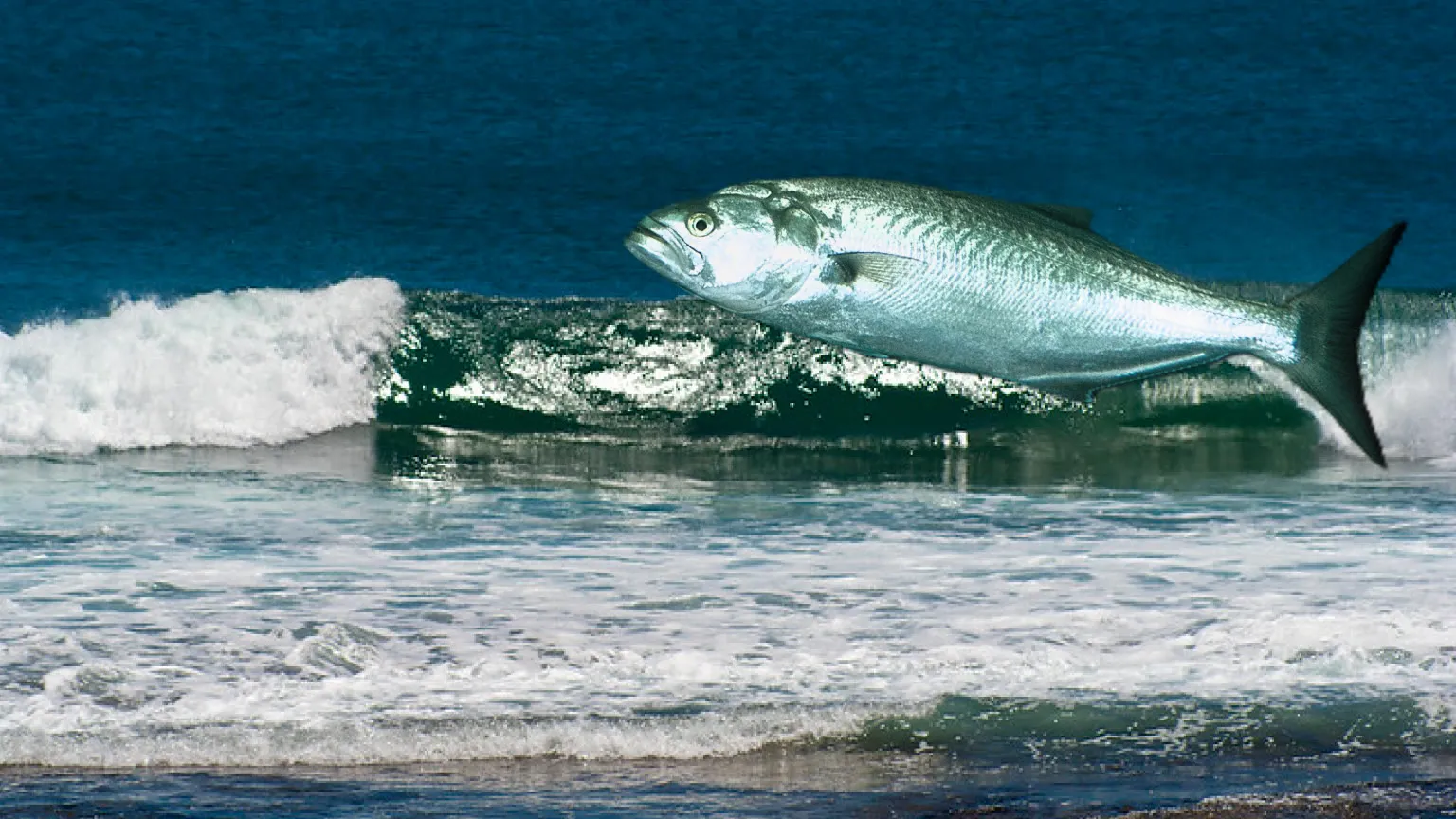
Target Species
Tailor
Kalbarri is one of the best spots for Jumbo Greenback Tailor fishing in WA, offering high-energy surf gutters and nutrient-rich reef structures where these massive predators hunt. Anglers can target these hard-fighting fish from the shore using whole baits and heavy spin gear.
If you want to experience the thrill of targeting massive, hard-fighting ocean predators from the shore, Jumbo Greenback Tailor fishing at Kalbarri is the pinnacle of West Australian beach and rock angling. This rugged stretch of coastline, where the Murchison River meets the Indian Ocean, is famous for producing legendary greenback tailor that easily dwarf the average ‘choppers’ found in southern waters. The unique collision of warm and cool currents, combined with dramatic geological formations, makes this region a premier destination for land-based anglers seeking a true trophy fish.
What makes Kalbarri so special is not just the size of the fish, but the sheer variety of environments you can target them in. From the turbulent, foaming waters of the coastal rock ledges to the deep, sandy gutters of the beaches and the swirling currents of the river mouth, every session offers a different challenge. These jumbo tailor, often measuring well over 60 centimetres and weighing upwards of 4 kilograms, are highly aggressive, incredibly fast, and armed with razor-sharp teeth that can slice through standard monofilament leaders in a split second.
In this guide, you will learn the exact strategies, local secrets, and technical setups required to successfully target and land these magnificent sportfish. We will break down the coastal geography, explore the influence of tides and weather, and detail the specific rigs and baits that local experts rely on to tempt the biggest greenbacks in the surf. Whether you are casting metal lures into the white water or drifting a whole garfish through a dark gutter at dusk, this guide will prepare you for the wild and rewarding experience of fishing in Kalbarri.
Getting There
Tailor
Pomatomus saltatrix
Always check current NSW DPI regulations before fishing. Bag and size limits may change.
Understanding Kalbarri: Location Intelligence
To consistently catch jumbo greenback tailor in Kalbarri, you must first understand the unique underwater topography and coastal features that draw these fish to the area. The Kalbarri coastline is defined by a dramatic transition from sandy beaches to ancient, red sandstone cliffs and shallow, limestone reef platforms. This diverse structure creates a highly productive marine environment where baitfish seek shelter and larger predators patrol in search of an easy meal.
Unlike smaller chopper tailor that travel in massive, fast-moving schools in calm bays, larger greenbacks are solitary or small-group hunters. They are built to thrive in highly aerated, turbulent water, often referred to by local anglers as “white water.” This white water is created when ocean swells crash over shallow reef ledges, creating a thick blanket of foam and bubbles that spills into adjacent deep gutters and holes.
The jumbo tailor use this turbulent foam as cover, hiding from their prey before launching lightning-fast ambush attacks. The bubbles and suspended sand disorient baitfish like blue sprats, hardyheads, and sea mullet, making them easy targets. Therefore, when scouting the coastline, your primary goal is to locate areas where deep water sits directly adjacent to shallow, wave-washed reefs or sandbars.
Location Essentials
Several key locations along the Kalbarri coast consistently produce these trophy fish:
- Wittecarra Creek: Located just south of the town, this is perhaps the most famous tailor beach in the region. The creek mouth creates a natural break in the nearshore reef, resulting in a deep, reliable sand gutter. The Kalbarri Tackle Shack frequently reports tailor up to 7 to 9 kilograms being taken from the deep hole directly opposite the creek mouth, especially after winter storms have reshaped the beach.
- Red Bluff Beach: Situated beneath the towering red cliffs, this beach features a mix of deep sand gutters and rocky reef patches. The turbulent water here is a magnet for large greenbacks, which patrol the edges of the reef looking for washed-off crabs, marine worms, and baitfish.
- The Blue Holes: While the southern section is a protected sanctuary zone, the northern end near the carpark is open to fishing. This area features extensive shallow reef platforms that drop off into deeper water. Casting baits or lures into the white water at the edge of these platforms is a highly effective method for targeting big tailor.
- Chinamans (Murchison River Mouth): This is a highly dynamic and sometimes dangerous location where the river meets the ocean. The shifting sandbars and rocky ledges create a maze of deep channels and fast-flowing currents. Jumbo tailor frequent this area to intercept baitfish moving in and out of the estuary, making it a premier spot for night fishing sessions.
When planning your trip, it is highly recommended to explore these locations at low tide. This allows you to clearly identify the position of the reef ledges, the deepest parts of the sandy gutters, and any potential hazards before you begin fishing in the low-light hours of dawn or dusk. For more details on finding productive coastal structures, explore our guide to local fishing spots.
When Is the Best Time to Fish for Jumbo Greenback Tailor at Kalbarri?
The best time to fish for jumbo greenback tailor at Kalbarri is during the low-light windows of dawn and dusk, particularly when these times coincide with a high tide. These predatory fish use the cover of darkness and changing light to ambush baitfish in the turbulent surf.
To consistently target the legendary jumbo greenback tailor, you must align your sessions with specific daily, tidal, and seasonal cycles. While smaller chopper tailor can be caught throughout the day when the sea breeze stirs up the water, the true jumbos, those fish stretching past 60 centimetres, are notoriously cautious. They prefer to hunt under the cover of twilight or complete darkness.
The hour before sunrise and the hour after sunset are the absolute peak periods. During these times, baitfish like garfish and hardyheads become disoriented in the shore break, making them easy targets for the razor-sharp teeth of the greenbacks.
Tidal movement is another critical factor. An incoming tide, especially one peaking just after dusk, is the prime scenario. The rising water allows these large, deep-bodied fish to cross shallow reef platforms, such as those at Blue Holes or Oyster Reef, to hunt in the deeper gutters close to the beach. If the water is flat and clear, tailor will remain wary, but a moderate swell that creates plenty of white water will give them the confidence to feed aggressively right at your feet.
Do not discount night fishing, especially during a bright moonlit night. A full moon provides enough light for tailor to hunt by sight throughout the night, making beach sessions at Wittecarra Creek or Red Bluff incredibly productive. Conversely, during the new moon, focus your efforts strictly on the peak dusk and dawn periods.
Tailor Seasonal Calendar
Tide Times
Optimal Tide
Rising tide peaking 1 hour after dusk
Tide movement is critical for fish activity. Most species feed actively during tide changes, especially the run-in (incoming) tide.
Detailed hourly tide charts
Official tide predictions
7-day tide calendar
Tide Guide
Best for most species. Fish move in to feed as water rises.
Good for ambush predators. Baitfish get swept out.
Slower bite. Fish less active during slack water.
New/full moon. Bigger tidal range, more fish movement.
Moon Phase & Solunar
Moon phases influence fish feeding behavior. New and full moons create spring tides with stronger currents and increased fish activity.
Best Phases
- New Moon: Peak feeding activity, spring tides, excellent fishing
- Full Moon: Strong tides, night feeding, great for nocturnal species
- 3 Days Either Side: Extended peak period for maximum results
Major/Minor Periods
- Major Periods: Moon overhead/underfoot (2-3 hours)
- Minor Periods: Moon rise/set (1-2 hours)
- Best Times: Major period + dawn/dusk = explosive action
Weather Conditions
Check current conditions before heading out. Wind, swell, and barometric pressure significantly affect fish behavior.
Official forecasts, warnings & radar
Hourly wind speed & direction
Swell height, period & direction
The White Water Advantage
Large greenback tailor are built to hunt in highly aerated, turbulent water. When scouting a beach or reef platform, look for areas where waves break over structure and create a thick blanket of white foam. This foam acts as cover, hiding the tailor from predators and masking their presence from baitfish. Cast your bait directly into the edge of this white water for the best chance at a trophy fish.
What Tackle Do You Need for Jumbo Greenback Tailor at Kalbarri?
For targeting jumbo greenback tailor at Kalbarri, you need a powerful 10 to 12 foot surf spinning rod rated for 10 to 15 kilograms, paired with a durable 4000 to 6000 size reel loaded with 20 to 30 pound braid. This heavy outfit is essential for casting large baits into strong headwinds and steering powerful fish away from sharp reef edges.
Chasing jumbo tailor is not a job for light estuary gear. These fish are incredibly strong, possess razor-sharp teeth, and are usually targeted in rough, snag-heavy environments. To ensure you do not lose the fish of a lifetime to a reef ledge, your gear must be reliable and well-maintained.
Your rod needs enough length to clear the shore break and cast heavy baits or metal lures into the wind. A high-quality graphite composite rod provides the perfect balance of casting distance and pulling power. Pair this with a high-speed spin reel that has a smooth, sealed drag system. The salt spray and sand of Kalbarri beaches will quickly ruin cheap reels, so investing in a reel with good water resistance is highly recommended.
For your main line, braid is the superior choice because its thin diameter allows for longer casts and better bite detection in turbulent water. However, because tailor have sharp teeth and often feed around abrasive rocks, a long, heavy leader is non-negotiable. Use a minimum of one metre of 40 to 50 pound monofilament or fluorocarbon leader. Monofilament is often preferred in the surf because it has more stretch, which helps absorb the violent headshakes and jumps that tailor are famous for.
For more tackle basics, see our tackle essentials guide to help you select the right gear for your next coastal adventure.
Jumbo Tailor Tackle Specifications
| Component | Specification |
|---|---|
| Rod | 10-12ft surf casting rod, medium-fast action, rated 10-15kg |
| Reel | 4000-6000 size spinning reel with high-speed retrieve and sealed drag |
| Main Line | 20-30lb PE braid for maximum casting distance and direct contact |
| Leader | 40-50lb monofilament, 1-1.2m length for abrasion resistance and shock absorption |
| Hooks | Ganged hooks (3 x 4/0 or 4 x 5/0 Mustad Tarpon or similar heavy-duty hooks) |
| Swivels | Size 2-4 black barrel swivels (avoid shiny brass to prevent bite-offs) |
| Sinker | Star sinker or spoon sinker, 2-4oz depending on current and swell |
| Lures | 40-65g metal slices, surface poppers, or 140mm sinking stickbaits |
How Do You Rig for Jumbo Greenback Tailor?
The most effective rig for jumbo greenback tailor is a ganged hook rig attached to a heavy monofilament leader, which allows you to present a whole bait naturally while protecting your line from the fish’s sharp teeth. This setup eliminates the need for wire leaders, which can often spook large, wary fish in clear water.
When rigging for tailor, your primary goal is to present a whole bait, such as a pilchard or garfish, as naturally as possible while ensuring the fish cannot bite through your line. Tailor have a mouth full of small, triangular, razor-sharp teeth that will slice through standard monofilament instantly.
While some anglers use multi-strand wire leaders, local experts at Kalbarri generally avoid them. Wire is highly visible in the water and can cause large, experienced greenbacks to turn away. Instead, a gang of three or four hooks acts as its own armour. Because the hooks run the entire length of the bait, the tailor’s teeth almost always make contact with the metal hooks rather than your leader material.
To connect your leader to your main line, use a strong, reliable knot like the FG knot or an Albright knot. For more information on tying these connections, check out our guide on fishing knots. If you prefer a simpler setup, a heavy-duty black barrel swivel can be used to join the lines. Always use black swivels; tailor are highly attracted to shiny objects and will often bite at a brass swivel, cutting your main line in the process.
For a detailed look at alternative setups, explore our guide on fishing rigs.
Building the Best Ganged Hook Rig
- 1
Select Your Hooks
Choose three or four heavy-duty 4/0 or 5/0 hooks. Ensure they have open eyes, or use a pair of pliers to slightly open the eyes yourself.
- 2
Gang the Hooks
Insert the point of one hook through the eye of the next. Use pliers to carefully squeeze the eye shut, securing the connection while allowing the hooks to pivot freely.
- 3
Prepare the Leader
Cut a 1.2 metre length of premium 50-pound monofilament leader material. This heavy line provides excellent abrasion resistance against rocks and sand.
- 4
Tie the Leader to the Gang
Attach the top hook of your gang to the leader using a secure knot, such as the Uni knot or the improved clinch knot.
- 5
Add a Black Swivel
Tie a size 3 black barrel swivel to the other end of your leader. Avoid silver or brass swivels to prevent tailor from attacking the connection.
- 6
Rig Your Bait
Insert the top hook through the eye of a whole pilchard, the middle hook through the body, and the bottom hook near the tail. Ensure the bait lies straight and does not bunch up.
- 7
Check the Presentation
Hold the rig up to ensure the bait hangs naturally. A bent bait will spin in the water, twisting your line and looking unnatural to hungry predators.
What Bait Works Best for Jumbo Greenback Tailor?
The best bait for jumbo greenback tailor at Kalbarri is a fresh, whole local garfish or a whole blue mackerel (mulie) rigged on a gang of hooks. These oily, shiny baits release a strong scent trail that draws large predators from deep within the surf.
When it comes to tempting a trophy greenback, bait quality is everything. While smaller tailor will eat almost anything that moves, jumbo tailor are highly selective and prefer fresh, oily baitfish.
Garfish, often referred to as ‘gardies’ by West Australian anglers, are the premier choice during the cooler months when they school up in large numbers around the cliffs and beaches. Their tough skin makes them highly durable on the hook, allowing them to withstand the constant buffeting of the surf.
Blue mackerel and West Australian pilchards (mulies) are also incredibly effective. They have a very high oil content, which creates a powerful scent trail that tailor can easily track in turbulent white water. However, pilchards can be soft, especially if they have been frozen and thawed multiple times. To prevent your bait from flying off during a heavy cast, look for local, IQF (Individually Quick Frozen) bait that is firm and bright.
For more expert advice on sourcing and preparing your offerings, read our complete bait guide.
Bait Performance for Jumbo Tailor
| Whole Garfish | WA Pilchard (Mulie) | Scaly Mackerel | Sea Herring (Tommie) | |
|---|---|---|---|---|
| Effectiveness | Excellent | Excellent | Good | Good |
| Durability | Very High | Moderate | High | High |
| Scent Trail | Moderate | Very High | High | Moderate |
| Best Rigging Method | 4-Hook Gang | 3-Hook Gang | Snelled Hooks | 3-Hook Gang |
| Target Environment | Deep surf gutters and rock platforms | Sandy beaches and reef edges | Heavy wash and high-current areas | Estuary mouth and shallow reefs |
The Freshness Factor
If you can catch fresh sea herring or yellowtail scad (yakkies) from the local jetties before your session, use them. Freshly caught bait that has never been frozen is vastly superior to store-bought bait. The firm flesh holds the hooks perfectly, and the natural body fluids release a scent that frozen baits simply cannot replicate.
How Do You Catch Jumbo Greenback Tailor at Kalbarri?
To catch Jumbo Greenback Tailor at Kalbarri, you must target the highly aerated white water of reef breaks and deep beach gutters using a slow, mid-water retrieve with ganged pilchards or by casting heavy metal lures and stickbaits.
When fishing the rugged coastlines of Wittecarra Creek, Red Bluff, or the Murchison River mouth, your casting accuracy is just as important as your distance. Jumbo tailor are ambush predators that patrol the edges of foam lines and reef structures. Do not cast directly into the shallowest part of the reef. Instead, aim for the edges of the white water where the aerated foam meets the deeper, darker water.
If you are using whole mulies or garfish, cast just past the breaker line and allow the swell to drift your bait naturally into the gutter. Keep your line taut but do not retrieve too quickly. A slow, pulsing retrieve that mimics a wounded baitfish struggling in the wash is highly effective. If you are casting metal slices or stickbaits, keep your rod tip low and use a fast, erratic retrieve to trigger a reaction strike from these aggressive predators. For more advanced casting methods, explore our guide on fishing techniques.
Bite Detection and Hookset
A strike from a jumbo greenback tailor is unmistakable and highly aggressive. They do not nibble. They smash the bait at high speed, often leaping out of the water immediately after feeling the hook. When bait fishing with ganged hooks, you will feel a sudden, heavy thud. Resist the urge to strike instantly. Allow the fish to turn with the bait for a split second, winding up the slack line until you feel the weight of the fish, then set the hooks with a firm, upward sweep of the rod.
If you are using lures, the fish will usually hook itself on the strike due to the speed of the retrieve. Ensure your knots are tied perfectly to withstand this initial impact. You can learn how to tie these high-strength connections in our guide on fishing knots.
Fighting and Landing Strategies
Fighting a jumbo tailor over 60 centimetres is a thrilling challenge. These fish are famous for their aerial acrobatics, frequently leaping and shaking their heads to dislodge the hooks. Keep your rod tip low during the fight to discourage them from jumping. Maintain constant pressure and never let the line go slack, as their sharp teeth and violent headshakes can easily wear through leader material.
When landing a fish from the beach, use the incoming waves to slide the tailor onto the sand. Never try to haul a heavy fish up a steep rock ledge using only your rod. Instead, guide the fish into a safe wash pool or use a long-handled landing net. Always keep your fingers well away from their razor-sharp teeth, using long-nosed pliers to remove the hooks safely.
What Are the Rules for Fishing at Kalbarri?
The rules for fishing for tailor in Western Australia include a minimum legal length of 300 millimetres and a daily bag limit of eight fish per fisher, with a maximum of two fish exceeding 500 millimetres.
These strict regulations are designed to protect the large, breeding greenback tailor that support the local fishery. The Western Australian biological stock is currently classified as sustainable, but maintaining this status requires all anglers to do their part. Always measure your catch from the tip of the snout to the fork of the tail to ensure compliance.
When practicing catch and release for large jumbo tailor, handle the fish with extreme care. Use a wet towel or specialized fish-handling gloves to protect their slime coating, and avoid lifting them by the gills. If you plan to keep a tailor for the table, bleed it immediately upon capture and place it straight onto ice. This simple step prevents the flesh from becoming soft and mushy, ensuring a high-quality meal. For a complete breakdown of state-wide fishing rules, check out our guide on fishing regulations.
Critical Safety Considerations
The West Australian coastline around Kalbarri is beautiful but highly unpredictable. Slippery rock ledges, powerful swells, and sudden king waves present severe hazards to land-based anglers.
- Always wear a high-quality life jacket when fishing from rock ledges like Red Bluff or Pot Alley.
- Never turn your back on the ocean, and observe the swell patterns for at least 20 minutes before setting up.
- Wear non-slip footwear with steel spikes or cleats to maintain traction on wet, weed-covered rocks.
- In case of an emergency, contact WA Emergency Services on 000.
Your Questions About Jumbo Greenback Tailor Fishing at Kalbarri
What is the best time to fish at Kalbarri?
The best time to fish for Jumbo Greenback Tailor at Kalbarri is during the low-light hours of dawn and dusk, particularly when these times coincide with an incoming high tide.
To maximize your success, plan your peak fishing hours around the transition periods of sunrise and sunset. These predatory fish use the changing light conditions to ambush baitfish in the shallow gutters and reef washes.
Is Kalbarri suitable for beginners?
Yes, Kalbarri offers several beginner-friendly fishing locations, such as the sheltered waters inside the Murchison River mouth and the jetties near the town centre.
While the rugged rock ledges require advanced skills, novices can find easy fishing spots along the riverbanks where smaller chopper tailor and whiting are highly abundant.
Do I need a boat to fish at Kalbarri?
No, you do not need a boat to catch trophy tailor at Kalbarri, as the vast majority of jumbo greenbacks are caught from land-based shore fishing spots.
Excellent shore fishing access is available along the beaches and rock platforms, making it one of the premier land-based destinations in Western Australia.
Where are the best specific spots at Kalbarri?
The best specific spots for catching jumbo tailor at Kalbarri include Wittecarra Creek, Red Bluff beach, Oyster Reef, and the Murchison River mouth.
These legendary fishing marks feature the ideal combination of deep coastal gutters, rocky structures, and highly aerated white water where large predators love to hunt.
What size Jumbo Greenback Tailor can I expect?
Anglers at Kalbarri can expect average catch sizes of 40 to 50 centimetres, with genuine jumbo greenbacks frequently exceeding 70 to 80 centimetres.
These larger trophy fish are powerful fighters that require heavy-duty tackle and precise drag settings to land successfully from the surf.
Is there parking available at Kalbarri?
Yes, ample parking is available at all major fishing locations in Kalbarri, including the Blue Holes, Red Bluff, and the river mouth.
Most parking areas offer easy access to the beach, though some of the more remote cliff tracks may require a short walk or a four-wheel-drive vehicle.
Can I fish at night at Kalbarri?
Yes, fishing at night is highly productive for jumbo tailor, especially during bright, moonlit nights or during the dark phases of the new moon.
Using night fishing tips like attaching a small glow stick to your rod tip or using highly scented baits will help you detect bites in the dark.
Where can I buy bait near Kalbarri?
You can buy fresh bait and tackle at local tackle stores nearby, such as the Kalbarri Tackle Shack located in the main town area.
These specialized bait shops provide excellent local advice, high-quality local mulies, and the exact rigs needed for the current fishing conditions.
What are the current bag and size limits?
The current legal limits for tailor in Western Australia are a minimum size of 300 millimetres and a daily bag limit of eight fish per person.
Anglers must adhere to these strict regulations, which also specify that only two of your eight kept fish may exceed 500 millimetres in length.
Is Kalbarri family-friendly for fishing?
Yes, Kalbarri is an incredibly family-friendly destination with many safe fishing spots located along the lower reaches of the Murchison River.
These calm waters are perfect for kids fishing, offering easy access, public toilets, playgrounds, and plenty of small fish to keep the children entertained.
What should I bring for a fishing session?
Your essential fishing checklist should include a long surf rod, a high-quality spinning reel, ganged hooks, heavy sinkers, a headlamp, and appropriate safety gear.
Bringing the right essential gear, including a warm windproof jacket and plenty of fresh water, ensures you stay comfortable during long beach sessions.
How crowded does Kalbarri get?
Kalbarri can become quite busy during school holidays and peak autumn seasons, but there are always quiet fishing times if you avoid the main beaches.
To find the best times to avoid crowds, plan your sessions during mid-week periods or explore the more remote coastal tracks south of the town.
Latest Fishing Reports
Stay updated with the latest catches, conditions, and hot tips from Kalbarri. Check these sources for recent reports filtered by location and species.
Fishraider
Community fishing reports and catch logs
Fishing World
Professional fishing reports and news
Tackle World
Local tackle shop reports and tips
NSW DPI
Official recreational fishing reports
Fishingmonthly
Monthly fishing magazine and reports
Hooked Up
Video fishing reports and tips
Pro Tip: Filter Reports
When browsing reports, search for "Kalbarri" or nearby landmarks. Look for reports from the last 7-14 days for the most relevant information. Pay attention to tide times, weather conditions, and successful techniques mentioned.
Share Your Catch
Caught something at Kalbarri? Share your success with the community! Upload your catch photos and reports to help other anglers.
Disclaimer: Fishing regulations and access conditions can change. Always verify current rules with the Western Australian Department of Primary Industries and Regional Development before heading out.
For more information on planning your next angling adventure, explore more fishing spots in the region, check out our detailed species guides, or brush up on your gear setup with our tackle basics manual.
Quick Info
- Location
- Kalbarri
- Coordinates
- -27.7100, 114.1600
- Difficulty
- intermediate
- Target Species
- Tailor
Conditions
Check local weather and tide conditions before heading out.