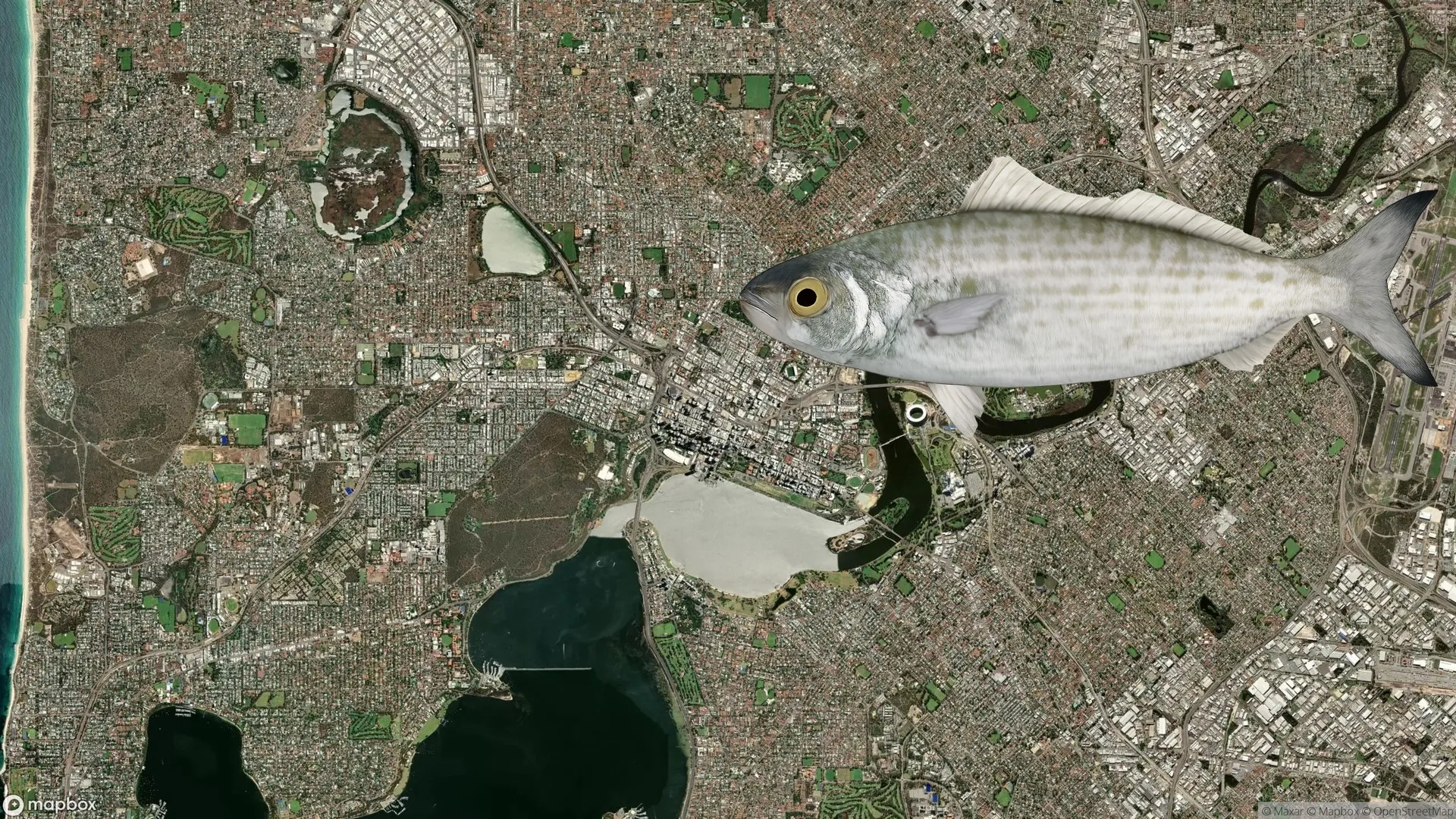
Target Species
Australian Herring
Introduction
If there is one fish that defines the recreational angling experience in Western Australia, it is undoubtedly the Australian Herring (Arripis georgianus). For generations of Perth locals, this species has served as the initiation rite into the world of saltwater fishing. They are aggressive, abundant, and pound-for-pound one of the scrappiest fighters you will encounter on light gear. While they might not grow to the size of the dhufish or pink snapper that offshore anglers chase, the humble herring provides consistent action that keeps rock walls and jetties across the metropolitan coast busy from dawn until dusk.
Perth is one of the best spots for Herring fishing in WA, offering accessible shore-based action at locations like North Mole and Hillarys Boat Harbour where large schools gather year-round. These fish are aggressive feeders that respond well to burley and light tackle, making them an ideal target for both beginners and experienced anglers seeking a reliable feed.
The beauty of targeting herring in Perth lies in the sheer variety of environments available to the angler. From the sheltered waters of the lower Swan River to the exposed limestone groynes of Cottesloe and the deep shipping channels of Fremantle, herring are adaptable predators that patrol anywhere current and structure intersect. They are a schooling fish, often moving in massive numbers, which means once you locate the bite, the action can be frantic and incredibly fun.
However, catching them consistently requires more than just dangling a hook in the water. The “herring run” in late autumn is legendary, but understanding how wind, tide, and water clarity affect their behaviour is what separates the angler who catches a bucketful from the one who goes home empty-handed. In this guide, we will break down the specific nuances of the Perth metropolitan fishery, exploring the tactical adjustments needed for our unique limestone coast and how to finesse these fish when they become fussy in clear water.
Whether you are looking to secure fresh bait for a larger target or simply want a feed of sweet, white fillets for the barbecue, mastering the herring fishery is an essential skill for any Perth angler.
Getting There
Herring
Arripis georgianus
Always check current NSW DPI regulations before fishing. Bag and size limits may change.
Understanding Perth: Location Intelligence
To consistently catch herring in Perth, you need to understand the unique geography of the metropolitan coastline. Unlike the calm bays of the south coast or the tropical flats of the north, Perth sits on a high-energy coastline shaped by limestone reef systems and the warming Leeuwin Current. This ocean flow moves south, delivering nutrients and warmer water that fuel the ecosystem herring rely on.
Location Essentials
The Role of Structure and Wash
Herring are sight predators that use turbulence to their advantage. In Perth, the most productive zones are where the Indian Ocean swell hits solid structure. This creates “wash”—white, oxygen-rich water that stuns baitfish (like hardyheads and whitebait) and gives herring cover to hunt.
The artificial structures along the coast are top-tier spots. North Mole and South Mole in Fremantle are arguably the most famous land-based locations in the state. These long rock walls stretch deep into the ocean, cutting across fish paths. The tip of North Mole, in particular, gives access to deep water (10m+) where bigger “bull” herring often stay near the bottom, while smaller pickers feed up top.
Further north, the Hillarys Boat Harbour rock walls offer a different vibe. Here, the water is often clearer, and the fish can be more cautious. The outer wall, facing the open ocean, delivers the needed wash, while the inner harbour (where allowed) gives shelter during rough winter weather. The structure here is limestone rock armour, home to crabs and shrimp that herring love to feed on.
The Weed Line Factor
Perth’s beaches, such as Cottesloe, Floreat, and Trigg, have wide seagrass meadows (Posidonia) mixed with sand patches. This is vital habitat. Herring often cruise the edges of these weed banks—known as the “weed line.” They use the dark weed for cover and ambush prey that swim over the bright sand.
When fishing the beaches, focus on “broken ground” (patches of dark weed and white sand) instead of casting into blank sandy gutters. The best beach spots in Perth are usually where a reef runs parallel to the shore, forming a lagoon or gutter where water speeds up. This flow gathers food, and the herring will sit just behind the reef edge or in the rip, waiting for a meal to come past.
Estuarine Dynamics
Don’t overlook the lower stretches of the Swan River. During summer and autumn, high salinity pulls herring further upstream, often as far as Claremont and Mosman Park. Spots like Blackwall Reach have deep water right off the rocks. In these estuarine areas, herring behaviour changes; they key in on prawn runs and small baitfish schools. The water here is calmer, so you’ll need lighter fluorocarbon leaders compared to the rough ocean-facing groynes.
The “Freo Doctor” Influence
The well-known afternoon sea breeze, the Fremantle Doctor, has a big impact on where to fish. In the morning, with light easterlies, east-facing groynes or open beaches work best. As the strong south-westerly kicks in during the afternoon, the surface gets rough. While this can make casting harder, the chop actually helps the herring. They feed more freely in choppy conditions because birds can’t spot them as easily, and the turbulence lifts food. The trick is positioning yourself safely where the wind helps your cast, not fights it.
Seasonal Movements
While herring are around all year, the “Autumn Run” (March to May) is when numbers peak. At this time, huge schools of pre-spawning fish move north and inshore. This is when bag limits get filled fast, and the average fish size jumps. In winter, schools tend to stay deeper to avoid cold surface water and storm surge, making deep water at the end of the Moles or boat trips to the “Three Mile Reef” more productive than shallow beach spots.
Knowing these location details—the wash, the weed, and the wind—is what helps successful anglers find schools, rather than just hoping they swim by. For more tips on reading water, check out our fishing basics guide.
When Is the Best Time to Fish for Herring at Perth?
The absolute best time to target Herring in Perth is during the “change of light” periods at dawn and dusk, especially when they line up with a rising tide. While Herring can be caught all day, their feeding spikes sharply during the first two hours of daylight and the last two hours before sunset, as low light gives them confidence to hunt closer to the surface and shore.
Timing your session right is often the difference between a basket full of fish and a long session with nothing to show. In the Perth metro area, environmental factors heavily influence fish behaviour. The mix of the “Freo Doctor” sea breeze, clear Indian Ocean water, and small tidal shifts creates specific windows that smart anglers use to their advantage.
The Dawn and Dusk Advantage
Herring are mainly visual hunters, with large eyes built for spotting movement. But they’re also a key meal for bigger predators like salmon, tailor, and birds. Because of this, they’re often wary in bright midday sun, especially in the clear waters at spots like Cottesloe or Trigg.
Dawn: This is the prime window. Arriving 30 minutes before sunrise lets you set up your burley trail while it’s still dark. As the sky starts to lighten, schools often rise and start feeding hard. The wind is usually at its lightest (easterly land breeze), making it easier to cast light floats or unweighted baits.
Dusk: The evening bite is just as good but comes with a catch—the wind. By late afternoon, the south-westerly sea breeze is often blowing at 15-20 knots. While this makes casting tough, the chop on the surface gives herring “cover,” making them less nervous than on flat days. If you can find a sheltered corner—like the inside of the North Mole or the leeward side of a groyne—the fishing can be red-hot right until dark.
Night Fishing: The Artificial Advantage
A unique pattern in Perth is the night fishery at lit-up spots. Locations like Hillarys Boat Harbour, Mindarie Marina, and the Fremantle Fishing Boat Harbour have strong overhead lights that shine onto the water. These lights draw in clouds of plankton and moths, which bring in baitfish, and finally, the herring.
When fishing at night under lights, the fish can be super fussy. They see your line and rig clearly against the bright water. This is when dropping to 4lb fluorocarbon leader and using tiny baits (like a single maggot or a small scrap of prawn) really pays off.
Tidal Influence
Perth has a small tidal range (often under 1 metre), but don’t ignore it.
- High Tide: Usually best for shore anglers. High water pushes baitfish up against rock walls and into beach gutters. On a big tide, you can hook herring just metres from the rocks at spots like Woodman Point.
- Low Tide: Can be tough on beaches as gutters get shallow and exposed. But deep spots like the tip of North Mole or deep channels in the Swan River (Blackwall Reach) still fish well at low tide because the fish have depth for safety.
- The Change: The period of moving water—the hour just after the tide turns—often triggers a feeding burst. The flow stirs up the bottom and knocks food loose from the reef, acting like a dinner bell for the schools.
Herring Seasonal Calendar
Tide Times
Optimal Tide
Rising tide, specifically the 2 hours leading up to the high.
Tide movement is critical for fish activity. Most species feed actively during tide changes, especially the run-in (incoming) tide.
Detailed hourly tide charts
Official tide predictions
7-day tide calendar
Tide Guide
Best for most species. Fish move in to feed as water rises.
Good for ambush predators. Baitfish get swept out.
Slower bite. Fish less active during slack water.
New/full moon. Bigger tidal range, more fish movement.
Moon Phase & Solunar
Moon phases influence fish feeding behavior. New and full moons create spring tides with stronger currents and increased fish activity.
Best Phases
- New Moon: Peak feeding activity, spring tides, excellent fishing
- Full Moon: Strong tides, night feeding, great for nocturnal species
- 3 Days Either Side: Extended peak period for maximum results
Major/Minor Periods
- Major Periods: Moon overhead/underfoot (2-3 hours)
- Minor Periods: Moon rise/set (1-2 hours)
- Best Times: Major period + dawn/dusk = explosive action
Weather Conditions
Check current conditions before heading out. Wind, swell, and barometric pressure significantly affect fish behavior.
Official forecasts, warnings & radar
Hourly wind speed & direction
Swell height, period & direction
The Burley Clock
Don’t just toss burley randomly. Time your burley with the swell. Throw a small handful of pollard/oil mix just after a big wave set passes. The outgoing water (drawback) will pull your burley trail out to sea, bringing the herring from deep water right to your feet. If you throw it while waves are coming in, the burley just washes up behind you.
What Tackle Do You Need for Herring at Perth?
The ideal tackle for Herring in Perth is a light 7-9ft spinning rod rated for 2-5kg line, paired with a 2500-3000 size reel. This light setup allows for long casts with light floats and provides the sensitivity needed to detect subtle bites while offering enough shock absorption to prevent the hooks from tearing out of the Herring’s soft mouth during their frantic jumps.
One of the most common mistakes anglers make in Perth is fishing too heavy. Using a surf rod meant for salmon or a stiff boat rod for herring is a recipe for frustration. Herring are “sport fish in miniature.” They fight hard, jump repeatedly, and shake their heads violently. A heavy, stiff rod will simply pull the hook out of their mouth or fail to pick up the subtle “sucking” bite they often give before running.
The Rod: Length and Action
You want a rod that acts as a shock absorber. A 2.1m to 2.7m (7ft to 9ft) graphite spin rod is perfect. The extra length helps in two ways: it boosts casting distance for light floats (“blobs”), and helps you steer fish around the sharp limestone rocks at most Perth groynes. Look for a rod with a “slow” or “moderate” taper—meaning it bends through the mid-section, not just the tip. This flexibility keeps tension on the fish when it goes airborne.
The Reel: Balance and Drag
A 2500 to 3000 size spinning reel balances perfectly with the rods mentioned above. While you don’t need 10kg of drag pressure, a smooth drag system is vital. Herring often make a sudden, zipping run straight at the rocks. A sticky drag can mean a snapped leader.
Line Choice: Braid vs. Mono
For the modern Perth angler, braided line is the better choice. A 6lb to 10lb high-quality braid (PE 0.6 - 0.8) cuts through the wind much better than thick monofilament, allowing for longer casts. Crucially, braid has zero stretch, so you feel every tiny nip and bump.
However, because braid has no stretch, you must use a leader. If you’re new or fishing with kids, straight monofilament (6-8lb) is perfectly fine and often more forgiving, as the natural stretch helps keep fish pinned.
Terminal Tackle: The Business End
The water clarity in Perth calls for careful terminal tackle.
- Leader: Fluorocarbon is essential. It’s nearly invisible underwater and tougher against the limestone reef. Use 2-3 metres of 6lb to 10lb fluorocarbon.
- Hooks: Long-shank hooks are preferred because herring have small, sharp teeth that can fray light line. A Size 8 or 10 Long Shank (like the Mustard Bloodworm or Gamakatsu Panfish) is the go-to.
- The “Blob”: This is a uniquely Western Australian bit of gear. It’s a weighted float, usually egg or teardrop shaped, often made of clear plastic or white foam. It gives you casting weight, but floats to keep your bait clear of the weed.
For more tackle basics, see our tackle essentials guide.
Complete Tackle Specifications
| Component | Specification |
|---|---|
| Rod | 7-9ft light spin, 2-5kg rating, soft taper |
| Reel | 2500-3000 size spin reel, smooth drag |
| Main Line | 6-10lb PE Braid (preferred) or 6-8lb Mono |
| Leader | 6-10lb Fluorocarbon, 1.5-2m length |
| Hooks | Size 8-10 Long Shank (Chemically Sharpened) |
| Float/Casting Weight | 20-40g 'Blob' float or Berley Cage Float |
| Swivels | Size 12-14 rolling swivels (tiny) |
| Lure Option | 10-20g Metal Slice (Halco Twisty) |
How Do You Rig for Herring?
The most effective rig for Herring in Perth is the “Blob Rig” or weighted float rig, which consists of a weighted float on the main line, a swivel, and a 1-1.5 metre leader of light fluorocarbon terminating in a size 8-10 long shank hook. This setup allows anglers to cast light baits long distances while keeping the presentation suspended in the strike zone above the weed and reef.
While you can catch herring on a standard paternoster rig (sinker on bottom, hooks above), this is usually less effective in Perth’s shallow, weedy waters because it drags the bait through the snaggy kelp. The Blob Rig (or Float Rig) is the go-to for WA herring fishing. It keeps your bait up in the top water where the herring are feeding and allows for a natural, drifting show.
The Mechanics of the Blob Rig
The beauty of this rig is its simplicity. The heavy float acts as your casting weight. Once it hits the water, the leader sinks slowly, letting the bait drift down naturally. Herring often take the bait “on the drop.” If they don’t, a slow retrieve keeps it moving just below the surface—just like a fleeing baitfish.
Another solid option is the Berley Cage Float. This float has a built-in cage or spring. You pack it with a pollard/oil dough mix. When you cast, the impact hits the water, and as you retrieve, the dough breaks down, creating a burley trail right beside your hook. This works wonders when the fish are spread out.
Building the Perfect Perth Blob Rig
- 1
Prepare Main Line
Thread your main line (braid or mono) through the top of the weighted 'blob' float. Ensure the float slides freely or is fixed, depending on the specific float design (most WA blobs are designed to run freely on the line).
- 2
Add Buffer Bead
Thread a small soft plastic bead or rubber buffer onto the line below the float. This protects the knot from the heavy float constantly banging against it during the cast.
- 3
Attach Swivel
Tie a small Size 12 or 14 rolling swivel to the end of the main line. This prevents line twist—a common issue when using spinning reels and casting repeatedly.
- 4
Connect Leader
Attach your 1.5 to 2-metre length of fluorocarbon leader to the other end of the swivel. If the water is rough, go shorter (1m); if calm and clear, go longer (2m).
- 5
Tie the Hook
Tie your Size 8 or 10 long shank hook to the end of the leader using a blood knot or uni knot. Ensure the knot is neat and trimmed close.
- 6
Bait Application
Thread your bait (maggot, piece of prawn, or fish strip) onto the hook. Ensure the hook point is exposed—Herring have hard bony mouths and you need immediate penetration.
- 7
Test the Drag
Before your first cast, pull some line from the reel. It should come off smoothly with moderate resistance. If it's too tight, a jumping Herring will snap the light leader.
What Bait Works Best for Herring?
The most effective baits for Herring in Perth are maggots (locally known as “wogs”), small pieces of coral prawn, and blue sardines (mulies). Maggots are particularly favored by competitive anglers because they are incredibly durable, allowing for multiple catches on a single bait, whereas softer baits like prawn often strip off easily during the cast or after a missed strike.
In the Perth herring scene, bait selection is often a trade-off between “attraction” and “durability.” Herring are aggressive schooling fish that compete for food, so they will eat almost anything when in a frenzy. However, when the bite is slow or the fish are shy, the quality of your bait matters immensely.
The “Wog” (Maggot) Phenomenon
If you visit any tackle shop in Perth, you will see tubs of live maggots for sale. While it might seem unappealing to the uninitiated, the “wog” is arguably the superior herring bait. Its tough skin means it stays on the hook during power casts and survives the frantic nibbling of smaller fish. A single maggot threaded carefully onto a size 10 hook is often all that is required.
Blue Bait and Mulies
The scent of oily fish is irresistible to herring. Cubes of blue sardines (blue bait) or mulies (pilchards) are excellent because they release a constant oil slick into the water. The downside is their softness. To use them effectively, you must salt them down the night before to toughen the flesh, or use bait thread to secure them to the hook.
The Artificial Alternative
Don’t discount lures. Small metal slices (10g-20g) like the Halco Twisty are deadly when retrieved at speed. They allow you to cast much further than a float rig, reaching schools that might be holding 60-70 metres offshore. Similarly, soft plastics (2-inch grubs in “Motor Oil” or “Glow White”) rigged on a 1/16oz jig head can out-fish bait when the herring are feeding on tiny whitebait.
Bait Performance Analysis
| Maggots (Wogs) | Prawn/Shrimp | Blue Sardines | |
|---|---|---|---|
| Effectiveness Rating | Excellent | Good | Excellent |
| Durability on Hook | High (Multiple fish per bait) | Low (One cast only) | Low (Needs salting) |
| Scent Dispersion | Low | Medium | High (Oily) |
| Availability | Tackle Shops Only | Supermarkets/Tackle Shops | Widespread |
| Best Use Conditions | High speed casting/frenzies | Fussy fish/Calm water | Night fishing/Murky water |
The 'Movement' Secret
Herring are predators, not scavengers. They prefer living, moving prey. If you are using dead bait like a piece of prawn, do not just let it sit there. Twitch your rod tip constantly during the retrieve. This erratic movement mimics a dying baitfish and triggers the herring’s predatory instinct far better than a static bait.
How Do You Catch Herring at Perth?
To catch Herring successfully in Perth, cast your float rig into the white wash or reef edges and employ a “slow roll” retrieve with constant rod tip twitches. The key is to keep the bait moving to mimic fleeing prey and to maintain tension on the line at all times, as Herring often swim toward the angler after biting, which can cause the hook to fall out if the line goes slack.
Catching herring is an active pursuit. Unlike soaking a bait for snapper where you place the rod in a holder and wait, herring fishing requires constant engagement. The most successful anglers at North Mole or Trigg Beach are the ones working their gear, reading the water, and adjusting their tactics.
Casting Strategy: Finding the Zone
Don’t just cast as far as you can every time. Herring schools often move in circuits. Start by “fan casting”—make your first cast to the left (10 o’clock), the next straight out (12 o’clock), and the third to the right (2 o’clock). Pay attention to where the bites come from. Often, the fish are sitting right in the “wash zone”—the turbulent white water where waves are crashing against the rocks or reef. This water is highly oxygenated and disorients the baitfish herring feed on. A cast that lands behind the wash and is retrieved through it is lethal.
The Retrieve: The “Twitch and Pause”
The standard retrieve for a blob rig is slow and steady, but adding action is better.
- The Cast: Land your rig and let it settle for 3-5 seconds. This allows the leader to straighten and the bait to sink below the float.
- The Twitch: Retrieve slowly, but every 3 turns of the handle, give the rod tip a sharp, short flick. This causes the bait to dart upwards.
- The Pause: Stop winding for one second after the twitch. This is when the bait flutters back down—90% of strikes happen at this exact moment.
Bite Detection and Hookset
Herring bites can be deceptive. Sometimes it’s a ferocious smash that rips the rod tip down; other times, it’s a subtle “heaviness” or a slack line.
- The Strike: Because herring have soft mouths, a violent “bass master” strike will rip the hook straight out. Instead, when you feel the bite, simply lift the rod firmly and increase your winding speed. The sharp, chemically sharpened hooks will set themselves.
- The Fight: Herring are frantic fighters. They will jump, shake their heads, and change direction rapidly. The golden rule is keep the line tight. If you give them an inch of slack during a jump, they will throw the hook. Keep your rod tip low (close to the water) to discourage them from jumping.
Landing the Fish
If you are fishing from a high rock wall like North Mole, landing the fish is the most dangerous part of the process—for the fish and your gear. Do not try to dead-lift a large herring if it’s thrashing. Wait for a wave to lift the fish, and use the momentum of the water to swing it onto the rocks. If you are on a beach, simply walk backward up the sand as you wind, sliding the fish onto the shore.
The Importance of Burley
In Perth waters, burley (chum) is the great equalizer. A simple mix of pollard (wheat bran) and fish oil, mixed with water to form a dough, is standard.
- Application: If using a burley cage float, the burley is deployed automatically. If not, use a spoon to flick small amounts of the mix into the wash every few minutes.
- Consistency: You want a cloud, not chunks. The goal is to stimulate their appetite with scent, not feed them. If you throw large chunks of pilchards, the fish will eat the free food and ignore your hook.
What Are the Rules for Fishing at Perth?
In Western Australia, the daily bag limit for Australian Herring is 20 fish per angler (increased from 12 in October 2022 following successful stock recovery). There’s no minimum size, but smart anglers let fish under 20cm go to keep the run strong.
Knowing the rules in Western Australia matters, because the Department of Primary Industries and Regional Development (DPIRD) enforces them hard to protect fish numbers. The herring fishery was tagged “vulnerable” a few years back, which led to tighter bag limits—something returning fishers might not expect.
Current Regulations (As of 2024/2025)
- Bag Limit: You can keep 20 Herring per person each day (increased from 12 in October 2022). This is just for herring, not shared with other species.
- Size Limit: There’s no legal minimum size, but most recreational fishers follow a personal rule of 20–22cm. Smaller ones don’t give much meat and are better off swimming to grow.
- Boat Limit: When fishing from a boat, the limit is per person on board (e.g., 2 people = 40 fish total), as long as everyone’s actively fishing.
- Possession Limit: Check possession rules if you’re away for several days, since they’re different from daily limits.
For the latest info, always check the official WA Fisheries Regulations.
Conservation and Ethics
Herring are a staple catch, often taken for the table. To keep the fishery healthy:
- Take Only What You Need: Just because you can take 12 doesn’t mean you should. These fish freeze okay, but taste best fresh.
- Wet Hands: If you’re letting a small one go, wet your hands first. Herring have soft scales that rub off easy. Dry hands strip their slime layer, which can kill them after release.
- Use Circle Hooks: If you plan to release fish—or just enjoy the sport—try small circle hooks (Size 8). They usually hook in the lip corner, making unhooking quick and safe, unlike long-shank hooks that often gut-hook.
Critical Safety Considerations
Slippery Rocks: The limestone groynes in Perth (especially North Mole and Cottesloe Groyne) are super slippery. The black and green algae near the waterline is like ice. Never stand on wet rocks. Wear rock spikes or cleats if you can. King Waves: The Perth coast faces the Indian Ocean. “King waves” or sudden swells can hit even on still days. Never turn your back on the sea, and always watch the swell for 10 minutes before picking your spot. Emergency: In an emergency, dial 000. Most groynes have location numbers (e.g., “Beach Emergency Number”) on signs—note them down when you arrive.
Quick Info
- Location
- Perth Metropolitan Coast
- Region
- Perth Metro, WA
- Coordinates
- -31.9505, 115.8605
- Difficulty
- beginner
- Target Species
- Australian Herring
Conditions
Check local weather and tide conditions before heading out.