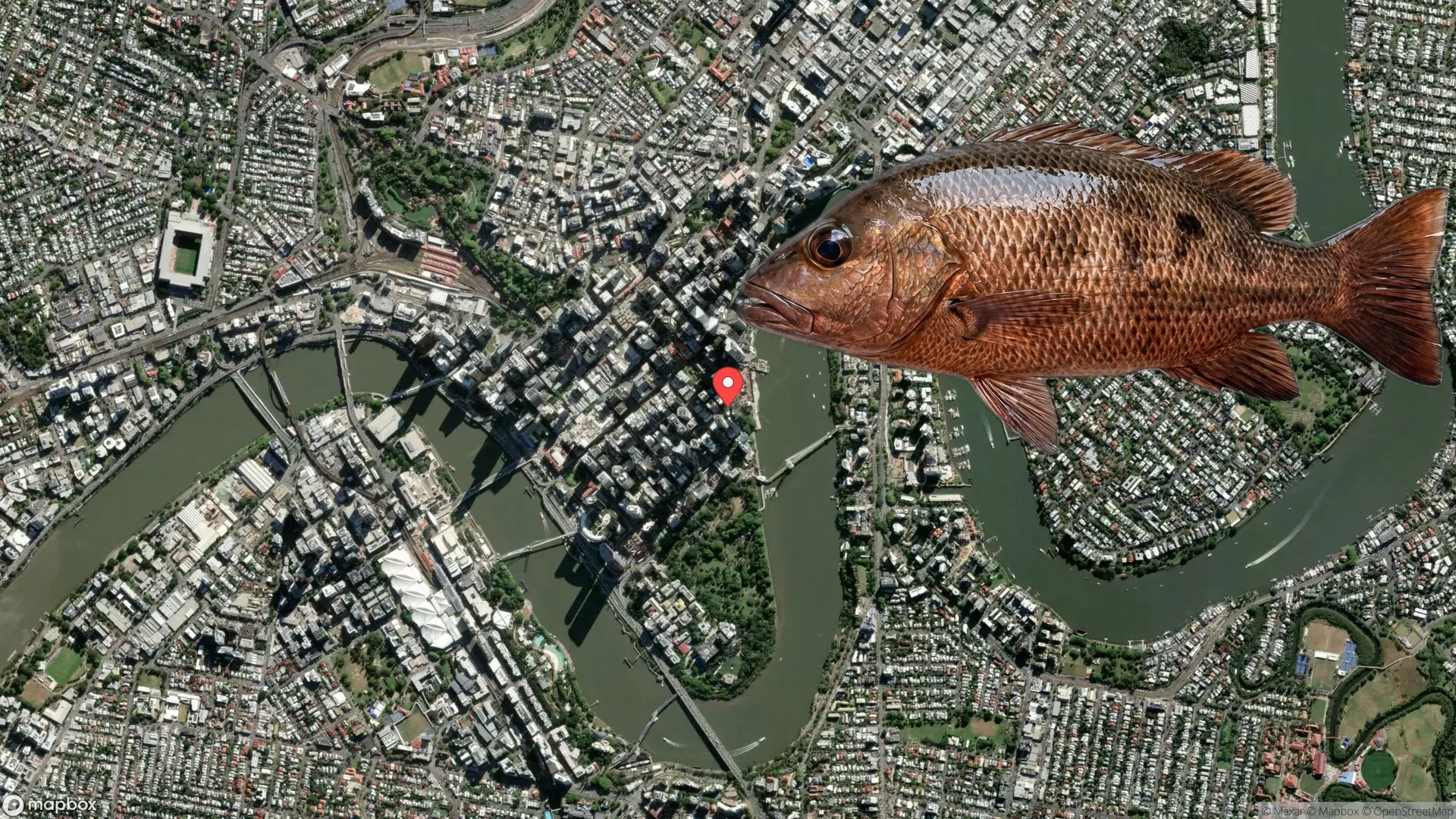
Target Species
Mangrove Jack
Gold Coast Canals offer some of the best Mangrove Jack fishing in Queensland, with endless artificial structure like pontoons and rock walls that hold trophy fish all year. The warm water trapped by concrete and the constant supply of baitfish create a perfect urban habitat where jacks ambush prey from deep cover.
For many Queensland anglers, the “red dog” or Mangrove Jack is the ultimate estuary prize, and the Gold Coast canal systems have become one of the top spots for hunting them. Unlike the remote mangrove creeks of the far north, this is urban warfare at its finest. You’re not dodging crocodiles and sandflies here; you’re mastering tight casts, maxed-out drags, and fish that know how to snap your line on a concrete pylon in a heartbeat.
The draw of the Gold Coast for jack hunters is the sheer amount of habitat. With over 400 kilometres of man-made waterways, the amount of “fishable” structure is incredible. Every pontoon, bridge pylon, retaining wall, and moored boat is a potential ambush zone for these aggressive predators. Though the environment is built by people, the jacks have adapted perfectly, using the shade of luxury homes and yachts to stalk baitfish.
This isn’t a fishery for the unprepared or the timid. Success here needs more than just dropping a line; it takes knowing how artificial structures affect water temp and flow. It takes gear that can stop a freight train in a phone booth. Whether you’re casting hardbodies at rock walls or skipping plastics under pontoons, the Gold Coast canals deliver a unique challenge where a 50cm+ trophy is well within reach if you put in the time.
Getting There
Mangrove Jack
Lutjanus argentimaculatus
Always check current NSW DPI regulations before fishing. Bag and size limits may change.
Understanding Gold Coast Canals: Location Intelligence
The best spots for Mangrove Jack in the Gold Coast Canals are the mid-sections of the Coomera and Nerang rivers, especially around man-made rock walls, bridge pylons, and pontoon systems. Areas like Paradise Point, Runaway Bay, and the tight channels of Hope Island are known for quality fish thanks to the high density of structure and tidal movement.
To consistently catch Mangrove Jack in this concrete maze, you need to stop thinking like a tourist and start thinking like a predator. The Gold Coast canal system is basically a giant, artificial reef. While it lacks the fallen timber of a wild river, it makes up for it with steady depth, heat benefits, and reliable bait funnels.
Location Essentials
The Thermal Advantage
One reason the Gold Coast holds so many big jacks is the “heat bank” effect. The kilometres of concrete walls and thousands of pontoons soak up sun all day. When the sun goes down and the air cools, these structures slowly release warmth into the water. Mangrove Jacks are cold-blooded and love warm water. This heat retention can keep local temps a degree or two above the main rivers, extending feeding into cooler months and keeping fish active even when the pressure changes.
Structure Orientation
In this setup, Mangrove Jacks are structure-hugging experts. They hardly swim through open water unless moving between covers at night.
- Pontoons: These are the high-rises of the jack world. The black plastic floats on many modern pontoons cast deep, dark shadows—the jack’s favourite hunting spot. The older the pontoon, the better, as marine growth (oysters, barnacles) draws in small baitfish and shrimp that jacks feed on.
- Bridge Pylons: The Gold Coast has dozens of bridges. The pylons create pressure zones where the tide speeds up, confusing baitfish. Jacks will sit in the slack water behind a pylon or right on the front edge, ready to grab passing prey.
- Rock Walls: Many canals, especially the older ones and main channels like the Nerang River, have rock retaining walls. These gaps make perfect hideouts for jacks to back into.
Key Zones to Target
While fish turn up all over, local knowledge highlights specific high-percentage areas. The Coomera River system, especially the upper stretches and canal estates off it (like Coomera Waters), is famous. The water here is often a bit more brackish, which jacks prefer.
Further south, the Nerang River holds huge fish. The stretch from the Council Chambers up to the M1 bridge is prime ground. The Paradise Point and Runaway Bay canals are also top spots, especially where the canals meet the Broadwater, letting seawater push bait schools in on the flood tide.
The “Shadow Line” Concept
If there’s one rule that decides success here, it’s the shadow line. Jacks have eyes set to look up and forward. They use the dark cover of a pontoon or bridge to hide, darting into the light to grab prey before vanishing back. Your lure needs to be spot on—casting near a pontoon isn’t enough. You need to get your lure deep into the shadow, often skipping it under the structure or running it tight along the dark edge where the fish is waiting.
Water clarity in the canals changes from crystal clear to murky after rain or strong tides. Usually, jacks are less cautious in dirty water or low light. In clear conditions, which happen often in Gold Coast winter or dry spells, daytime fishing can be hard. That’s when finesse methods and lighter leaders (though risky) matter, or when you should focus on dawn, dusk, and night sessions.
For more on spotting good water, check out our fishing spots guide which covers reading water in estuary systems.
Baitfish Pathways
Knowing how bait moves through the canals is the last key. Canal entrances are clear “choke points.” On a falling tide, baitfish that have been hiding in calm canals get washed out into the main river or Broadwater. Jacks will pack into these junctions, holding on rock wall corners or the first few pontoons inside the canal, waiting for the feed to come to them. On a rising tide, bait gets pushed deep into dead-end canals. In those times, the very ends—often near stormwater drains—can fire up, especially after a summer storm.
By seeing these patterns—heat benefits, shadow use, and tidal bait flow—you turn the Gold Coast canals from a confusing maze into a predictable hunting ground.
When Is the Best Time to Fish for Mangrove Jack at Gold Coast Canals?
The best time to target Mangrove Jack in the Gold Coast Canals is during the low-light periods of dawn and dusk, or throughout the night, especially from October to March. While daytime captures are possible by skipping lures deep under pontoons, the “red dogs” are most active and more likely to leave structure when the sun’s off the water and the humidity’s high.
Understanding the timing for Jacks comes down to their behaviour. They are ambush predators that rely on stealth. In the crystal-clear waters of a Gold Coast winter or a calm, sunny day, they feel exposed and will retreat deep into the darkest corners of a pontoon or rock wall.
The Seasonal Switch
October to March is the undisputed peak season for Mangrove Jack on the Gold Coast, matching rising water temperatures and storm activity.
Locals often say, “If you’re sweating, the Jacks are biting.” These fish love heat. As spring warms the water past 22°C, their metabolism kicks into overdrive. The humid, sticky days of summer—especially those building up to an afternoon thunderstorm—are alive with energy. The drop in barometric pressure often triggers a feeding frenzy. Once the water cools in late April or May, the bite slows sharply, though keen anglers can still hook up with resident fish from deep water using live bait.
Mangrove Jack Seasonal Calendar
Tidal Influence and Moon Phases
The best luring time is around 2 hours either side of the low tide change, particularly the last few hours of the run-out tide.
The tide decides where the bait moves, and that’s where the Jacks will be.
- Run-Out Tide: As the water drains from the canals, baitfish hiding in the shallow edges and mangrove roots get pushed out toward deeper channels. Jacks know this. They’ll set up at drain mouths, canal junctions, and the ends of rock walls to ambush the fleeing prey.
- Run-In Tide: Late in the day, a run-in tide flowing over sun-warmed rock walls lifts the temperature slightly. This can spark a hot bite right along the retaining walls.
- Slack Water: The turn of the tide (the 30 minutes when the water’s still at high or low) is often the “bite window.” Be ready.
Yes, moon phases affect feeding patterns a lot; the New Moon and Full Moon periods often bring the best sessions thanks to stronger tidal flow.
Many Gold Coast regulars back the New Moon. The darker nights let Jacks hunt more freely away from cover. But the Full Moon can also fire, as long as there’s solid tidal movement. The real key is current—flat, still water rarely brings good Jack action in the canals.
Tide Times
Optimal Tide
Last 2 hours of run-out and first hour of run-in
Tide movement is critical for fish activity. Most species feed actively during tide changes, especially the run-in (incoming) tide.
Detailed hourly tide charts
Official tide predictions
7-day tide calendar
Tide Guide
Best for most species. Fish move in to feed as water rises.
Good for ambush predators. Baitfish get swept out.
Slower bite. Fish less active during slack water.
New/full moon. Bigger tidal range, more fish movement.
Moon Phase & Solunar
Moon phases influence fish feeding behavior. New and full moons create spring tides with stronger currents and increased fish activity.
Best Phases
- New Moon: Peak feeding activity, spring tides, excellent fishing
- Full Moon: Strong tides, night feeding, great for nocturnal species
- 3 Days Either Side: Extended peak period for maximum results
Major/Minor Periods
- Major Periods: Moon overhead/underfoot (2-3 hours)
- Minor Periods: Moon rise/set (1-2 hours)
- Best Times: Major period + dawn/dusk = explosive action
Weather Conditions
Check current conditions before heading out. Wind, swell, and barometric pressure significantly affect fish behavior.
Official forecasts, warnings & radar
Hourly wind speed & direction
Swell height, period & direction
The Barometer Secret
Watch your weather app for the barometer. A sharp drop in pressure usually means a storm’s on the way. Jacks feel it coming and often feed hard before the weather hits. If the barometer’s falling and the sky’s turning grey, get on the water straight away.
What Tackle Do You Need for Mangrove Jack at Gold Coast Canals?
You need tough estuary gear, usually a 6-10kg baitcast or spin rod matched with a 3000-4000 size reel and at least 20lb braid, to stop Mangrove Jack from making it into structure.
This isn’t finesse fishing. When a Mangrove Jack hits, the first few seconds decide the outcome. Give them a little slack, and they’ll pull your lure—and your hopes—straight into the barnacles. The “Gold Coast Standard” has moved on from light bream rods (which just lead to heartbreak) to proper heavy estuary setups.
The Rod: Backbone is Everything
You need a rod that locks up fast. A soft, whippy tip might help with light lures, but it’ll buckle when you try to set the hook and turn the fish’s head.
- Baitcast Setup: Favored by many for accurate casts. A 5’6” to 6’4” rod rated 6-10kg (or 12-20lb) lets you thumb the spool for precise casts under pontoons and gives plenty of power for the short, intense fight.
- Spin Setup: Easier for skipping lures and lighter plastics. Look for a 6’6” to 7’0” rod with a “medium-heavy” or “heavy” rating. It must be stiff.
The Reel: Drag Power
Your reel needs a smooth but strong drag. For spin reels, a 3000 or 4000 size (like a Shimano Stradic or Daiwa BG) is standard. For baitcasters, low-profile reels (like the Shimano Curado or Daiwa Tatula 150/200 sizes) are ideal.
- Drag Setting: There’s a myth you should lock your drag solid. While it needs to be tight, a fully locked drag often leads to pulled hooks or broken line. Set it to about 80-90%—tight enough to hurt if you pull the line, but with just enough give to handle the shock of the strike.
Line and Leader: The Weakest Link
A 20-30lb braided main line tied to a 30-40lb fluorocarbon leader is the go-to setup for handling the rough structures in Gold Coast canals.
Monofilament stretches too much. Braid is a must for feeling the bite and setting the hook fast.
- Main Line: 20lb to 30lb high-quality PE braid.
- Leader: This is critical. You need toughness. 30lb fluorocarbon is the minimum. Many locals run 40lb or even 50lb when fishing around sharp, barnacle-covered pylons. The leader should be at least rod-length (1.5m - 2m) to protect against concrete and oysters.
For more tackle basics, see our tackle essentials guide.
Complete Tackle Specifications
| Component | Specification |
|---|---|
| Rod (Baitcast) | 5'6" - 6'4" Medium-Heavy, 6-10kg rating |
| Rod (Spin) | 6'6" - 7'0" Medium-Heavy, fast taper |
| Reel (Baitcast) | 150-200 size low profile, 7kg+ drag |
| Reel (Spin) | 3000-4000 size, high gear ratio |
| Main Line | 20-30lb PE Braid (8-strand preferred) |
| Leader | 30-50lb Fluorocarbon (High abrasion grade) |
| Hooks (Live Bait) | 4/0 - 6/0 Heavy Gauge Gamakatsu/Owner |
| Jigheads | 3/8oz - 1/2oz Heavy Wire (Mustad XXH or TT HeadlockZ) |
How Do You Rig for Mangrove Jack?
The most effective rig for live baiting Mangrove Jack is a running sinker rig with a snelled double-hook setup, while lure anglers should use a twisted leader knot or FG knot to connect a heavy fluorocarbon leader directly to the braid.
Simplicity is key. Fiddly rigs with too many swivels and clips just create more weak spots. When live baiting—which is arguably the best way to hook a trophy Jack in the canals—a Double Hook Snell Rig works better. It lets you present a live mullet or herring naturally while making sure you stay connected, even if the fish nips at the tail.
The “Canal brawler” Live Bait Rig
This rig keeps live bait right in the strike zone (near the bottom or hovering beside a pylon) without giving the fish any reason to feel something’s wrong.
Building the Perfect Live Bait Snell Rig
- 1
Select Leader Material
Cut a 1.5-metre length of 40lb fluorocarbon leader. Don’t cut corners here; this line will be grinding against barnacles.
- 2
Snell the Bottom Hook
Take a 4/0 or 5/0 heavy-gauge suicide hook (like a Gamakatsu Octopus). Pass the leader through the eye and tie a snell knot, fixing the hook at the very end of the line.
- 3
Measure Bait Size
Work out the size of your average bait (e.g., a 10cm poddy mullet). You want the second hook to sit near the bait's back or nose.
- 4
Add the Second Hook
Slide a second identical hook down the leader. Place it about 5-8cm above the bottom hook (adjust based on bait size). Snell this hook in place. Both hooks should stay fixed.
- 5
Attach the Swivel
Tie a high-quality size 4 barrel swivel to the other end of the leader using a Uni knot or Blood knot.
- 6
Main Line Prep
Thread a small ball sinker (size 2-4, just enough to get down) onto your main braid line. Add a small lumo bead after it to protect the knot.
- 7
Connect the Rig
Tie your main line to the other end of the swivel. The sinker should slide freely on the main line, stopping at the swivel.
- 8
Baiting Up
Hook the top hook through the nose or lips of the live bait, and the bottom hook gently under the skin near the tail or anal fin. This helps the bait swim true.
For Lure Anglers: If you’re casting lures, your “rig” comes down to one thing—your leader knot.
- The Knot: Master the FG Knot. It’s the strongest, thinnest join from braid to heavy leader. It shoots through the guides smoother than a Double Uni or Albright, which matters when you’re trying to place your cast just right.
- The Clip: Don’t tie direct to the lure if you switch lures a lot. Use a tough snap clip (like a Mustad Fastach), but make sure it’s rated to at least 40lb. Jacks can crush flimsy clips.
What Bait Works Best for Mangrove Jack?
Live Poddy Mullet and Herring are the absolute best baits for Mangrove Jack in the Gold Coast canals, followed closely by fresh dead mullet fillets and large banana prawns.
Lures are fun, but live bait is the go-to for consistent results on big Jacks. The canals are packed with baitfish, so matching what’s already in the water makes all the difference. You can gather your own using a cast net in shallow sandy patches or near stormwater drains (just check local rules on net use).
Live Baits
- Poddy Mullet: The top pick. Tough as nails, they stay lively for hours on a hook, and Jacks can’t resist them. A 10-15cm mullet is the perfect size.
- Herring: “Jack Candy.” They thrash hard when a predator’s near, setting off strike triggers. But they’re delicate—keep them well oxygenated or they’ll fade fast.
- Pike: Often ignored, but a small pike (20cm) is a feast a 50cm+ Jack won’t pass up.
Dead Baits
No live bait? Fresh dead bait still pulls fish, especially after dark when scent rules.
- Mullet Fillet: A fresh strip of mullet, scaled and filleted, leaves a strong oil trail that draws fish in.
- Whole Prawns: Big green banana prawns from the shop (uncooked) work a treat.
Artificials
The best lures are 3-4 inch paddle tail soft plastics (like ZMan MinnowZ) rigged on heavy jigheads, or suspending hardbody minnows (like Lucky Craft Pointers) that can be paused in the strike zone.
- Soft Plastics: ZMan 3” MinnowZ or 4” DieZel MinnowZ in white, gold, or “opening night” colours. Rig them on a 3/8oz or 1/2oz TT HeadlockZ HD jighead. The weight helps your lure reach the strike zone fast, before the current drags it away.
- Hardbodies: Suspending minnows (80-100mm) are deadly. Cast, crank it down, then PAUSE. That still moment is when bites usually happen.
Bait Performance Analysis
| Live Poddy Mullet | Live Herring | Dead Mullet Strip | ZMan Soft Plastic | |
|---|---|---|---|---|
| Effectiveness Rating | 10/10 (Elite) | 9/10 (Excellent) | 7/10 (Good) | 8/10 (Versatile) |
| Durability on Hook | High - Very tough | Low - Dies easily | High | Extreme (ElaZtech) |
| Scent Dispersion | Medium (Vibration high) | High (Scales/Flash) | Very High (Oily) | Low (Add Scent) |
| Availability | Cast net required | Cast net/Jig | Easy (Bait shop) | Tackle Store |
| Best Use Conditions | All conditions, esp day | Clean water, fussy fish | Night fishing, dirty water | Reaction bite, searching |
The 'By-Catch' Bonus
When fishing with live herring or mullet in the canals, you’ll often hook up to Trevally (GTs and Big Eyes) and large Flathead. They’re not the target, but a 60cm GT on Jack gear in a canal puts up a wild, heart-pounding fight!
For more on picking the right bait, check out our full bait guide.
How Do You Catch Mangrove Jack at Gold Coast Canals?
To catch Mangrove Jack in the canals, you must cast lures or baits deep into structure like pontoons and bridge pylons, then use a locked drag and aggressive rod work to immediately turn the fish’s head away from cover before it snaps the line.
Catching a Mangrove Jack is less about finesse and more about controlled aggression. The “strike” is often described as an implosion; there is no nibble, just a sudden, violent weight that tries to rip the rod from your hands. Your technique needs to be spot on from the cast to the net.
The Art of the Cast
Accuracy is the single most important skill. Mangrove Jacks will rarely move more than a metre or two to eat a lure during the day. You need to put the offering right on their nose.
- Skip Casting: This is the technique of skipping a soft plastic lure across the surface of the water, like a stone, so it slides deep underneath a pontoon or jetty. This puts the lure into the darkest, safest part of the structure where the biggest fish hide.
- Parallel Casting: Instead of casting at a rock wall, position your boat (or walk along the shore) so you can cast along it. This keeps your lure in the strike zone for the entire retrieve, rather than just the first few seconds.
- The “Silent Entry”: A heavy splash spooks wary fish in shallow canals. Feather your line with your finger just before the lure hits the water to soften the landing.
The Retrieve
A slow, deliberate retrieve with pauses works best for hardbodies to mimic stunned baitfish, while a medium-paced “slow roll” is effective for soft plastics to keep them swimming just above the bottom structure.
If you are using hardbody lures, the “twitch and pause” is deadly. Cast close to the structure, crank the reel 3-4 times to get the lure down to depth, and then STOP. Let it sit suspended for 3 to 5 seconds. This mimics a stunned baitfish. The hit almost always comes on the pause.
For soft plastics, the “slow roll” is king. Let the plastic sink to the bottom (watch your line for ticks on the drop!), then wind just fast enough to get the tail paddling. If you feel the lure bump a rock or pylon, don’t strike—pause it. That deflection often triggers the predator’s instinct.
The Fight: Turn and Burn
You must apply maximum pressure immediately upon hookup by clamping your thumb on the spool (for baitcasters) or cupping the spool (for spin reels) and physically lifting the rod to drag the fish away from the structure in the first three seconds.
This is where the “Gold Coast Handshake” happens—the moment you get dusted.
- The Hit: When you feel the weight, do not hesitate. Strike hard to drive the thick-gauge hooks into the Jack’s tough jaw.
- The Turn: You have roughly two seconds to turn the fish’s head. If the fish gets momentum back toward the snag, you will lose. Wind frantically. If you are using a baitcaster, clamp your thumb down on the spool to stop any line slipping, even if the drag is tight.
- The Extraction: Pump and wind. Keep the rod tip low to the side to pull the fish off balance. Do not high-stick (lift the rod straight up) as a big Jack will pull the rod down and snap it.
- The Net: Never try to lift a Jack into the boat or onto the bank by the leader. Their teeth will slice through tensioned fluorocarbon in an instant. Always use a landing net.
For more tips on handling powerful fish, check out our fishing techniques guide.
What Are the Rules for Fishing at Gold Coast Canals?
In Queensland, the minimum legal size for Mangrove Jack is 35cm, and the possession limit is 5 fish per person.
The Gold Coast canals are a shared waterway, and respecting both the rules and the locals is key to keeping this fishery open and productive.
Queensland Fisheries Regulations
- Size Limit: Minimum 35cm.
- Bag Limit: 5 per person in possession.
- Closed Season: There is no closed season for Mangrove Jack in tidal waters (unlike Barramundi).
- Licence: No recreational fishing licence is required for tidal waters in Queensland (only for stocked impoundments).
Note: Regulations can change. Always verify with the Department of Agriculture and Fisheries before your trip.
Conservation and Ethics
While the bag limit is 5, most local anglers live by “limit your kill, don’t kill your limit.” Mangrove Jacks are slow-growing. A 50cm+ fish is a breeding machine and is far more valuable to the ecosystem in the water than on a plate.
- Catch and Release: Consider releasing any fish over 50cm. These are the prime breeders.
- Handling: Use a rubber-mesh net to protect their slime coat. If taking photos, support the fish’s weight with two hands—never hang a heavy fish by its jaw on a grip, as this can damage its spine.
- Respect Residents: You are fishing in people’s backyards. Do not cast onto private pontoons (cast under or beside them). Keep noise down, especially during early morning or late night sessions. Do not shine spotlights into houses.
Critical Safety Considerations
- Sharp Hazards: Mangrove Jacks have formidable canine teeth that can inflict deep lacerations. They also have razor-sharp gill rakers and dorsal spines. Use long-nose pliers to remove hooks and never put your fingers inside the gill plate.
- Stonefish: While rare in the clean sand canals, stonefish can inhabit the older rock walls and weed beds. Wear sturdy footwear if wading or walking the banks.
- Boat Traffic: The Gold Coast Broadwater and main channels are “marine highways.” Be highly visible at night (use anchor lights) and be aware of large cruisers throwing massive wakes that can capsize small tinnies or kayaks.
For more on staying safe near the water, read our rock fishing safety guide (many principles apply to rock walls).
Your Questions About Mangrove Jack Fishing at Gold Coast Canals
What is the best time to fish at Gold Coast Canals?
The best time to fish is during low light periods—specifically dawn, dusk, and throughout the night—when Mangrove Jack leave their structure to hunt. While you can catch them during the day by skipping lures deep into shadows, your catch rate will jump after dark. The "golden hour" is the shift from light to dark. If you time this with a tide change, you're in for a hot session. Summer nights with high humidity are the absolute peak times.
Is Gold Coast Canals suitable for beginners?
Gold Coast Canals are considered an intermediate to advanced fishery because accurate casting and quick reaction times are needed to land these powerful fish. If you're a complete novice, you might find it frustrating. You'll lose lures to pylons, rock walls, and fish. However, it's a great place to learn accuracy. If you're starting out, try live bait (poddy mullet) on a running sinker rig. This takes the guesswork out of lure work and lets you focus on the fight when the fish hits.
Do I need a boat to fish at Gold Coast Canals?
No, you don't need a boat; the Gold Coast has plenty of public access for land-based fishing along parks, bridges, and rock walls. In fact, land-based anglers often have the edge at bridges. You can walk right under and cast parallel to the pylons. Top spots include the bridges around Paradise Point, the rock walls at the Sundale Bridge, and the parklands along the Coomera River. Just respect private property and stick to public easements.
Where are the best specific spots at Gold Coast Canals?
The best spots are the Sovereign Islands bridges, the Runaway Bay canal entrances, and the rock walls lining the Nerang River near the Council Chambers. Look for "pinch points" where water funnels through narrow gaps, creating current. The Sovereign Islands bridges are famous for big jacks because the deep water and big pylons offer perfect cover. The Emerald Lakes system is also productive, though the locks can make access tricky for boats.
What size Mangrove Jack can I expect?
The average Mangrove Jack caught in the canals is between 35cm and 45cm, but fish over 50cm are caught regularly by dedicated anglers. A 50cm Jack is the benchmark trophy for the system. Fish over 60cm ("dogs") are around but are tough to land due to their power and the rough surroundings. If you hook a 50cm+ fish in a canal, you've done something special.
Is there parking available at Gold Coast Canals?
Yes, there's plenty of street parking near most public parks and bridges, but always check signs for time limits and avoid blocking driveways. Popular spots like Paradise Point Parklands and Broadwater Parklands have dedicated car parks. If you're launching a boat, the ramps at Grand Hotel (Labrador) and Coomera have trailer parking, though they fill up early on weekends.
Can I fish at night at Gold Coast Canals?
Yes, night fishing is highly recommended and often the best time to catch Mangrove Jack as they move away from structure. Night fishing opens up more water. Jacks will cruise the edges of rock walls and even feed on prawns at the surface under lights. Surface lures (poppers and walkers) can be deadly at night. Cast them near lit areas where insects and prawns gather.
Where can I buy bait and tackle near Gold Coast Canals?
Most tackle shops along the Gold Coast stock live bait and lures suitable for Jacks. Try BCF Southport, Tackle World Runaway Bay, or local bait shops near the boat ramps. Local tackle shops can provide fresh live bait like herring and mullet, plus insider tips on what's working in the canals that week.
Latest Fishing Reports
Stay updated with the latest catches, conditions, and hot tips from Gold Coast Canals. Check these sources for recent reports filtered by location and species.
Fishraider
Community fishing reports and catch logs
Fishing World
Professional fishing reports and news
Tackle World
Local tackle shop reports and tips
NSW DPI
Official recreational fishing reports
Fishingmonthly
Monthly fishing magazine and reports
Hooked Up
Video fishing reports and tips
Pro Tip: Filter Reports
When browsing reports, search for "Gold Coast Canals" or nearby landmarks. Look for reports from the last 7-14 days for the most relevant information. Pay attention to tide times, weather conditions, and successful techniques mentioned.
Share Your Catch
Caught something at Gold Coast Canals? Share your success with the community! Upload your catch photos and reports to help other anglers.
Disclaimer: Fishing regulations can change. Always verify current size and bag limits with the Queensland Department of Agriculture and Fisheries before heading out. Local conditions, including weather and access, can vary.
The Gold Coast canals offer a unique fishing experience—a chance to tangle with one of Australia’s most aggressive predators against a backdrop of urban lights. It’s a game of patience, precision, and the odd heartbreak. But when that red flash bursts from the shadows and your drag screams, you’ll get why the “Jack addiction” is real.
Explore more fishing spots in the area, learn about other species like the dusky flathead that share these waters, or brush up on your fishing knots to make sure your leader holds when it matters most. Good luck, and watch your fingers!
Quick Info
- Location
- Gold Coast Canals
- Coordinates
- -27.4700, 153.0300
- Difficulty
- intermediate
- Target Species
- Mangrove Jack
Conditions
Check local weather and tide conditions before heading out.