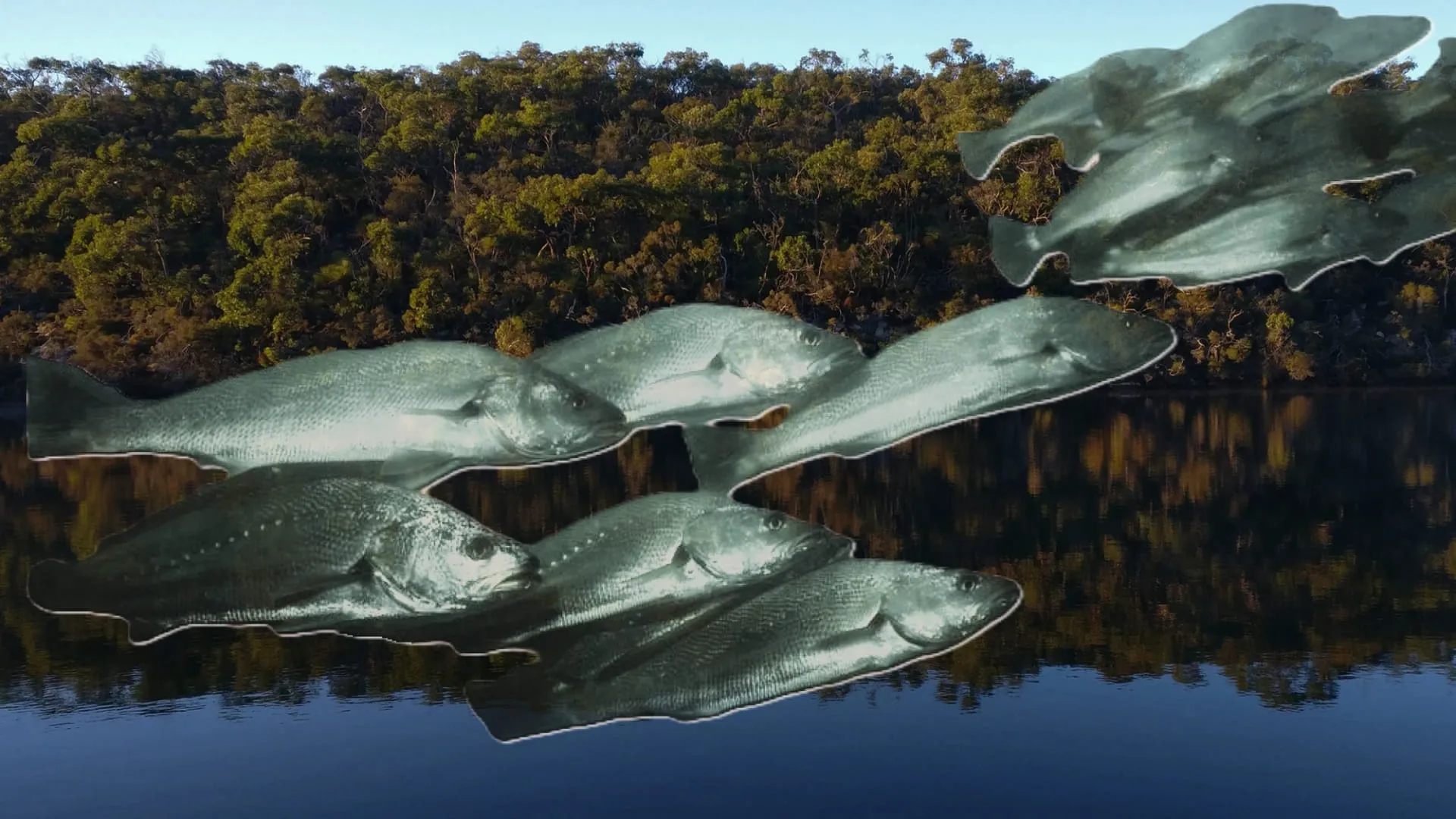
Target Species
Mulloway
Mulloway fishing at Glenelg River is legendary among Australian anglers, offering some of the most consistent sport for trophy-sized mulloway in Victoria. This unique estuarine system provides the perfect combination of deep salt wedge channels, abundant live bait, and structural cover that allows these silver ghosts to thrive year-round.
Flowing through the rugged landscape of Nelson in the far south-west corner of Victoria, the Glenelg River is not just another coastal waterway. It is a premier destination where dedicated fishers come to test their patience and gear against one of the hardest-fighting estuarine species in the country. What makes the Glenelg so special is its structure. Unlike shallow, sandy bar-bound systems, this river carves deep into limestone gorges, creating deep holes, undercuts, and a distinct salt wedge where heavy saltwater sits beneath the freshwater outflow.
This hydrological phenomenon creates a perfect highway for mulloway, which use the denser, salty bottom layer to travel kilometres upstream in search of food. Whether you are casting soft plastics along the rock walls, slow-trolling live mullet behind a boat, or soaking fresh squid on a balmy summer night, this river offers a diverse range of environments to target them. In this guide, you will learn how to read the river, decode the seasonal movements of these magnificent fish, select the perfect tackle, and apply local secrets to convert frustrating near-misses into unforgettable trophy catches.
Getting There
Mulloway
Argyrosomus japonicus
Always check current NSW DPI regulations before fishing. Bag and size limits may change.
Understanding Glenelg River: Location Intelligence
The Glenelg River is a highly dynamic estuarine system that behaves differently to almost any other river in Victoria. To successfully target mulloway here, you must understand its unique physical layout and hydrology. The river functions as a salt wedge estuary, meaning that heavier, highly saline ocean water pushes along the bottom of the river channel, while lighter freshwater from upstream flows over the top.
Mulloway are highly sensitive to salinity and water temperature, and they almost exclusively patrol this deeper, salty bottom layer. When heavy winter rains fill the catchment, the freshwater flow pushes this salt wedge down towards the river mouth near Nelson. During these periods, the fish concentrate in the lower reaches, particularly around the entrance, the poles, and the bridge. Conversely, during dry summer spells, the salt wedge pushes up to 50 kilometres upstream, allowing mulloway to travel far past Pritchards and Sandy Waterhole.
The river channel itself is deep, often dropping to depths of 10 to 15 metres in the main bends, with steep limestone cliffs, reed beds, and submerged timber providing exceptional structure. Mulloway use these deep holes and underwater ledges to ambush schools of baitfish, particularly mullet, juvenile salmon, and estuary perch. Key structural hotspots include the rock walls near Donovans, the reed edges around Tailors, and the deep, slow-moving pools opposite Simpsons landing. Understanding how to find the boundary line where the freshwater meets the salt wedge on your sounder is the absolute key to finding active fish.
When the river mouth is open, the tidal influence is strong, bringing clean, bait-rich ocean water into the lower estuary on the flood tide. This creates a perfect feeding zone near the entrance, where mulloway wait behind sandbars and rock structures to pick off incoming prey. However, when the entrance closes or becomes highly restricted, the river behaves more like a deep lake, and the fish rely heavily on wind-driven currents and the movement of bait schools.
For land-based anglers, targeting the deep water off the wooden jetties or the rock walls near the town centre is highly productive. Boat anglers have the advantage of using fish finders to locate the exact depth of the salt wedge, which often shows up as a distinct line of suspended sediment or a temperature change on the screen. By positioning your baits right on this boundary, you put yourself directly in the path of cruising fish.
Location Essentials
When Is the Best Time to Fish for Mulloway at Glenelg River?
The best time to fish for Mulloway at Glenelg River is during the dark hours of night, particularly around the high tide change that coincides with a new or full moon from September to December. Dawn and dusk also offer excellent bite windows as these predators use low light conditions to ambush unsuspecting baitfish.
To consistently find success on this river, you must understand how the unique estuary system behaves. The Glenelg is a classic salt wedge estuary. This means that heavier, salty seawater pushes in from the Southern Ocean and crawls along the bottom of the river channel, while lighter freshwater from upstream flows along the surface. Mulloway are highly sensitive to salinity and water temperature, and they will almost always hold in that lower, salty layer of water.
When heavy winter rains hit the western district, a massive volume of fresh water pushes down the system. This dirty freshwater flush forces the Mulloway down into the lower reaches of the estuary, concentrating them around the river mouth, the poles, and the Nelson bridge. Conversely, during extended dry summer spells, the salt wedge moves much further upstream. During these drier periods, you can find fish schooling up past Donovans, all the way up to the limestone cliffs near Princess Margaret Rose Cave.
Tidal movement is another critical factor. The run-out tide is highly productive because it washes crabs, shrimp, and small baitfish out of the shallow reed beds and into the deeper channels where Mulloway wait. If you can time your session so that the top of the high tide or the start of the run-out occurs right at dusk or in the middle of the night, your chances of hooking a silver ghost increase dramatically.
Moon phases play a massive role in their feeding activity. The three days leading up to a full moon and the three days after are prime times. During these periods, the tidal movement is at its strongest, which stirs up the river bed and triggers a feeding frenzy. Mulloway have incredibly sensitive eyes, much like barramundi, which allows them to hunt efficiently in pitch blackness. Because of this visual sensitivity, they are easily spooked by artificial light. Keep your headtorches off the water and avoid shining bright lights into the river, as this will instantly shut down the bite.
Mulloway Seasonal Calendar
Tide Times
Optimal Tide
First two hours of the run-out tide coinciding with dusk or dawn.
Tide movement is critical for fish activity. Most species feed actively during tide changes, especially the run-in (incoming) tide.
Detailed hourly tide charts
Official tide predictions
7-day tide calendar
Tide Guide
Best for most species. Fish move in to feed as water rises.
Good for ambush predators. Baitfish get swept out.
Slower bite. Fish less active during slack water.
New/full moon. Bigger tidal range, more fish movement.
Moon Phase & Solunar
Moon phases influence fish feeding behavior. New and full moons create spring tides with stronger currents and increased fish activity.
Best Phases
- New Moon: Peak feeding activity, spring tides, excellent fishing
- Full Moon: Strong tides, night feeding, great for nocturnal species
- 3 Days Either Side: Extended peak period for maximum results
Major/Minor Periods
- Major Periods: Moon overhead/underfoot (2-3 hours)
- Minor Periods: Moon rise/set (1-2 hours)
- Best Times: Major period + dawn/dusk = explosive action
Weather Conditions
Check current conditions before heading out. Wind, swell, and barometric pressure significantly affect fish behavior.
Official forecasts, warnings & radar
Hourly wind speed & direction
Swell height, period & direction
The Stealth Factor
Mulloway have a highly developed lateral line system that detects tiny vibrations in the water, and their eyes are incredibly sensitive to light. When night fishing from a boat or the bank, keep noise to an absolute minimum. Avoid banging sinkers against the boat hull, and never shine your headtorch directly onto the water surface. A stealthy approach is often the difference between a blank night and a trophy fish.
What Tackle Do You Need for Mulloway at Glenelg River?
For targeting Mulloway at Glenelg River, you need a medium-heavy spinning rod paired with a smooth 3000 to 5000 size reel spooled with 20 to 30-pound braid and a strong fluorocarbon leader. This setup provides the necessary pulling power to stop large fish from reefing you in the submerged timber and limestone structures.
Your choice of tackle needs to be balanced. While you want enough power to control a large fish, using gear that is too heavy will reduce your casting distance and prevent you from presenting baits naturally. If you are fishing the upper reaches near the cliffs where snags are common, you must opt for heavier line classes to prevent being cut off on the sharp limestone edges.
For general estuary work, a rod around 7 to 8 feet in length with a line rating of 6 to 10 kilograms is ideal. This gives you the versatility to cast unweighted live baits or heavy soft plastics. Pair this with a high-quality reel that features a sealed drag system, such as a Daiwa Saltist MQ 4000. The drag must be incredibly smooth, as Mulloway are famous for making blistering first runs when they feel the hook.
Your main line should be a high-quality, thin-diameter braid. Braid offers superior sensitivity, allowing you to feel the subtle taps of a Mulloway mouthing a bait in deep water. Connect your braid to a leader of 20 to 30-pound fluorocarbon using a reliable knot like the FG knot. Avoid using light leaders below 15 pounds; many local anglers have suffered heartbreak when a mystery monster has rubbed through a light leader during a long fight. For more tackle basics, see our tackle essentials guide.
Complete Tackle Specifications
| Component | Specification |
|---|---|
| Rod | 7.6ft medium-heavy spin, 6-10kg rating, fast action |
| Reel | 3000-4000 size spinning reel with minimum 8kg drag |
| Main Line | 20lb to 30lb high-quality PE braid |
| Leader | 20lb to 30lb fluorocarbon, 1.2m to 1.5m length |
| Hooks | 4/0 to 6/0 snelled circle hooks or suicide hooks |
| Sinker | Size 1 to 3 ball sinker running directly on the leader |
| Swivels | Size 4 rolling crane swivels (strong and compact) |
| Rig Type | Running sinker rig or a bridle-rigged live bait setup |
How Do You Rig for Mulloway?
The most effective rig for Mulloway at Glenelg River is the running sinker rig, which allows a fish to pick up the bait and run without feeling any resistance from the weight. This is critical because Mulloway are notorious for dropping baits if they detect any unnatural tension on the line.
When constructing your rig, simplicity and strength are key. Using a snelled twin-hook setup is highly recommended when using larger live baits like mullet or salmon trout. This ensures that no matter which end of the bait the Mulloway attacks, there is a hook positioned to find a secure hold. Circle hooks are preferred by many modern anglers as they almost always hook the fish in the corner of the mouth, making catch and release much safer and easier.
The running sinker rig keeps your bait swimming naturally near the bottom where the fish are holding. To construct this rig properly, follow these steps to ensure your connections are flawless and strong enough to handle a lifetime trophy.
Building the Best Snelled Running Sinker Rig
- 1
Thread the Running Sinker
Slide a small ball sinker onto your main line or a heavy mono leader. Use the lightest sinker possible that will still hold your bait near the bottom.
- 2
Add a Buffer Bead
Slide a small rubber bead onto the line after the sinker. This protects the knot on your swivel from being damaged by the heavy sinker sliding up and down.
- 3
Tie on the Swivel
Securely tie a strong size 4 rolling swivel to the end of your main line using a Uni knot or a Palomar knot.
- 4
Prepare the Leader
Cut a 1.2-metre length of 25-pound fluorocarbon leader material. This length keeps your bait away from the main line while remaining easy to cast.
- 5
Snell the Hooks
Snell two 5/0 circle hooks onto the leader. Space them approximately 10 to 15 centimetres apart, depending on the average size of your live baits.
- 6
Connect Leader to Swivel
Tie the open end of your fluorocarbon leader to the remaining eye of the rolling swivel using a strong Uni knot.
- 7
Check and Test
Inspect all knots for neatness, moisten them, and pull them tight. Test the sliding action of the sinker to ensure it moves freely without catching.
What Bait Works Best for Mulloway?
Live bait is the undisputed king for Mulloway at Glenelg River, with fresh live mullet and juvenile salmon trout being the most effective choices. These baits emit strong distress vibrations and scent trails that trigger the predatory instincts of large resident fish.
While artificial lures certainly have their place during daylight hours, nothing beats a fresh, wriggling live bait when the sun goes down. Mulloway are opportunistic hunters, but they are also highly selective. They will easily bypass a stale, frozen bait in favour of something that is alive and kicking.
You can easily catch your own live bait along the shallow sand flats and reed edges of the Glenelg River. Use a light estuary rod with a size 10 hook and a tiny piece of worm or dough to target mullet, or cast small metal slugs into the schools of salmon trout near the river mouth. Once caught, keep them healthy in a aerated livewell or a bucket with a battery-powered aerator.
If live bait is unavailable, fresh squid is the next best option. Buy whole squid from local bait shops or catch them yourself in the nearby bays, and present them either whole or cut into thick, juicy strips. Ensure the hook is exposed clearly so that it can easily penetrate the hard jaw of a Mulloway when you strike.
Bait Performance Analysis
| Live Mullet | Live Salmon Trout | Fresh Squid | |
|---|---|---|---|
| Effectiveness Rating | Outstanding | Excellent | Very Good |
| Durability on Hook | Excellent | Good | Excellent |
| Scent Dispersion | Moderate | High | Very High |
| Availability | High (catch locally) | Seasonal | Easy to buy |
| Best Use Conditions | Night sessions in deep channels | Lower estuary near the mouth | Strong tidal flows and dirty water |
Bridle Rigging for Longevity
To keep your live baits swimming naturally for hours, try bridle rigging them. Instead of passing the hook directly through the fish’s back or nose, use a small bait needle to pass a dental floss loop through the cartilage in front of the eyes. Slip the loop onto your hook and twist it tight. This keeps the hook completely exposed and prevents the bait from getting waterlogged, ensuring it stays active and attractive for much longer.
How Do You Catch Mulloway at Glenelg River?
Catching Mulloway in the Glenelg River requires a mix of precise bait placement along the deep river drop-offs and extreme patience during the bite. By targeting the salt wedge layer where these predators patrol, you can present your bait or lure exactly where they are actively feeding.
Casting Strategy and Bait Placement
The Glenelg River is famous for its steep clay banks and the “second step” drop-offs. When fishing from a boat or the shore, your primary goal is to place your bait right on this ledge, which is usually found three to four metres from the water’s edge. Mulloway use these underwater steps as highways, cruising along them to ambush unsuspecting baitfish.
If you are using a boat, position yourself in the deeper channel and cast back towards the shallow edges, letting your rig slide down the clay slope until it rests on the step. For land-based anglers, a short, angled cast along the bank is far more effective than casting straight out into the middle of the river.
When trolling, which is a highly successful local method, use an electric motor to quietly move along the reed edges. Slow-trolling live mullet or juvenile salmon trout behind the boat at a walking pace keeps your offering in the strike zone. Keep all bankside noise and light to an absolute minimum. Mulloway have highly sensitive lateral lines and eyes that are incredibly sensitive to light. Slamming boat hatches or shining bright torches on the water will instantly spook the fish.
Bite Detection and Hookset
A Mulloway bite is rarely a sudden, aggressive smash. More often, it begins as a series of slow, deliberate tugs as the fish mouths the bait and tests its weight. This is the critical moment where many anglers drop the fish.
If you are using suicide hooks on a running sinker rig, leave your reel in spool-free or bait-runner mode. Let the fish run, pause to swallow the bait, and run a second time before you engage the reel and strike firmly. If you are using circle hooks, you must change your approach. Do not strike at all. Instead, let the line go tight as the fish walks away, and slowly wind down to allow the hook to slide and set itself perfectly in the corner of the mouth.
Fighting and Landing
Once hooked, a big Glenelg mulloway will make a powerful, blistering run towards the nearest structure, which is usually the thick reed beds or submerged timber. Keep your rod tip high and apply steady side pressure to steer the fish into open water.
Do not rush the fight. Mulloway have soft mouths, and pulling too hard can tear the hook free. Let your drag do the work, and keep a steady bend in the rod. When the fish is spent and comes to the surface, guide it head-first into a large, knotless landing net. Never lift a heavy Mulloway by the line or gill covers if you plan to release it. Mastering these fishing techniques will greatly increase your success rate on this river.
What Are the Rules for Fishing at Glenelg River?
Fishing for Mulloway in the Glenelg River is governed by Victorian recreational fishing rules, which specify a minimum legal size limit of 60 centimetres and a daily bag limit of five fish per person. All anglers must hold a valid Victorian Recreational Fishing Licence unless they are exempt.
Regulations and Conservation
It is vital to check current state regulations before heading out, as rules can change. Because Mulloway are slow-growing, long-lived fish, practicing sustainable fishing is highly encouraged on the Glenelg.
Consider releasing larger breeding fish over one metre to help preserve the local population. When releasing a fish, handle it with wet hands, keep it in the water as much as possible, and use a wet brag mat to measure it.
- Always wet your hands or use a wet cloth before touching the fish to protect its slime coating.
- Use a knotless landing net to prevent damage to the scales and fins.
- Support the fish horizontally under the belly when taking photos.
- Revive the fish by holding it upright in the water facing the current until it swims away strongly.
Critical Safety Considerations
The Glenelg River can present several hazards that anglers must prepare for:
- Slippery Clay Banks: The steep banks along the river can become incredibly slick, especially after rain or high tides. Watch your footing when casting from the shore.
- Strong Tidal Flows: When the river mouth at Nelson is opened, the tidal flow can become exceptionally strong and dangerous for small boats and swimmers.
- Submerged Timber: Heavy snags and fallen trees are prevalent above Saunders Landing. Navigate slowly to avoid damaging your boat or motor.
- Snakes: Tiger snakes and copperheads are common in the riverside reeds during the warmer months. Keep a first aid kit handy and watch where you step.
- Emergency Contacts: In case of an emergency, contact 000 immediately. Ensure you practice proper fishing safety at all times.
Your Questions About Mulloway Fishing at Glenelg River
What is the best time to fish at Glenelg River?
The best time to fish for Mulloway at Glenelg River is during the warmer months from October to January, specifically around the full moon or new moon phases.
To maximise your chances, plan your peak fishing hours around the high tide at night, dawn, or dusk. When to fish is highly dependent on tidal movement, as the transition from slack water to a run-in tide often triggers a major feeding run along the deep clay steps.
Is Glenelg River suitable for beginners?
Yes, the Glenelg River is suitable for beginners, though targeting Mulloway specifically can be a challenging pursuit that requires patience and skill.
While seasoned anglers chase the elusive mulloway, there are plenty of beginner friendly options along the river. Novice fishers can easily target estuary perch, bream, or mullet from the many accessible fishing platforms, making it one of the most versatile and easy fishing spots in western Victoria.
Do I need a boat to fish at Glenelg River?
No, you do not need a boat to fish the Glenelg River, as there are numerous productive land-based locations along its banks.
Excellent shore fishing can be had from the jetties, public landings, and rock walls near Nelson and Donovans. However, having a boat or kayak does give you access to the deeper channels and remote clay banks where the larger fish often patrol.
Where are the best specific spots at Glenelg River?
The best specific spots for Mulloway include the river mouth near the poles, the structures around Donovans, the bridge at Nelson, and the deep reed beds near Taylors.
These legendary hot spots are well-known for holding baitfish, which naturally attracts hungry predators. Marking these key fishing marks on your sounder and fishing them during a tide change is the secret to local success.
What size Mulloway can I expect?
Anglers at Glenelg River commonly catch school-sized Mulloway between 60 and 80 centimetres, though trophy fish exceeding one metre are caught every season.
The average catch size tends to hover just around the legal limit, but the river is famous for producing massive “soapies” and giant green-backed mulloway. Landing a genuine trophy fish requires heavy gear and fresh live bait.
Is there parking available at Glenelg River?
Yes, there is ample parking available at major access points along the Glenelg River, including boat ramps, reserves, and public landings.
Most popular spots like Nelson, Donovans, and Simpsons Landing offer excellent vehicle access with spacious parking areas suitable for cars towing boat trailers. Knowing how to get there and where to park makes planning your trip simple.
Can I fish at night at Glenelg River?
Yes, night fishing is highly productive at Glenelg River, as Mulloway are nocturnal predators that become much braver under the cover of darkness.
Some of the best night fishing tips include keeping your bankside lights to an absolute minimum and using highly scented baits like fresh squid. Fishing after dark along the shallow mud flats can yield surprising results as the fish move out of the deep channels to feed.
Where can I buy bait near Glenelg River?
You can buy fresh bait, ice, and tackle at the local kiosk and general stores in the town of Nelson, located right near the river mouth.
Visiting these local bait shops and tackle stores nearby is also a great way to get up-to-the-minute fishing reports. For the best advantage, try catching your own live bait using a bait trap or a light estuary rod near the jetties.
What are the current bag and size limits?
The current Victorian regulations for Mulloway specify a minimum legal size limit of 60 centimetres and a daily bag limit of five fish.
It is your responsibility to know these legal limits before casting a line. These strict regulations are designed to protect the fishery and ensure that juvenile fish have a chance to spawn before being harvested.
Is Glenelg River family-friendly for fishing?
Yes, the Glenelg River is exceptionally family-friendly, offering safe, stable fishing platforms and beautiful picnic areas along its banks.
If you are planning a trip with kids fishing in mind, spots like the Nelson jetty or the grassy banks at Donovans are perfect. These safe fishing spots offer easy access to toilets, shelter, and plenty of small fish like bream to keep the little ones entertained.
What should I bring for a fishing session?
For a successful session, you should bring a medium-heavy rod setup, a selection of fresh baits, warm clothing, a headlamp, and a large landing net.
Your essential gear should also include a valid fishing licence, a measuring mat, and insect repellent to ward off the evening midges. Having a complete fishing checklist ensures you do not leave crucial items behind when heading to remote river bends.
How crowded does Glenelg River get?
The Glenelg River can become quite busy during peak summer holidays and long weekends, but its sheer size means you can always find a quiet spot.
To find the quiet fishing times, try planning your trips mid-week or during the cooler shoulder seasons. Knowing the best times to avoid crowds will give you peaceful access to the premier river bends and structure.
Latest Fishing Reports
Stay updated with the latest catches, conditions, and hot tips from Glenelg River. Check these sources for recent reports filtered by location and species.
Fishraider
Community fishing reports and catch logs
Fishing World
Professional fishing reports and news
Tackle World
Local tackle shop reports and tips
NSW DPI
Official recreational fishing reports
Fishingmonthly
Monthly fishing magazine and reports
Hooked Up
Video fishing reports and tips
Pro Tip: Filter Reports
When browsing reports, search for "Glenelg River" or nearby landmarks. Look for reports from the last 7-14 days for the most relevant information. Pay attention to tide times, weather conditions, and successful techniques mentioned.
Share Your Catch
Caught something at Glenelg River? Share your success with the community! Upload your catch photos and reports to help other anglers.
Disclaimer: While we make every effort to ensure our guides are accurate, bag limits, size limits, and local licensing laws can change without notice. Always verify the current rules with the Victorian Fisheries Authority before heading out on the water. Explore more fishing spots in the area, learn about other species in our species guides, or brush up on your gear setup with our tackle basics guide.
Quick Info
- Location
- Glenelg River
- Coordinates
- -38.0460, 141.0140
- Difficulty
- advanced
- Target Species
- Mulloway
Conditions
Check local weather and tide conditions before heading out.