Target Species
Salmon
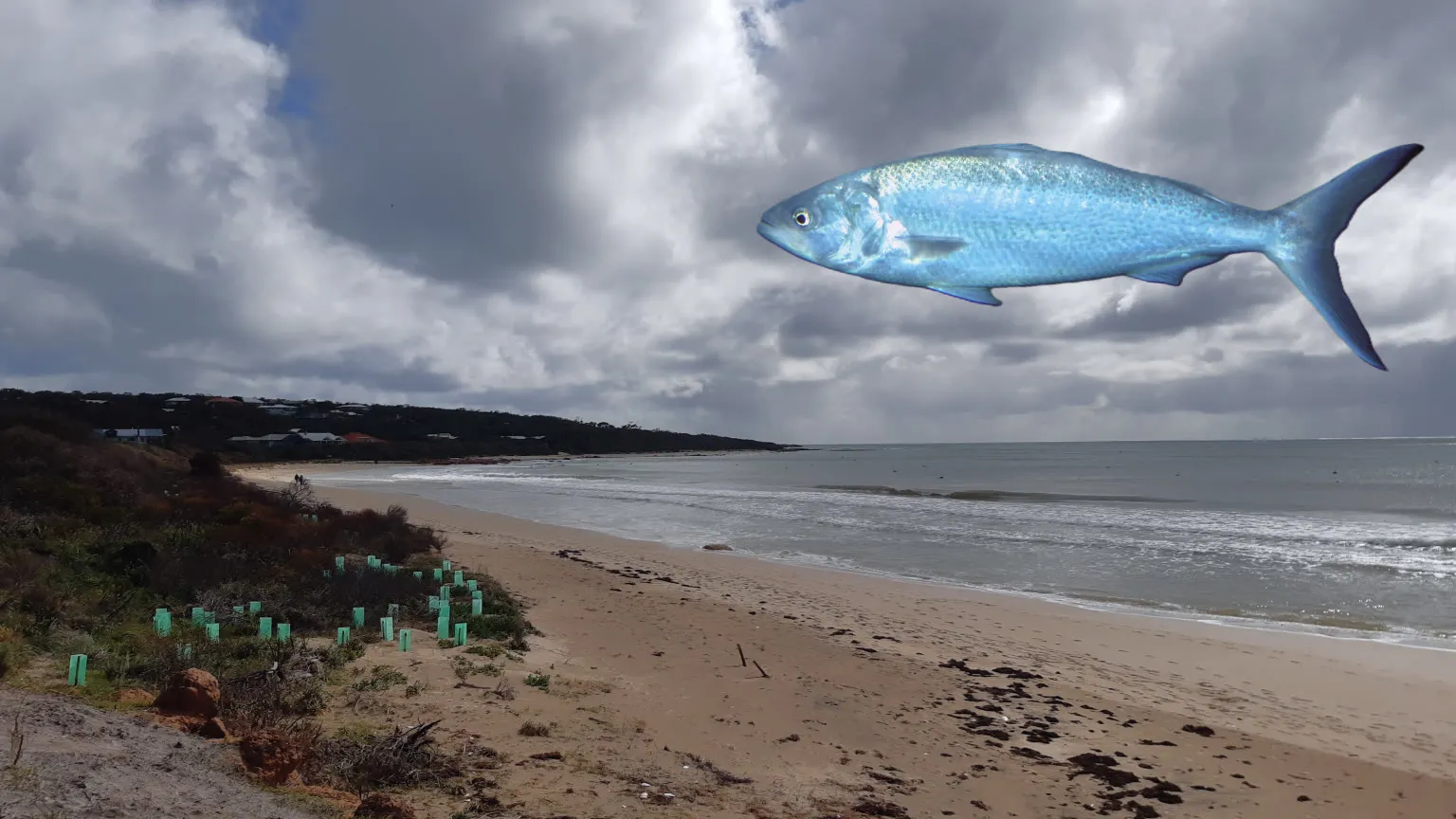
Eagle Bay is the most sheltered salmon beach on Cape Naturaliste, staying fishable in the south-westerly winds that shut down the exposed coast. The water clarity lets you spot schools from the dunes before you unpack, making it a sight-casting fishery rather than a blind-casting one.
Every year, a spectacular natural phenomenon transforms the quiet, turquoise waters of Western Australia’s southwest into a high-octane fishing playground. As the autumn weather cools the coast, massive schools of Australian salmon embark on their annual spawning migration from the Great Australian Bight, travelling northwards along the shoreline. Eagle Bay, nestled on the protected eastern side of Cape Naturaliste, stands out as a premier destination to intercept these powerful ocean wanderers.
Unlike the wild, swell-battered surf beaches of the open ocean, this location offers a remarkably calm and family-friendly environment. Here, the water is often so clear that you can spot the dark, shifting shapes of salmon schools from the sand dunes before you even unpack your gear. This makes it an incredibly visual and exciting fishery, where you can watch a hungry salmon detach from the school, chase down your lure in the shallows, and inhale it right in front of your eyes.
Whether you are a seasoned sportfisher looking to test your light-tackle skills on jumping fish, or a family wanting to introduce the kids to the thrill of beach fishing, this spot delivers. In this guide, we will break down the local secrets, seasonal patterns, and specific tactics needed to find success on the sand at Eagle Bay. For a broader look at other coastal targets, you can also check out our general species guides to see what else is biting along the coast.
Getting There
Salmon
Arripis truttaceus
Always check current NSW DPI regulations before fishing. Bag and size limits may change.
What Makes Eagle Bay a Top Salmon Spot?
Eagle Bay is a top salmon spot because the bay sits on the sheltered eastern side of Cape Naturaliste, staying calm and fishable when the west coast is blown out. The water is clear enough to see schools from the dunes, which turns it into a sight-casting fishery rather than a blind-casting one.
To consistently catch salmon here, you must first understand the unique underwater geography that makes this bay such a productive pitstop for migrating schools. Eagle Bay is highly protected from the heavy south-westerly swells that regularly batter the western side of Cape Naturaliste. When the west coast is completely washed out and dangerous to fish, Eagle Bay remains calm, fishable, and safe.
The bay features a gently sloping sandy bottom interspersed with patches of dark seagrass and small, low-profile reef structures. The water depth drops off relatively close to the shore, creating a natural highway or channel that runs parallel to the beach. Migrating salmon use this deeper channel to travel along the coast, using the shelter of the bay to rest, escape predators, and corner schools of small baitfish like pilchards, blue sprats, and hardyheads.
Because the water is incredibly clear, salmon rely heavily on their eyesight to hunt. They are highly visual predators, meaning they are easily attracted to flashing metal lures and fast-moving surface presentations. However, this clarity also means they can easily spot thick leaders, heavy sinkers, and clumsy presentations. Success here requires a stealthier approach than you might use on a murky, high-energy surf beach.
When searching for fish, do not just cast blindly into the blue. Walk up to the elevated sand dunes or the small rocky headlands at either end of the bay. From these high vantage points, look for large, dark patches in the water. While some of these patches are permanent weed beds, a moving dark patch that slowly shifts shape is almost certainly a tightly packed school of salmon. You can also look for white terns and gulls hovering and diving close to the water surface, which indicates that salmon are actively pushing baitfish to the top.
For those looking to explore other productive areas nearby, our guide to regional fishing spots offers excellent alternatives if the wind shifts.
Location Essentials
When Is the Best Time to Fish for Salmon at Eagle Bay?
The best time to fish for salmon at Eagle Bay is during the autumn months from mid-March to May, focusing your efforts around dawn and dusk when the fish are actively hunting. High water periods on an incoming tide also trigger intense feeding frenzies close to the shore.
Timing your session at Eagle Bay requires an understanding of both seasonal migration patterns and daily environmental triggers. The annual salmon run is the headline event in this region. Driven by the cool, nutrient-rich currents pushing up from the Southern Ocean, massive schools of migratory Australian salmon round Cape Naturaliste and enter the sheltered waters of Geographe Bay. While early scouts can appear as early as February, the peak action consistently occurs from late March through to the end of April, often coinciding with the Easter holiday period.
On a daily scale, dawn and dusk are the golden windows. Salmon are highly visual, aggressive predators that use low-light conditions to ambush baitfish in the shallows. During the first hour of light, schools will often push right up into the shore break, sometimes feeding in water less than knee-deep. This makes them incredibly accessible to land-based anglers casting from the sand.
While night fishing is less common for salmon, it can produce excellent results, particularly on nights with bright moonlight when resident fish or late-running schools continue to hunt close to the beach. However, if you are planning an after-dark session, you are just as likely to encounter tailor or herring.
Tidal movement is another critical factor. An incoming tide, particularly one that peaks in the early morning or late afternoon, is the best scenario. The rising water floods the shallow sandbanks and gutters, allowing the salmon to cruise closer to the beach in search of baitfish. Conversely, a dead low tide often pushes the schools further out into deeper water, requiring much longer casts to reach the fish.
Weather patterns also dictate salmon behaviour. While clear, sunny days make for comfortable fishing, overcast and slightly windy conditions often produce better bite rates. The surface chop created by a moderate breeze breaks up the light, making the salmon less spooky and more willing to strike at lures and baits.
Salmon Seasonal Calendar
Tide Times
Optimal Tide
Incoming tide pushing water over the shallow sandbanks
Tide movement is critical for fish activity. Most species feed actively during tide changes, especially the run-in (incoming) tide.
Detailed hourly tide charts
Official tide predictions
7-day tide calendar
Tide Guide
Best for most species. Fish move in to feed as water rises.
Good for ambush predators. Baitfish get swept out.
Slower bite. Fish less active during slack water.
New/full moon. Bigger tidal range, more fish movement.
Moon Phase & Solunar
Moon phases influence fish feeding behavior. New and full moons create spring tides with stronger currents and increased fish activity.
Best Phases
- New Moon: Peak feeding activity, spring tides, excellent fishing
- Full Moon: Strong tides, night feeding, great for nocturnal species
- 3 Days Either Side: Extended peak period for maximum results
Major/Minor Periods
- Major Periods: Moon overhead/underfoot (2-3 hours)
- Minor Periods: Moon rise/set (1-2 hours)
- Best Times: Major period + dawn/dusk = explosive action
Weather Conditions
Check current conditions before heading out. Wind, swell, and barometric pressure significantly affect fish behavior.
Official forecasts, warnings & radar
Hourly wind speed & direction
Swell height, period & direction
Spotting the Shadow Schools
On bright, sunny days, climb to a slightly elevated position on the sand dunes or rocky edges. Look for large, dark patches in the water that look like clumps of seaweed. If the patch is moving slowly against the current or changing shape, you are looking at a massive school of salmon. Cast your lure just past the edges of this shadow to trigger a strike.
What Tackle Do You Need for Salmon at Eagle Bay?
To successfully target salmon at Eagle Bay, you need a versatile spinning outfit consisting of a 9 to 10 foot medium-heavy rod paired with a 4000-size reel loaded with 20 to 30 pound braid. This setup allows you to cast heavy metal lures long distances into the wind while maintaining enough pulling power to steer strong fish away from reef structures.
Selecting the right gear is essential because Australian salmon are incredibly strong, acrobatic fighters that will quickly expose any weaknesses in your tackle. The ideal setup depends on whether you are casting lures from the sand or fishing with baits from the rocky headlands. For a complete breakdown of basic gear setups, you can refer to our tackle essentials guide.
For lure fishing from the beach, a 9 to 10 foot rod rated at 6 to 10 kilograms is the sweet spot. This length provides the use needed to fling 40 to 60 gram metal slices well past the shore break, while still being light enough to cast repeatedly for hours without causing angler fatigue. Pair this rod with a high-speed spinning reel in the 4000 to 5000 size range. A fast retrieve ratio is crucial because salmon often prefer a lightning-fast lure presentation.
Your reel should be spooled with 20 to 30 pound braided main line. Braid is essential for this style of fishing because its thin diameter maximizes casting distance, while its lack of stretch provides direct contact with your lure, allowing you to feel the slightest tap from an interested fish.
At the business end, always use a high-quality fluorocarbon leader of about 1 to 1.5 metres in length. Salmon have keen eyesight, especially in the crystal-clear waters of Eagle Bay, so a stealthy leader is a must. A 30-pound leader provides the perfect balance of invisibility and abrasion resistance against the sharp teeth of the salmon and any submerged rocks.
If you prefer bait fishing, you may want to step up to a 12-foot surf rod to keep your line clear of the breaking waves and to cast heavy star sinkers into the deeper channels. This should be paired with a larger 6000-size reel to balance the longer rod and provide extra line capacity.
Complete Tackle Specifications
| Component | Specification |
|---|---|
| Rod (Lure) | 9-10ft medium-heavy spin, 6-10kg rating, fast action |
| Rod (Bait) | 12ft surf rod, 8-15kg rating, heavy action |
| Reel | 4000-5000 spin reel, high-speed retrieve, smooth carbon drag |
| Main Line | 20-30lb PE braid (multicolour or high-vis is helpful) |
| Leader | 30lb fluorocarbon, 1-1.5m length for stealth |
| Hooks | 4/0 to 6/0 snelled suicide hooks, or 3/0 ganged hooks |
| Sinker | 2-4oz star or snapper sinker, depending on currents |
| Swivels | Size 4-6 heavy-duty rolling or crane swivels |
How Do You Rig for Salmon?
The most effective rig for bait fishing for salmon is a heavy-duty double-dropper Paternoster rig tied with 30-pound fluorocarbon leader. This classic presentation keeps your baits suspended off the seabed, preventing crabs from stealing your offering while presenting the bait directly in the mid-water column where salmon cruise.
While lure fishing is highly popular, bait fishing remains an incredibly productive way to target salmon, especially when the fish are holding in deeper gutters or when the water is a bit discoloured after a storm. The Paternoster rig is the go-to choice because it allows you to present two different baits at different depths, doubling your chances of a hookup.
When constructing this rig, using high-quality knots is paramount. Salmon are relentless fighters that will test every connection. We recommend using a Uni knot or a Palomar knot to secure your swivels and hooks, as these knots retain a high percentage of the line’s original breaking strength. For more detailed instructions on tying these connections, check out our guide on fishing knots.
Another popular variation is the running sinker rig, which is ideal when the fish are feeding shyly. This rig allows a salmon to take the bait and run without feeling the immediate resistance of the sinker. However, in the high-energy surf zones often found around Eagle Bay, the Paternoster rig is generally preferred as it keeps the baits from tangling in the wash.
Building the Perfect Salmon Paternoster Rig
- 1
Prepare Leader Material
Cut a 1.2 to 1.5 metre length of premium 30-pound fluorocarbon leader material. Avoid cheap monofilament as it stretches too much and is easily scuffed by sand and teeth.
- 2
Tie the Top Swivel
Secure a heavy-duty size 4 rolling swivel to the top of the leader using a Uni knot. This swivel will connect directly to your braided main line.
- 3
Create First Dropper Loop
About 40 centimetres down from the swivel, tie a Dropper Loop knot. Ensure the loop is about 15 centimetres long so the bait can drift naturally.
- 4
Add Second Dropper Loop
Tie a second Dropper Loop roughly 40 centimetres below the first loop. This spacing ensures your two baits will not tangle with each other in the surf.
- 5
Attach Snelled Hooks
Pass the loop of each dropper through the eye of a 5/0 suicide hook, then loop it back over the hook point to secure it. Alternatively, use pre-rigged ganged hooks for whole pilchards.
- 6
Connect Sinker
At the very bottom of the leader, tie a simple loop knot. Pass this loop through the eye of a 3-ounce star sinker and pull it over the body of the sinker to lock it in place.
- 7
Final Inspection
Pull firmly on all sections of the rig to ensure the knots seat correctly. Trim any tag ends close to the knots to prevent weed from catching on your rig.
What Bait Works Best for Salmon?
Whole pilchards are the undisputed best bait for targeting Australian salmon at Eagle Bay, offering an unbeatable combination of strong scent and natural oily flash. Other highly effective options include whole blue mackerel and fresh squid strips, which provide superior durability when smaller bait-stealers are active in the shallows.
When it comes to bait selection, matching the local forage is the key to success. Salmon are opportunistic carnivores that feed heavily on small baitfish such as sandy sprats, anchovies, and pilchards. Therefore, presenting a bait that looks, smells, and behaves like these species will yield the best results. For a deeper dive into bait presentation, explore our bait guide.
Using a gang of three 3/0 or 4/0 hooks is the standard method for rigging whole fish baits like pilchards and blue mackerel. Ganged hooks keep the bait straight, preventing it from spinning unnaturally in the current, and ensure that no matter where the salmon grabs the bait, they will find a hook point.
If you find that smaller species like herring, wrasse, or silver trevally are constantly stripping your soft pilchard baits, switching to a tougher bait like squid or a fillet of mullet is a smart move. While these baits may have slightly less scent dispersion than a fresh pilchard, they can withstand repeated attacks from bait-stealers, remaining on the hook until a salmon cruises past.
Bait Performance Analysis
| Whole Pilchard | Blue Mackerel | Squid Strip | |
|---|---|---|---|
| Effectiveness Rating | Excellent | Very Good | Good |
| Durability on Hook | Low | Medium | High |
| Scent Dispersion | High | High | Medium |
| Availability | Very Easy | Easy | Very Easy |
| Best Use Conditions | Low-energy surf, active feeding schools | Strong currents, targeting larger fish | High-energy surf, heavy bait-stealer activity |
The Slow Retrieve Bait Trick
If the salmon are proving picky and ignoring stationary baits sitting on the bottom, try casting an unweighted whole pilchard rigged on ganged hooks. Allow it to sink slowly for a few seconds, then retrieve it with a slow, erratic winding motion. This mimics a dying baitfish and will often trigger a violent strike from salmon that are ignoring static baits.
How Do You Catch Salmon at Eagle Bay?
To catch salmon at Eagle Bay, you need to locate active schools by looking for dark patches in the water or diving birds, then cast your lure or bait just past the school and retrieve it directly through the fish.
Sighting the fish is more than half the battle when beach fishing at Eagle Bay. Because the water is incredibly clear, you can often spot schools of salmon from the elevated sand dunes before you even unpack your gear. Once you spot a school, your casting strategy must be precise. Avoid casting directly into the middle of the school, as this can spook the fish and cause the entire school to head into deeper water. Instead, aim your casts to the edges or just past the school, retrieving your lure or bait back through the outer flanks of the pack.
When using metal lures, a fast and erratic retrieve is highly effective. Keep your rod tip high and wind at a rapid pace, occasionally pausing for a split second to simulate a wounded baitfish. If you are bait fishing, cast your rig into the deeper gutters or just behind the shore break where salmon patrol in search of small baitfish. For more detailed insights on casting and retrieval methods, check out our guide on fishing techniques.
                       [ Beach / Shoreline ]
                                 |
                         ( Shore Break / Wave )
                                 |
   [ Cast Lure Past School ] ----+----> [ Target Area ]
                                 |       (Retrieve through edges)
                                 |
                       { Salmon School } (Dark Patch)
Detecting a salmon bite is rarely subtle. These are aggressive, visual predators that hit with immense speed and power. When a salmon takes your lure, you will feel a sudden, violent weight on your line. If you are using lures with treble hooks, avoid striking hard with the rod. Simply keep winding rapidly and let the rod load up naturally under the weight of the fish. If you are using bait with circle hooks, let the line run tight and lift the rod tip slowly to set the hook in the corner of the mouth.
Once hooked, Australian salmon are famous for their aerial acrobatics. They will jump repeatedly, shaking their heads violently to throw the hook. To counter this, keep your rod tip low during the fight and maintain constant pressure. Never allow any slack in your line, especially if you are using barbless hooks or heavy metal lures that can easily shake loose.
When landing a salmon from the beach, use the incoming waves to your advantage. Rather than trying to winch the fish against the receding tide, wait for a larger wave to lift the fish, then walk backward up the beach to slide the salmon onto the wet sand.
What Are the Rules for Fishing at Eagle Bay?
Fishing at Eagle Bay requires adhering to Western Australian recreational fishing rules, which include a daily bag limit of four salmon per fisher and a minimum legal length of 300 millimetres.
The limits quoted above were verified on 15 August 2026 from the DPIRD Recreational Fishing Rules. Nearshore finfish rules shift between seasons, so confirm them on the DPIRD site and review SharkSmart advice for Geographe Bay before you head down.
Before heading out, it is vital to understand the local regulations to ensure the sustainability of this fantastic fishery. In Western Australia, salmon are managed under nearshore and estuarine species guidelines. Fishers must respect the daily bag limit of four salmon per person, which sits within a mixed species daily bag limit of 16 nearshore or estuarine finfish. Every salmon you keep must meet the minimum legal length of 300 millimetres, measured from the tip of the snout to the fork of the tail. To stay up to date with any seasonal changes or local closures, always check the official fishing regulations page before your trip.
Practising good conservation ensures that future generations can enjoy the thrill of the annual salmon run. If you plan to release your catch, follow these sustainable handling practices:
- Use single hooks: Replace treble hooks on your metal lures with single inline hooks to minimise damage to the fish’s mouth.
- Keep them wet: Avoid dragging fish up onto dry, hot sand if you intend to release them. Keep the fish in the water or on a wet towel while removing the hook.
- Support the body: Never hold a salmon solely by the gills or tail. Support its belly horizontally to protect its internal organs.
- Revive before release: Hold the fish facing into the current or incoming waves until it regains its strength and swims away strongly.
- Dispatch quickly: If you are keeping a fish for the table, dispatch it immediately using the iki jime method or a swift blow to the head, and bleed it straight away in cool water to preserve the eating quality.
Critical Safety Considerations
The coastal environment around Eagle Bay and Cape Naturaliste can change rapidly. Keep these safety rules in mind during your session:
- Slippery Rocks: The rocky headlands around the edges of Eagle Bay can become incredibly slick when wet. Always wear footwear with excellent grip and avoid standing on wet rocks.
- Large Swells: While Eagle Bay is more sheltered than the western side of the cape, sudden large swells can still wash over the beach and rocky outcrops. Never turn your back on the ocean.
- Lifejackets: If you decide to fish from the rocks near the points, wearing a certified lifejacket is highly recommended. For complete safety tips, read our guide on rock fishing safety.
- Emergency Contacts: In case of an emergency, call 000 immediately. The nearest major medical facilities are located in Dunsborough and Busselton.
Your Questions About Salmon Fishing at Eagle Bay
What is the best time to fish at Eagle Bay?
The best time to fish at Eagle Bay is during the autumn months from March to May, focusing your daily sessions around dawn and dusk.
Planning your trip during these peak fishing hours will significantly increase your chances of intercepting a migrating school. The low-light conditions of early morning and late afternoon encourage salmon to push closer to the shore to feed. Additionally, targeting the high tide during these times provides deeper water close to the beach, allowing the fish to patrol the gutters comfortably.
Is Eagle Bay suitable for beginners?
Yes, Eagle Bay is highly suitable for beginners due to its sheltered waters, easy beach access, and straightforward shore-based fishing opportunities.
Because the bay is protected from the heavy southwest swells that batter much of the WA coastline, it is one of the most beginner friendly beach locations in the region. Novice anglers can easily cast metal lures or baits from the safety of the sand without needing advanced surf casting skills or specialized heavy tackle.
Do I need a boat to fish at Eagle Bay?
No, you do not need a boat to fish at Eagle Bay, as the vast majority of salmon are caught directly from the sandy shoreline.
Land-based fishing is the primary method here because the salmon schools travel incredibly close to the beach, often swimming in water less than a metre deep. While a small dinghy or kayak can help you reach schools that are holding further out on calm days, shore fishing remains highly productive and accessible to everyone.
Where are the best specific spots at Eagle Bay?
The best specific spots at Eagle Bay include the deeper gutters along the main sandy beach and the rocky fringes near the eastern and western headlands.
Anglers looking for key fishing marks should focus on the dark, deep water channels that run parallel to the beach. The rocky points at either end of the bay are also excellent ambush zones where salmon stall to feed on baitfish before moving further along the coast.
What size Salmon can I expect?
You can expect to catch salmon averaging between 3 and 6 kilograms, with larger trophy fish occasionally exceeding 8 kilograms.
The average catch size during the annual autumn run consists of mature, hard-fighting sportfish measuring between 60 and 80 centimetres. These are powerful fish that will thoroughly test your tackle, making them highly prized by local and visiting anglers alike.
Is there parking available at Eagle Bay?
Yes, there is convenient parking available at several designated car parks located directly behind the beach dunes at Eagle Bay.
Access to the beach is straightforward, with gravel and sealed parking areas providing short walks down to the sand. During the peak of the salmon run, these parking spots can fill up quickly, so arriving early in the morning is highly recommended.
Can I fish at night at Eagle Bay?
Yes, you can fish at night at Eagle Bay, although salmon are primarily visual daytime hunters and become less active after dark.
While daytime is best for salmon, night fishing tips for this area include targeting other species such as tailor, mulloway, or reef sharks that patrol the shallow gutters under the cover of darkness. If you do target salmon after dark, using fresh, highly scented baits like mulleted fillets or whole pilchards is essential.
Where can I buy bait near Eagle Bay?
You can buy fresh bait and basic tackle at nearby service stations and tackle stores in Dunsborough, which is just a ten-minute drive from the bay.
Several local bait shops and service stations stock frozen pilchards, blue bait, and squid, along with popular metal lures like Halco Twisties. Stocking up in Dunsborough before you head down to the beach ensures you will not run out of gear during a hot bite.
What are the current bag and size limits?
The current rules specify a daily bag limit of four salmon per fisher with a minimum legal size limit of 300 millimetres.
These strict regulations are designed to protect the breeding stock of Australian salmon as they make their annual migration. Always measure your catch carefully and ensure you stay within the legal limits to help maintain a healthy fishery.
Is Eagle Bay family-friendly for fishing?
Yes, Eagle Bay is exceptionally family-friendly, offering calm waters, clean sand, and safe fishing spots for children.
The lack of dangerous undertows and large waves makes it a fantastic spot for kids fishing. Parents can set up beach umbrellas and chairs on the sand while keeping a close eye on the kids as they try their hand at catching herring, whiting, or salmon.
What should I bring for a fishing session?
Your essential fishing checklist should include a medium-heavy spinning outfit, a selection of metal lures, polarized sunglasses, a bucket, and sun protection.
Polarized sunglasses are absolutely critical for spotting the dark shapes of salmon schools in the clear water. Additionally, make sure to pack plenty of water, warm clothing for early morning starts, and a tape measure to verify the size of your catch.
How crowded does Eagle Bay get?
Eagle Bay can become quite crowded during the peak Easter holiday period and on sunny weekends when the salmon are running.
To find quiet fishing times and avoid the crowds, try planning your sessions mid-week or during overcast, windy days when fewer casual anglers are on the beach. The salmon will still bite in rougher weather, often pushing even closer to the shore.
What Are the Best Nearby Fishing Spots?
Eagle Bay is the sheltered end of a cluster of southwest salmon marks. Pick by wind and swell:
- Bunker Bay salmon: Deeper gutters at the northern tip, better in light winds.
- Castle Rock salmon: Rock-ledge access to deep water minutes away.
- Cape Naturaliste salmon: Regional view of how the autumn run tracks the headland.
- Busselton Jetty salmon: Structure fishing in Geographe Bay when the beach is quiet.
- Margaret River mullet: Light-tackle estuary trip an hour south.
Latest Fishing Reports
Stay updated with the latest catches, conditions, and hot tips from Eagle Bay. Check these sources for recent reports filtered by location and species.
Fishraider
Community fishing reports and catch logs
Fishing World
Professional fishing reports and news
Tackle World
Local tackle shop reports and tips
NSW DPI
Official recreational fishing reports
Fishingmonthly
Monthly fishing magazine and reports
Hooked Up
Video fishing reports and tips
Pro Tip: Filter Reports
When browsing reports, search for "Eagle Bay" or nearby landmarks. Look for reports from the last 7-14 days for the most relevant information. Pay attention to tide times, weather conditions, and successful techniques mentioned.
Share Your Catch
Caught something at Eagle Bay? Share your success with the community! Upload your catch photos and reports to help other anglers.
Disclaimer: Fishing regulations and bag limits can change. Always verify current rules with the Western Australia Department of Primary Industries and Regional Development before heading out. Ensure you have the appropriate licences and follow all local safety guidelines.
Explore more fishing spots in the area, learn about other species at this location, or read our fishing basics guide to brush up on your skills.
Quick Info
- Location
- Eagle Bay
- Coordinates
- -33.5586, 115.0577
- Difficulty
- intermediate
- Target Species
- Salmon
Conditions
Check local weather and tide conditions before heading out.