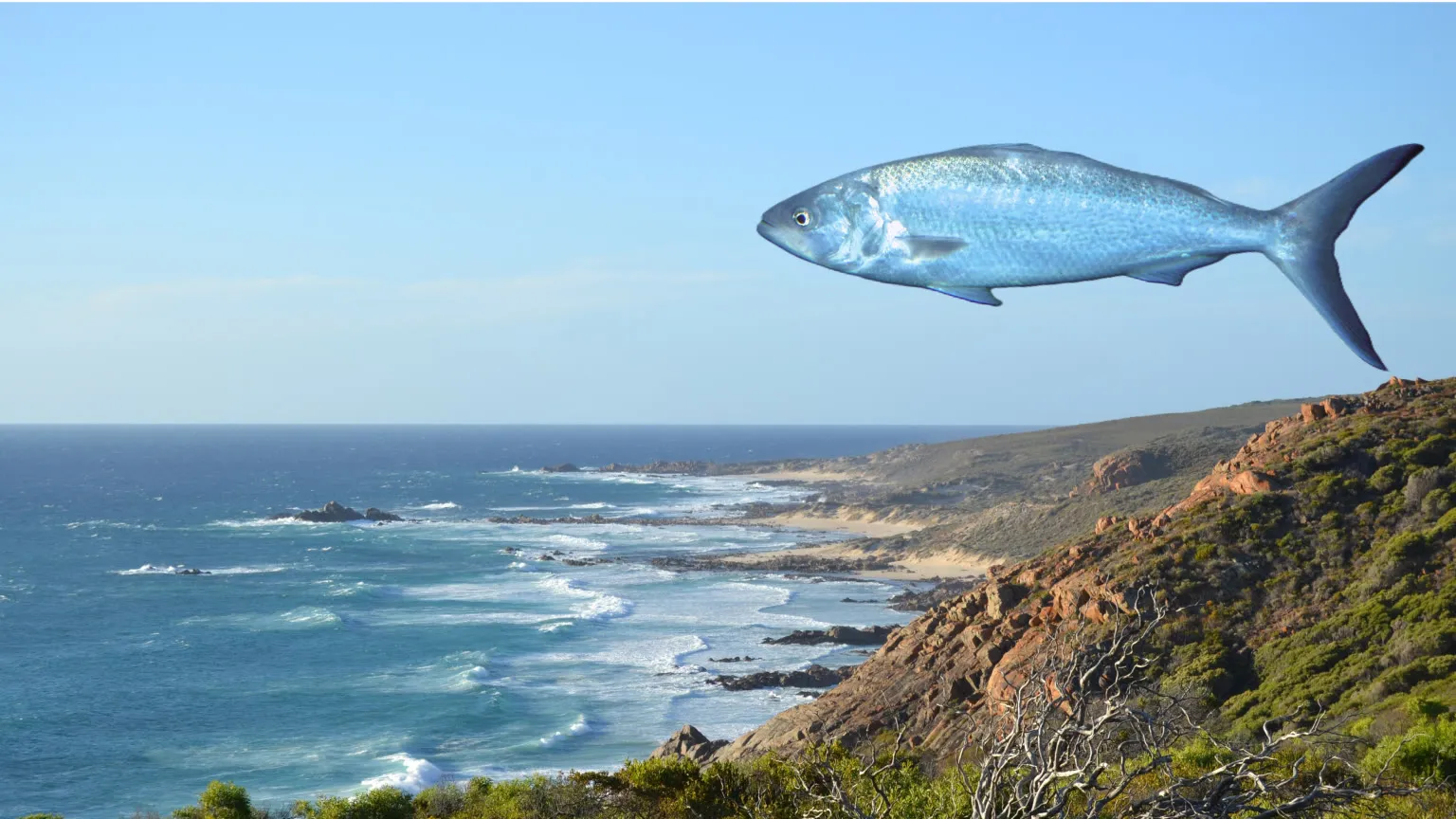
Target Species
Australian Salmon
The annual autumn migration of Australian Salmon along the southwest coast of Western Australia is one of the most spectacular events on the national angling calendar. As the temperature drops, massive schools of these hard-fighting sportfish round the rugged cliffs of Cape Naturaliste, entering the pristine, sheltered waters of Geographe Bay. For beach and rock anglers, this migration creates a top fishery right on the doorstep of Dunsborough.
Australian Salmon fishing at Dunsborough Cape Naturaliste offers some of the most exciting land-based and nearshore sportfishing in Western Australia, particularly during the annual autumn migration when massive schools enter the sheltered waters of Geographe Bay.
This geographic transition zone is highly significant. The Cape acts as a giant natural barrier, forcing migrating schools to hug the shoreline as they move from the high-energy waters of the Southern Ocean into the calm, sandy bays of the north-facing coast. Anglers flock to this region because it offers a rare combination of easy access, crystal-clear water, and the chance to sight-cast to schools of fish that can exceed eight kilograms.
Whether you are standing on the white sands of Bunker Bay, casting from the granite boulders of Castle Rock, or launching a boat from the Old Dunsborough ramp, the visual thrill of watching a dark blue wave of salmon charge your lure is unmatched. This guide provides the local knowledge, precise locations, and proven tactics required to consistently hook and land these iconic southern sportfish.
Getting There
Australian Salmon
Arripis truttaceus
Always check current NSW DPI regulations before fishing. Bag and size limits may change.
What Makes Cape Naturaliste a Top Australian Salmon Spot?
Cape Naturaliste is a top salmon spot because the headland pushes the autumn migration route hard against the shore, funnelling schools within casting range of both the beaches and the rock ledges. Anglers can pick a sheltered or exposed side of the cape depending on the wind.
To successfully target Australian Salmon in this region, you must understand the unique underwater topography and coastal dynamics of the Cape Naturaliste peninsula. The area is characterized by a dramatic shift in marine environments. The western side of the Cape is exposed to the full force of the Indian Ocean, featuring steep granite cliffs, deep water drop-offs, and heavy swell. In contrast, the eastern side of the Cape curves into Geographe Bay, presenting a highly sheltered coastline dominated by shallow sandy flats, limestone reef patches, and extensive seagrass meadows.
This transition zone is the best ambush point. As the salmon travel north from their spawning grounds along the south coast, they round the tip of Cape Naturaliste. The sudden change from turbulent ocean swells to calm, clear bay water slows the schools down, causing them to pool up in the shallow bays to rest and feed.
[West Coast: High Swell] ---> [Cape Naturaliste Tip] ---> [Sheltered Bays (Bunker, Eagle, Meelup)]
                                                                  |
                                                     [Salmon Pool & Feed in Shallows]
The depth profile along the eastern beaches is relatively shallow, with water depths ranging from one to five metres within casting distance of the shore. This shallow profile makes the fish highly visible, but it also makes them wary. The presence of ribbon weed beds and sand patches creates a mosaic of light and dark patches on the water. Salmon will often patrol the edges of these weed beds, using the darker water for cover before launching raids into the clear sand gutters to chase baitfish.
The key forage species in this area include blue sprats, sandy sprats, hardyheads, and juvenile sea herring. When the salmon are active, they will herd these baitfish against the shore, creating highly visible feeding frenzies. Understanding where these baitfish congregate, particularly around small rocky outcrops and boat ramps, is the secret to locating the salmon schools before they show themselves on the surface.
Location Essentials
For land-based anglers, the most productive structures are the granite rock platforms that dot the coast between Curtis Bay and Sugarloaf Rock. These platforms provide elevated casting positions and direct access to deeper water. However, the sandy beaches of Bunker Bay, Eagle Bay, and Meelup Beach are equally productive during the peak of the migration. Here, the salmon will often swim in water so shallow that their dorsal fins cut through the surface, offering top sight-fishing opportunities.
For boat and kayak anglers, the nearshore reefs and sand lines offer excellent trolling and casting opportunities. The Dunsborough Artificial Reef, located approximately seven kilometres offshore, is a well-known structure that attracts larger pelagic species, but the migrating salmon generally stay much closer to the shoreline, often within fifty metres of the beach.
When Is the Best Time to Fish for Australian Salmon at Dunsborough Cape Naturaliste?
The best time to fish for Australian Salmon at Dunsborough Cape Naturaliste is during the annual autumn migration from March to May, with daily peak activity occurring during dawn and dusk sessions on an incoming tide. Fishing during these low light periods when the tide is pushing baitfish against the shore provides the highest chance of intercepting large, active schools.
Understanding the daily and seasonal movements of these fish is the secret to a successful session. While the autumn run is the undisputed peak, resident fish can occasionally be found year-round if you know where to look. Daily timing is just as critical as the season. Dawn and dusk are the golden hours because salmon use the low light to ambush baitfish in the shallows. During these times, schools will push right into the shore break, sometimes feeding in water less than a metre deep.
Night fishing for salmon is a different game altogether. While they are visual hunters that prefer daylight, they will feed after dark, especially under a bright full moon or around artificial light sources. However, fishing the rocky ledges of Cape Naturaliste at night is incredibly dangerous and should be avoided. If you want to fish after dark, stick to the safe, sandy beaches of Geographe Bay, where you can cast out a large, oily bait and wait for a passing fish.
Tides play a massive role in how salmon behave around the Cape. An incoming tide is highly preferred because it brings cooler, oxygen-rich water closer to the shore, along with schools of baitfish. When a high tide coincides with dawn or dusk, you have the perfect storm. The fish will use the extra depth to patrol the edges of reef structures and sandy gutters. Conversely, a dead low tide often pushes the schools further out into deeper water, making them difficult to reach for land-based anglers.
Weather patterns also dictate your success. Unlike many species that prefer calm, clear conditions, Australian Salmon love a bit of rough weather. A moderate westerly or south-westerly wind creates white water and chop along the beaches and rocks. This white water acts as natural cover, making the salmon feel secure and masking your leader and hooks. However, always put safety first, as heavy swells make the rocky zones of the Cape completely unfishable.
Australian Salmon Seasonal Calendar
Tide Times
Optimal Tide
Rising tide, especially when coinciding with dawn or dusk
Tide movement is critical for fish activity. Most species feed actively during tide changes, especially the run-in (incoming) tide.
Detailed hourly tide charts
Official tide predictions
7-day tide calendar
Tide Guide
Best for most species. Fish move in to feed as water rises.
Good for ambush predators. Baitfish get swept out.
Slower bite. Fish less active during slack water.
New/full moon. Bigger tidal range, more fish movement.
Moon Phase & Solunar
Moon phases influence fish feeding behavior. New and full moons create spring tides with stronger currents and increased fish activity.
Best Phases
- New Moon: Peak feeding activity, spring tides, excellent fishing
- Full Moon: Strong tides, night feeding, great for nocturnal species
- 3 Days Either Side: Extended peak period for maximum results
Major/Minor Periods
- Major Periods: Moon overhead/underfoot (2-3 hours)
- Minor Periods: Moon rise/set (1-2 hours)
- Best Times: Major period + dawn/dusk = explosive action
Weather Conditions
Check current conditions before heading out. Wind, swell, and barometric pressure significantly affect fish behavior.
Official forecasts, warnings & radar
Hourly wind speed & direction
Swell height, period & direction
The Overcast Advantage
Do not pack up when the sun goes down or if the sky turns grey. Overcast, gloomy days often produce the most explosive salmon action of all. The low light keeps the fish feeding in the shallows all day long, allowing you to catch them on surface lures well into the afternoon.
What Tackle Do You Need for Australian Salmon at Dunsborough Cape Naturaliste?
For land-based salmon fishing at Dunsborough Cape Naturaliste, you need a 9 to 10 foot medium-heavy spinning rod rated for 6 to 10 kilograms, paired with a 4000 to 5000 size reel spooled with 20 to 30 pound braid. This setup allows you to cast heavy metal lures long distances while retaining enough pulling power to stop strong fish.
Selecting the right gear is essential because Australian Salmon are incredibly strong, hard-fighting sportfish that will test every inch of your tackle. If your gear is too light, you will get spooled or busted yarded in the rocks. If it is too heavy, you will struggle to cast the lures and baits far enough to reach the schools. For more tackle basics, see our tackle essentials guide.
Your rod is the most important tool in your arsenal. A rod length of 9 to 10 feet is the sweet spot for beach and rock fishing around the Cape. It gives you the use needed to cast 40 to 60 gram metal lures into the wind, while also helping you keep your line clear of the shore break or shore rocks. Look for a graphite composite rod with a fast action, which helps with accurate, long-distance casting.
Pair your rod with a high-quality spinning reel in the 4000 to 5000 size range. The reel must have a smooth, reliable drag system capable of handling long, blistering runs. Spool the reel with 20 to 30 pound braid. Braid is essential because its thin diameter cuts through the wind and water, giving you maximum casting distance and direct contact with your lure or bait. Always tie on a 1 to 1.5 metre leader of 30 to 40 pound fluorocarbon. This provides abrasion resistance against the sand, rocks, and the salmon’s raspy teeth.
If you are bait fishing, you will need terminal tackle that can handle the surf. Use strong, sharp hooks in sizes 4/0 to 6/0. Snelled suicide hooks are perfect for presenting whole pilchards, while circle hooks are great if you plan to release your catch, as they usually hook the fish in the corner of the mouth. Keep your sinkers as light as possible, just heavy enough to hold the bottom, with star or pyramid sinkers being the best choices for sandy beaches.
Complete Tackle Specifications
| Component | Specification |
|---|---|
| Rod | 9-10ft graphite spin, 6-10kg or 8-15kg rating, fast action |
| Reel | 4000-5000 size spinning reel with high drag capacity (8kg+) |
| Main Line | 20-30lb high-quality PE braid for maximum casting distance |
| Leader | 30-40lb fluorocarbon, 1.2-1.5 metres in length |
| Hooks | 4/0-6/0 snelled suicide hooks or inline single hooks for lures |
| Sinker | 2-4oz star or pyramid sinker, depending on surf conditions |
| Swivels | Size 4-6 heavy-duty barrel or crane swivels |
| Lures | 40-60g metal slugs, casting spoons, and 120-140mm stickbaits |
How Do You Rig for Australian Salmon?
The most effective rig for Australian Salmon is the classic two-hook surf paternoster rig, which keeps your bait suspended off the seabed and allows for long casts into the surf zone. This rig uses a heavy sinker at the bottom to anchor your line, with two dropper loops holding baited hooks above the sand where salmon patrol.
A properly constructed rig ensures your bait stays in the strike zone and survives the immense pressure of a long cast. The paternoster rig is the go-to choice for beach anglers because it prevents your bait from getting buried in the sand or eaten by crabs. It also allows you to present two different baits at once, or even a bait and a small plastic skirt to add some extra flash.
Another excellent option is the running sinker rig, which is ideal when the fish are feeding shyly. This rig allows a salmon to take the bait and run without feeling the weight of the sinker immediately. However, in heavy surf or high-current areas around the Cape, the paternoster remains the most reliable and tangle-free option. For a broader look at different setups, check out our guide on fishing rigs.
Here is how to construct the best surf paternoster rig for targeting salmon off the beaches of Dunsborough and Cape Naturaliste.
Building the Perfect Surf Paternoster Rig
- 1
Prepare Leader Material
Cut a 1.5 metre length of 40-pound fluorocarbon leader material. This heavy line provides excellent abrasion resistance against sand and the fish's body during the fight.
- 2
Tie the Top Swivel
Tie a strong size 4 barrel swivel to the top of your leader using a Uni knot. Moisten the knot with water or saliva before pulling it tight to prevent friction damage.
- 3
Create the First Dropper Loop
About 40 centimetres down from the swivel, tie a dropper loop that stands out roughly 15 centimetres from the main line. Make sure the loop is large enough to pass a hook through.
- 4
Add the Second Dropper
Move another 40 centimetres down the leader and tie a second dropper loop identical to the first. This gives you two distinct bait positions in the water column.
- 5
Attach the Sinker Connection
At the very bottom of the leader, tie a heavy-duty snap clip or a simple loop knot. This is where you will attach your star or pyramid sinker, allowing you to change weights quickly.
- 6
Mount the Hooks
Pass the loop of each dropper through the eye of a 5/0 baitkeeper hook, then pass the hook point back through the loop and pull it tight. This loop-to-eye connection makes changing hooks easy.
- 7
Final Inspection
Pull on all sections of the rig to ensure the knots are seated perfectly. Attach your sinker to the bottom and bait your hooks with fresh pilchards, ensuring the hook points remain exposed.
What Bait Works Best for Australian Salmon?
The best bait for Australian Salmon is a whole fresh pilchard (mulie) rigged on a multi-hook gang, which mimics their natural prey and releases a strong scent trail. Other highly effective baits include whole sea herring (tommy ruff), yellowtail scad, and fresh squid strips.
While salmon are famous for chasing down fast-moving lures, there are many days when a well-presented bait will outfish lures ten to one. This is especially true when the water is dirty, or when the schools are holding deep and moving slowly. Salmon have an excellent sense of smell, so using oily, fresh baits that release a strong scent trail is the key to drawing them in from a distance. For more details on bait preparation, see our bait guide.
Pilchards, locally known as mulies, are the absolute gold standard. They are oily, soft, and represent the exact size of the baitfish salmon hunt. Because they are soft, they can fly off the hook during heavy casts, so using a three-hook gang (sizes 4/0 or 5/0) is essential to keep the bait straight and secure.
If you are plagued by pickers like small herring or blowfish, switch to a tougher bait. Whole yellowtail scad (yakkas) or sea herring are much more durable and will survive the small fish long enough for a salmon to find them. Fresh squid is another fantastic option; it is incredibly tough, moves beautifully in the wash, and can survive multiple casts even in rough conditions.
Bait Performance Analysis
| Pilchards (Mulies) | Sea Herring (Tommy Ruff) | Fresh Squid | |
|---|---|---|---|
| Effectiveness Rating | Excellent | Very Good | Good |
| Durability on Hook | Low | High | Very High |
| Scent Dispersion | Very High | Medium | Medium |
| Availability | Excellent (All tackle shops) | Good (Catch your own) | Excellent |
| Best Use Conditions | Calm to moderate surf, clean water | Rough surf, high presence of bait-stealers | Heavy wash, reefy areas, night fishing |
The Slow-Retrieve Trick
When bait fishing with a pilchard, do not just let it sit dead on the bottom. Cast it out, let it sink, and then slowly retrieve it a few metres every minute. This slow movement makes the bait look wounded and helps spread the scent trail across a wider area, often triggering a strike from a nearby salmon.
How Do You Catch Australian Salmon at Dunsborough Cape Naturaliste?
Catching Australian Salmon at Dunsborough Cape Naturaliste requires a fast, active retrieve when using lures to trigger their predatory instinct, or presenting fresh, oily baits in deep gutters and wash zones where these fish naturally patrol.
To successfully target these powerful sportfish, you need to master three key phases: casting strategy, bite detection, and the physical fight.
Casting Strategy and Bait Placement
When fishing from the beaches of Eagle Bay, Bunker Bay, or Meelup, your primary goal is to locate the deep gutters, channels, and sandbar edges. Salmon use these deeper depressions as highways to travel along the coastline. Look for patches of dark, deep water situated between the shore and the outer sandbar.
If you are casting lures, aim to throw past the school or the deep gutter and retrieve your lure directly through the zone. A high-speed retrieve is essential when using metal slugs or surface poppers. Australian Salmon are highly visual predators. If they see a lure moving slowly, they will often follow it out of curiosity but refuse to strike. By retrieving your lure as fast as your reel allows, you force the fish to make a split-second decision, triggering an aggressive reaction strike. Mix up your retrieve by adding sudden pauses and erratic sweeps of the rod tip to simulate a panicked baitfish.
For bait fishing, cast your rig directly into the white water where waves are breaking over reef patches or sandbars. This turbulent water stirs up food and provides cover for feeding salmon. Keep your line tight to prevent the swell from washing your rig back onto the rocks or sand.
Bite Detection and Hookset
When a salmon decides to feed, there is very little subtlety involved. If you are casting lures, the strike is incredibly violent and will instantly load up your rod. In this scenario, you do not need to perform a massive hookset. The speed of your retrieve combined with the forward momentum of the fish is usually enough to set the hooks. Simply keep a firm grip on your rod, maintain a tight line, and let the drag do its job.
If you are fishing with bait, the bite detection process requires a bit more patience. Salmon will often pick up a whole bait, such as a pilchard or blue mackerel, and run with it before swallowing. You will feel a series of sharp tugs followed by a steady, powerful pull. Avoid the temptation to strike at the first vibration. Instead, lower your rod tip toward the water, wait for the rod to bend fully as the fish runs, and then lift the rod firmly to set the hook. Using circle hooks is highly recommended for bait fishing, as they are designed to slide to the corner of the mouth and hook the fish automatically as it swims away.
Fighting and Landing Strategies
The real challenge begins once the fish is hooked. Australian Salmon are famous for their acrobatic aerial displays, often jumping out of the water multiple times during a fight. These jumps are the most common moment to lose a fish, as the thrashing motion can easily dislodge a hook. To counter this, lower your rod tip toward the water when you feel the fish rising to jump. This technique, known as bowing to the fish, slackens the line slightly so the weight of the lure does not pull the hook free during the jump.
Keep your drag set at a moderate level. If your drag is too tight, the sudden, powerful bursts of a salmon will snap your leader or straighten your hooks. If you are fishing near rocky structures around Cape Naturaliste, you will need to apply more pressure to steer the fish away from sharp reef edges.
Landing a salmon off these beaches is easier if you let the swell do the work. Never try to drag a heavy fish up the sand against a receding wave, as this puts immense pressure on your gear and often results in a bust-off. Instead, wait for a larger wave to lift the fish, walk backward away from the water, and let the swell wash the salmon onto the dry sand. If you are rock fishing, use a long-handled landing net or a cliff gaff only when absolutely necessary, and always wait for a lull in the swell before attempting to land the fish. For more tips on general angling methods, check out our guide on fishing techniques.
What Are the Rules for Fishing at Dunsborough Cape Naturaliste?
Fishing for Australian Salmon at Dunsborough Cape Naturaliste is subject to Western Australian recreational fishing rules, which dictate a minimum legal length of 300 mm and a daily bag limit of 4 fish per person.
Limits on this page were checked on 15 August 2026 against the DPIRD Recreational Fishing Rules. Parts of the cape sit inside the Ngari Capes Marine Park, so cross-check zoning with Parks and Wildlife and the current rules on the DPIRD site before you fish a new mark.
Before heading out, it is vital to familiarise yourself with the local regulations and safety requirements. The waters around Cape Naturaliste are highly dynamic, and understanding both the legal limits and physical hazards will ensure a safe and successful trip.
Critical Safety Considerations
The coastal waters around Cape Naturaliste, particularly the west-facing rock shelves, are exceptionally hazardous. Large ocean swells can appear without warning, washing anglers off the rocks.
- Safety Gear: Always wear a certified life jacket (PFD) and non-slip footwear when fishing from rocks. Never fish alone.
- Observation: Spend at least 20 minutes watching the sea state and swell patterns before unpacking your gear. If the rocks are wet, it means waves are washing over them: find a safer spot.
- Emergency Contacts: In an emergency, call 000 immediately. Keep a personal locator beacon (PLB) on your person if fishing remote rock platforms.
- Rock Safety Guide: For detailed advice on staying safe on the coast, read our fishing safety guide.
Current State Regulations
The Department of Primary Industries and Regional Development (DPIRD) manages the fisheries in Western Australia. For Australian Salmon (Arripis truttaceus), the following rules apply:
- Minimum Size Limit: 300 mm (measured from the tip of the snout to the end of the tail).
- Daily Bag Limit: 4 fish per angler.
- Mixed Species Limit: Salmon are part of the nearshore/estuarine finfish category, which has a combined mixed species daily bag limit of 16 fish.
Please note that rules can change. Always verify the latest limits on the regulations page or directly through the WA Fisheries website before your trip.
Conservation Practices
Because Australian Salmon are highly respected sportfish but have a lower eating quality compared to other species, practicing proper catch and release is highly encouraged.
- Use Single Hooks: Replace treble hooks on your lures with inline single hooks. This reduces damage to the fish’s mouth and makes unhooking much faster.
- Support the Body: Never hold a salmon solely by its gill covers or tail if you plan to release it. Always support its belly horizontally to protect its internal organs.
- Revive the Fish: Before releasing, hold the fish facing into the current or move it gently back and forth in the water until its gills begin to pump and it swims away under its own power.
- Bleed Immediately: If you choose to keep a salmon for the table, bleed it immediately by cutting the gills. Place the fish on ice straight away to preserve the meat quality.
Your Questions About Australian Salmon Fishing at Dunsborough Cape Naturaliste
What is the best time to fish at Dunsborough Cape Naturaliste?
The best time to fish for Australian Salmon at Dunsborough Cape Naturaliste is during the autumn migration from March to May, particularly around dawn and dusk.
While the autumn months represent the peak fishing hours for the annual migration, you can also find resident fish during spring. Focus your efforts on the change of tide, especially when a high tide coincides with sunrise or sunset.
Is Dunsborough Cape Naturaliste suitable for beginners?
Yes, the sheltered beaches of Geographe Bay, such as Meelup Beach and Castle Rock, are highly beginner friendly and offer safe, easy access for novice anglers.
These calm, sandy locations provide excellent land-based fishing opportunities without the dangers of heavy surf. Beginners can easily cast metal lures or light bait rigs from the shore and stand a great chance of hooking a salmon during the autumn run.
Do I need a boat to fish at Dunsborough Cape Naturaliste?
No, you do not need a boat to catch Australian Salmon here, as this area is one of the premier shore fishing destinations in Western Australia.
During the migration, massive schools of salmon travel incredibly close to the beach, often swimming in water less than a metre deep. Land-based angling from the sandy beaches and accessible rocky points is highly effective.
Where are the best specific spots at Dunsborough Cape Naturaliste?
The most productive fishing marks include Eagle Bay, Bunker Bay, Rocky Point, and the beaches surrounding the Old Dunsborough Boat Ramp.
These hot spots offer a mix of sandy gutters and rocky structure. When the salmon are running, they tend to pool up in these bays, making them prime locations to intercept migrating schools. Check our fishing spots page for more regional maps.
What size Australian Salmon can I expect?
The average catch size for Australian Salmon in this region ranges between 3 and 6 kilograms, with trophy fish exceeding 8 kilograms occasionally landed.
These are mature, hard-fighting adult fish. While smaller juvenile salmon, often called salmon trout, are found in the bay, the autumn run consists almost entirely of large, powerful sportfish.
Is there parking available at Dunsborough Cape Naturaliste?
Yes, excellent parking access is available at all major beaches, including Meelup, Eagle Bay, and Bunker Bay, with most spots located just a short walk from the sand.
Most of these parking areas are sealed and managed by the local council, providing easy access for standard two-wheel-drive vehicles. During the peak salmon season, these car parks can fill up early in the morning.
Can I fish at night at Dunsborough Cape Naturaliste?
Yes, night fishing tips for this area suggest targeting the sandy beaches of Geographe Bay where salmon will occasionally feed after dark.
While salmon are primarily visual daytime hunters, they can still be caught at night using highly scented baits like fresh mullet or squid. Fishing after dark is also a great way to target other species like tailor and mulloway.
Where can I buy bait near Dunsborough Cape Naturaliste?
You can purchase high-quality bait and tackle at local specialty stores in Dunsborough, including Outdoor Sportz and local service stations.
These tackle stores nearby stock fresh local pilchards, squid, and blue mackerel, as well as the specific metal lures and heavy terminal tackle needed to successfully target salmon in the area. For more bait selection tips, consult our bait guide.
What are the current bag and size limits?
The legal limits for Australian Salmon in Western Australia are a minimum size of 300 mm and a daily bag limit of 4 fish per person.
These regulations are strictly enforced by local fisheries officers. Always make sure you have a measuring mat or tape on hand to verify your catch is legal before dispatching it.
Is Dunsborough Cape Naturaliste family-friendly for fishing?
Yes, the calm, protected waters of Meelup Beach and Old Dunsborough are safe fishing spots that are highly suitable for families and kids.
These areas feature grassy foreshores, public barbecues, toilets, and very gentle wave action, making them the perfect places to introduce kids fishing to the excitement of catching salmon or herring.
What should I bring for a fishing session?
Your essential fishing checklist should include a 9 to 10 foot spinning rod, a selection of metal slugs, a bucket for bleeding fish, polarized sunglasses, and a tape measure.
Polarized sunglasses are absolutely critical for spotting the dark schools of salmon moving through the clear, shallow water. Do not forget to pack warm clothing, as the wind coming off the Southern Ocean can be very cold, even in autumn.
How crowded does Dunsborough Cape Naturaliste get?
During the peak of the autumn salmon run, popular beaches can become very crowded, especially on weekends and during school holidays.
If you prefer a quiet fishing experience, try walking a few hundred metres away from the main car parks to find your own stretch of beach. Alternatively, fish the early morning dawn sessions when crowds are at their thinnest.
What Are the Best Nearby Fishing Spots?
This guide covers the cape as a whole. Each of the individual marks below has its own detailed guide with spot-specific access, tackle, and timing:
- Bunker Bay salmon: Deep gutters and beach access at the tip of the cape.
- Eagle Bay salmon: The sheltered eastern option in a strong south-westerly.
- Castle Rock salmon: Rock-ledge casting into deep water.
- Busselton Jetty salmon: Flat-water structure fishing in Geographe Bay.
- Margaret River mullet: A light-tackle estuary session south of the cape.
Latest Fishing Reports
Stay updated with the latest catches, conditions, and hot tips from Dunsborough Cape Naturaliste. Check these sources for recent reports filtered by location and species.
Fishraider
Community fishing reports and catch logs
Fishing World
Professional fishing reports and news
Tackle World
Local tackle shop reports and tips
NSW DPI
Official recreational fishing reports
Fishingmonthly
Monthly fishing magazine and reports
Hooked Up
Video fishing reports and tips
Pro Tip: Filter Reports
When browsing reports, search for "Dunsborough Cape Naturaliste" or nearby landmarks. Look for reports from the last 7-14 days for the most relevant information. Pay attention to tide times, weather conditions, and successful techniques mentioned.
Share Your Catch
Caught something at Dunsborough Cape Naturaliste? Share your success with the community! Upload your catch photos and reports to help other anglers.
Disclaimer: Recreational fishing regulations, bag limits, and access points can change. Always consult the Western Australian Department of Primary Industries and Regional Development (DPIRD) for the most up-to-date rules before planning your trip. Practice safe rock fishing, respect the marine environment, and always leave our beaches cleaner than you found them.
To discover more incredible angling opportunities, explore more fishing spots in the region, learn about other target species with our species guides, or brush up on your fundamental skills with our tackle basics guide.
Quick Info
- Location
- Dunsborough Cape Naturaliste
- Coordinates
- -33.5378, 114.9797
- Difficulty
- intermediate
- Target Species
- Australian Salmon
Conditions
Check local weather and tide conditions before heading out.