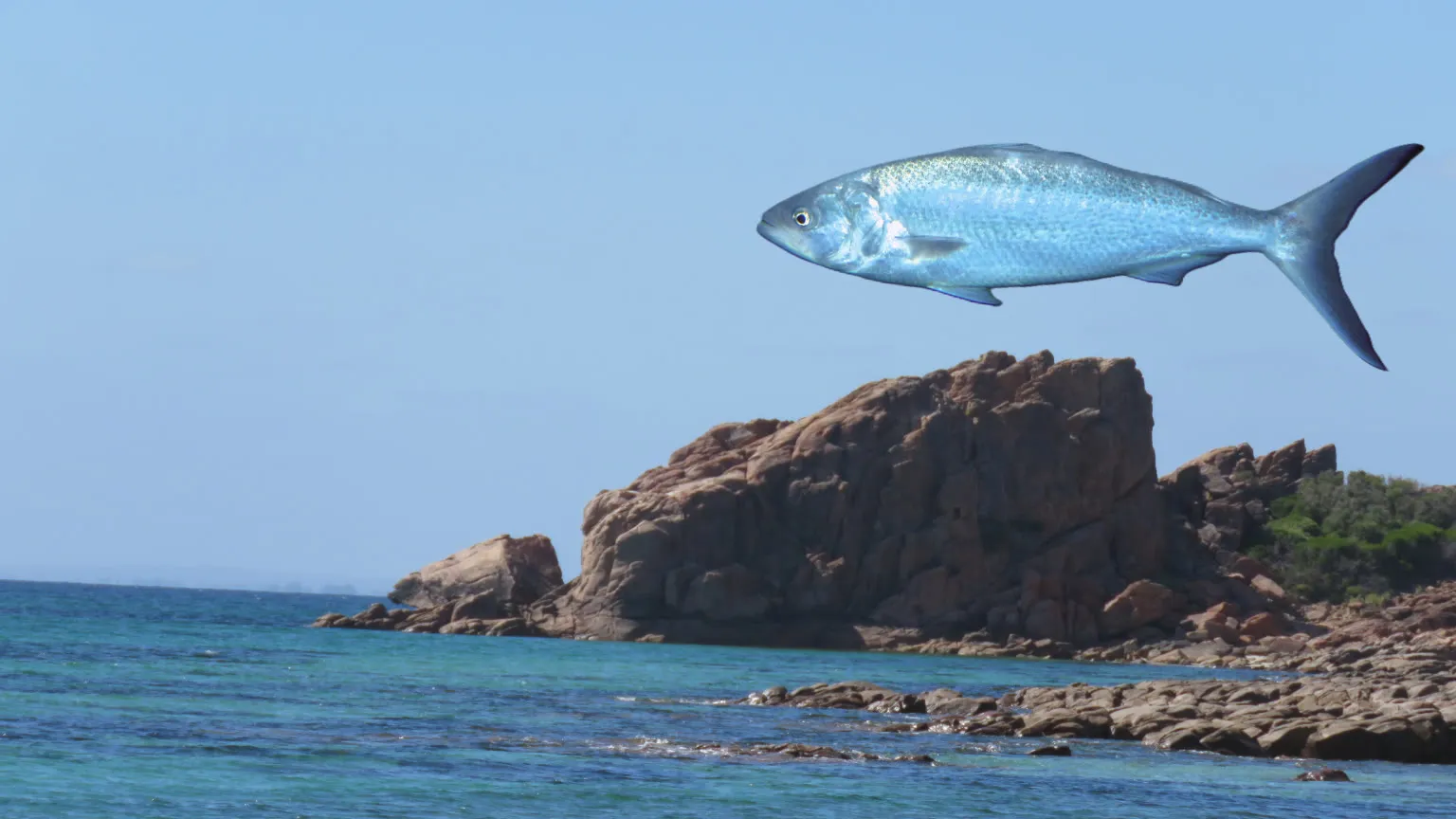
Target Species
Salmon
Salmon fishing at Castle Rock is one of the premier land-based angling experiences in Western Australia, offering fishers the chance to sight-cast to massive schools of migrating sportfish in shallow, crystal-clear coastal waters. This iconic granite structure provides a perfect vantage point to intercept hard-fighting Western Australian salmon as they hug the coastline during their annual autumn migration.
For generations, local and visiting anglers have gathered along this picturesque stretch of the southwest coast, drawn by the spectacle of the annual salmon run. Unlike many deep-water ocean ledges, Castle Rock offers a unique combination of accessibility, visual excitement, and high-energy sportfishing. When the schools arrive, the water turns a deep, shimmering blue-black, and the surface erupts as baitfish flee from these aggressive, fast-moving predators.
This guide will walk you through everything you need to know to successfully target salmon at this famous location. You will learn how to read the unique local structure, choose the right tackle, time your sessions around the tides, and apply the exact casting techniques used by seasoned local anglers to hook and land these incredible sportfish.
Getting There
Salmon
Arripis truttaceus
Always check current NSW DPI regulations before fishing. Bag and size limits may change.
What Makes Castle Rock a Top Salmon Spot?
Castle Rock is a productive salmon spot because a granite ledge drops straight into deep water, letting land-based anglers reach travelling schools without a long cast. The rock platform sits directly on the migration line that hugs the Cape Naturaliste shore each autumn.
To consistently catch salmon at Castle Rock, you must understand the physical layout of the area and why it acts as such a powerful magnet for migrating schools. The location is defined by its ancient orange-hued granite boulders that slide gently into the southern waters of Geographe Bay. This geological formation creates a highly dynamic marine environment that differs significantly from the long, sandy surf beaches found further north or south.
The key to the productivity of this spot lies in its underwater topography. The granite rocks extend beneath the surface, creating a series of deep gutters, ledges, and submerged boulders that run parallel to the shoreline. These structures are bordered by clean, light-coloured sand flats. This contrast between dark rock and bright sand makes the area an exceptional location for sight-fishing. Anglers standing on the elevated granite platforms can easily spot the dark, dense masses of salmon schools as they cruise over the white sand.
The depth around the main rock platforms varies from two metres close to the edge, dropping off to five or six metres in the deeper sandy channels. This relatively shallow water means that salmon are often highly active and visible throughout the water column. The structure also serves a dual purpose: it provides shelter for massive schools of baitfish, such as blue sprats, hardyheads, and pilchards, while giving the predatory salmon a physical barrier to herd and corner their prey.
During the peak of the autumn migration, schools of salmon travel northward from the cold waters of the Great Australian Bight, rounding Cape Naturaliste before entering the calmer, sheltered waters of Geographe Bay. Castle Rock is one of the first major structural headlands they encounter on this journey. The fish use the structure to rest, feed, and shelter from the heavier ocean swells of the open coast, making it a reliable holding pattern for schools that can linger in the bay for days at a time.
Location Essentials
Understanding how the wind and swell interact with this structure is crucial. Because Castle Rock faces northeast, it is highly sheltered from the prevailing southwest winds and heavy Indian Ocean swells that batter the western side of the cape. This makes it a much safer and more comfortable land-based fishing location than the exposed ocean rocks nearby. However, a moderate westerly or southwesterly wind is actually highly beneficial, as it flattens the sea surface even further, clearing the water and allowing for unparalleled visibility to spot incoming schools.
When Is the Best Time to Fish for Salmon at Castle Rock?
The best time to fish for Salmon at Castle Rock is during the autumn months of March, April, and May, with dawn and dusk sessions on an incoming tide offering the highest chance of success.
Western Australian salmon are highly visual, aggressive coastal hunters. Because they rely heavily on their keen eyesight to target schools of baitfish, the low-light periods of early morning and late afternoon trigger intense feeding activity. During these golden hours, salmon will push baitfish right up against the rocky shoreline and into the shallow sandy gutters of Castle Rock, making them highly accessible to land-based anglers.
While dawn and dusk are the prime daily windows, the state of the tide plays an equally critical role in your success. An incoming tide, particularly the two hours leading up to high tide, is the ideal time to fish. The rising water creates a stronger current around the headland, pushing baitfish close to the rocks and giving the salmon the cover they need to patrol the shallow wash. If a high tide coincides with first light or sunset, you have the perfect recipe for a chaotic, action-packed session.
Night fishing for salmon is generally less productive because these fish are visual predators that prefer to hunt during daylight hours. However, fishing after dark can still produce results, especially on bright, moonlit nights when the fish can still spot silhouettes in the water. During these nocturnal sessions, using highly oily, smelly baits like fresh mullet or bonito fillets is essential to help the fish locate your offering through scent rather than sight.
Weather patterns also heavily dictate the fishing conditions at Castle Rock. Because this spot faces northeast into Geographe Bay, it is highly protected from the heavy southwesterly swells that batter the west coast. Westerly and southwesterly winds are actually highly favoured by local fishers here, as they blow from behind the headland, flattening the sea surface and clearing the water. This crystal-clear water is perfect for spotting the large, dark schools of salmon as they cruise along the sandy bottom. Conversely, overcast and gloomy days can extend the morning bite well into midday, as the reduced light keeps the salmon active and confident in the shallows.
Salmon Seasonal Calendar
Tide Times
Optimal Tide
Rising tide, specifically the two hours leading up to high tide.
Tide movement is critical for fish activity. Most species feed actively during tide changes, especially the run-in (incoming) tide.
Detailed hourly tide charts
Official tide predictions
7-day tide calendar
Tide Guide
Best for most species. Fish move in to feed as water rises.
Good for ambush predators. Baitfish get swept out.
Slower bite. Fish less active during slack water.
New/full moon. Bigger tidal range, more fish movement.
Moon Phase & Solunar
Moon phases influence fish feeding behavior. New and full moons create spring tides with stronger currents and increased fish activity.
Best Phases
- New Moon: Peak feeding activity, spring tides, excellent fishing
- Full Moon: Strong tides, night feeding, great for nocturnal species
- 3 Days Either Side: Extended peak period for maximum results
Major/Minor Periods
- Major Periods: Moon overhead/underfoot (2-3 hours)
- Minor Periods: Moon rise/set (1-2 hours)
- Best Times: Major period + dawn/dusk = explosive action
Weather Conditions
Check current conditions before heading out. Wind, swell, and barometric pressure significantly affect fish behavior.
Official forecasts, warnings & radar
Hourly wind speed & direction
Swell height, period & direction
Spotting the Schools
Before you even unpack your gear, walk up to a high vantage point on the dunes or the headland at Castle Rock. Wear a good pair of polarised sunglasses to cut through the surface glare and look for large, dark, slow-moving shapes over the light-coloured sand. These are not seaweed patches, they are massive schools of salmon. Once spotted, you can plan your casts to intersect their path.
What Tackle Do You Need for Salmon at Castle Rock?
To successfully target Salmon at Castle Rock, you need a 9 to 10 foot medium-heavy spinning rod paired with a 4000 to 5000 size reel, spooled with 20 to 30 pound braid and a 30 to 40 pound fluorocarbon leader.
When selecting your gear for Castle Rock, you must strike a balance between casting distance and physical comfort. Because you will often be casting heavy metal lures or unweighted baits repeatedly for hours on end, a setup that is too heavy will quickly cause fatigue, while a setup that is too light will fail to cast far enough to reach the schools or control a powerful fish around the rocks.
A rod length of 9 to 10 feet is the sweet spot for this location. This length provides the necessary casting arc to launch 40 to 60 gram metal slices into the wind, while still being short and light enough to work active lures with an erratic, high-speed retrieve. Look for a rod rated between 6 and 10 kilograms with a fast action, which helps load the rod quickly during the cast and provides a solid backbone for steering hard-fighting fish away from the reef.
Your reel needs to be a high-quality spinning model with a smooth, reliable drag system. Salmon are renowned for their blistering first runs and spectacular aerial acrobatics, which will easily expose any sticky or jerky drags. A 4000 to 5000 size reel with a high retrieve ratio is ideal, allowing you to recover line quickly when retrieving lures at high speed or when a hooked fish runs directly toward you.
For your main line, braid is highly recommended over monofilament. The thin diameter of 20 to 30 pound braid reduces wind resistance, allowing for much longer casts, and its lack of stretch provides direct contact with your lure or bait for instant hooksets. Always tie on a 1 to 1.5 metre leader of 30 to 40 pound fluorocarbon. This leader provides crucial abrasion resistance against the rough rocks and the salmon’s raspy mouths, while remaining virtually invisible in the clear water of Geographe Bay. For more tackle basics, see our tackle basics guide.
Castle Rock Salmon Tackle Specifications
| Component | Specification |
|---|---|
| Rod | 9-10ft medium-heavy spin, fast action, 6-10kg rating |
| Reel | 4000-5000 size spinning reel with high-speed retrieve |
| Main Line | 20-30lb PE braided line for maximum casting distance |
| Leader | 30-40lb fluorocarbon leader, 1-1.5 metres in length |
| Hooks | 4/0 to 5/0 ganged hooks (3-hook configuration) for bait |
| Lures | 40-60g metal slices, Richter plugs, or 5-inch soft plastics |
| Swivels | Size 4 to 6 heavy-duty rolling barrel swivels |
| Sinker | Size 2 to 4 ball sinker (only if fishing in strong currents) |
How Do You Rig for Salmon?
The most effective rig for Salmon at Castle Rock is a classic ganged pilchard rig, which presents a whole bait naturally while preventing the fish from biting through the line or throwing the hook during jumps.
When fishing with bait at Castle Rock, the ganged hook rig is the undisputed king. Because salmon have large mouths lined with small, raspy teeth, and because they shake their heads violently when hooked, a single hook can easily tear out or be bitten off. Ganging three or four hooks together distributes the holding power along the entire length of the bait, ensuring a secure hookup no matter where the salmon strikes.
This rig can be fished completely unweighted, which is highly effective when the salmon are cruising close to the surface or in shallow water. The unweighted pilchard sinks slowly and naturally through the water column, mimicking a dying baitfish. If there is a strong breeze or a noticeable current sweeping across the point, adding a small ball sinker directly above the swivel will help you gain extra casting distance and keep your bait in the strike zone.
Building the Perfect Ganged Pilchard Rig
- 1
Cut the Leader
Measure and cut a 1.2 metre length of 40-pound fluorocarbon leader material from the spool.
- 2
Tie the Swivel
Attach a heavy-duty size 4 rolling swivel to one end of the leader using a strong Uni knot, pulling it tight and trimming the tag end.
- 3
Prepare the Hooks
Select three 4/0 long-shank hooks. Insert the point of one hook through the eye of the next, then use a pair of pliers to carefully squeeze the eye shut so they are linked securely.
- 4
Attach the Leader to Hooks
Tie the open end of your fluorocarbon leader to the eye of the top hook in your ganged chain using a secure Uni knot.
- 5
Rig the Pilchard
Insert the point of the top hook through the eye of the pilchard, the middle hook through the middle of the body, and the bottom hook near the tail, ensuring the bait sits straight.
- 6
Add Optional Weight
If casting into a headwind, thread a small size 2 ball sinker onto your main line braid before tying it to the top swivel of your leader.
- 7
Final Inspection
Hold the rig up to ensure the pilchard is not bunched up or spinning. A straight bait swims naturally and avoids twisting your line.
What Bait Works Best for Salmon?
The best bait for Salmon at Castle Rock is a fresh, whole pilchard, which offers the perfect combination of natural presentation, rich oil content, and strong scent dispersion to attract cruising schools.
While lures are incredibly popular for salmon fishing, using natural bait is highly effective, especially when the schools are holding in deeper water or when they become wary of artificial lures. Salmon are highly opportunistic feeders, but they are particularly drawn to oily, shiny baitfish that mimic their natural prey.
When selecting bait, freshness is key. While frozen bait from the local service station will catch fish, fresh, local bait holds together much better during long, forceful casts and releases a much stronger scent trail into the water. If you can source fresh garfish or mullet, these baits are incredibly durable and can withstand the attention of smaller pickers while you wait for a salmon school to move through. To learn more about preparing your baits, check out our detailed Bait Guide.
Bait Performance Analysis for Castle Rock Salmon
| Whole Pilchard | Whole Garfish | Mullet Fillet | |
|---|---|---|---|
| Effectiveness Rating | Excellent | Good | Good |
| Durability on Hook | Moderate | High | Very High |
| Scent Dispersion | High | Moderate | High |
| Availability | Very High | Moderate | High |
| Best Use Conditions | Low light, calm to moderate seas | Strong currents, long casting required | Rough wash, high presence of bait pickers |
The Salt Cure Tip
If you are using frozen pilchards, sprinkle them with a generous handful of coarse prep salt or pool salt a few hours before your session. The salt draws out excess moisture, toughening the skin and flesh. This simple trick prevents the bait from flying off the hooks during heavy casts and makes it much harder for small bait-stealing fish to tear it apart.
How Do You Catch Salmon at Castle Rock?
To catch salmon at Castle Rock, you must spot cruising schools from the elevated headland, cast your lure or bait ahead of their swimming path, and use a fast, erratic retrieve to trigger an aggressive strike.
Casting strategy is the foundation of success when targeting these ocean sportfish. When you arrive at the beach or the rocky headland, do not just blindly cast into the blue. Take a few minutes to stand on the higher granite rocks or the sand dunes to scan the water. Look for large, dark patches moving slowly through the clear water of Geographe Bay. These patches are often mistaken for seaweed reef, but a closer look will reveal a shifting, pulsing shape of thousands of tightly packed fish.
Once you spot a school, your bait placement must be precise. Never cast directly into the middle of the school, as this will spook the fish and cause the school to split or dive deep into offshore waters. Instead, cast your lure or ganged pilchard rig five to ten metres past the school and ahead of their direction of travel. Retrieve your offering across the leading edge of the school. This makes your lure look like a panicked baitfish that has broken away from safety, which triggers an immediate predatory response from the leading salmon.
[ Cruising School of Salmon ] ---> (Direction of Travel)

                                      * (Target Cast Landing Zone)
                                     /
                                    /
                                   /  (Retrieve Path across front)
                                  /
                                 /
[ Angler on Rocks ] ------------*
If you are casting metal lures like a Halco Twisty or a heavy spoon, vary your retrieve until you find what is working. A standard high-speed retrieve works well when the fish are highly active, but on calmer days, a lift-and-drop technique or a sudden pause can entice a stubborn fish to strike. If you prefer surface action, working a cup-faced popper with short, sharp sweeps of the rod will create a splash that salmon find irresistible. For those using bait, drift a unweighted ganged pilchard through the sandy channels and gutters between the rocks, letting the natural swell move the bait.
Bite detection when lure fishing is unmistakable. Salmon hit with incredible speed and force, often hooking themselves on the strike. When using metal lures or hardbodies with treble hooks, you do not need to strike hard to set the hook. Simply keep winding and lift the rod tip to drive the hooks home. If you are using bait with circle hooks, avoid the temptation to strike when you feel the initial tugs. Allow the fish to take the bait, run for a second or two, and then slowly tighten your drag while lifting the rod. This ensures the circle hook slides to the corner of the mouth for a secure hookup.
Fighting a big Western Australian salmon is one of the great thrills of local angling. These fish are renowned for their acrobatic aerial displays, often jumping clear of the water multiple times during a fight. When a salmon jumps, it will shake its head violently to throw the hook. To counter this, lower your rod tip toward the water to slacken the line slightly during the jump, a technique known as bowing to the fish. Keep constant, firm pressure on the line at all times when the fish is underwater.
Landing a salmon at Castle Rock requires patience, especially around the granite ledges. Never try to lift a heavy fish directly out of the water using your rod, as this high-sticking technique will easily snap your rod tip. Instead, look for a safe, flat rock ledge or a sandy pocket. Use the incoming swell to wash the fish onto the flat surface, then quickly secure it by hand or with a landing net. If you are releasing the fish, handle it with wet hands or a damp cloth to protect its slime coating, and spend a minute reviving it in the water before letting it swim away. For more tips on mastering these battles, explore our guide on fishing techniques.
What Are the Rules and Safety Guidelines for Fishing at Castle Rock?
Fishing at Castle Rock requires strict adherence to Western Australian recreational fishing rules, including a daily bag limit of four salmon per fisher, a minimum legal length of 300 mm, and essential rock safety precautions.
These limits were confirmed on 15 August 2026 from the DPIRD Recreational Fishing Rules. Because this is a rock-platform fishery, check the SharkSmart activity map and the swell forecast as well as the current rules on the DPIRD site before committing to the ledge.
Before you head out to Castle Rock, it is vital to familiarise yourself with the current Department of Primary Industries and Regional Development (DPIRD) regulations. Western Australian salmon are subject to a strict daily bag limit of four fish per angler. They also fall under the category of nearshore finfish, which means they contribute to your mixed species daily bag limit of 16 finfish. The minimum legal length for salmon is 300 mm, measured from the tip of the snout to the tip of the tail. Any undersized fish must be returned to the water immediately with the utmost care. To stay fully informed on local bag limits and seasonal closures, check the latest fishing regulations.
Conservation is key to preserving this incredible fishery for future generations. If you plan to keep a salmon for the table, bleed it immediately by cutting the gills and placing it straight into an ice slurry. This improves the eating quality of the meat significantly by removing the strong, bloody flavour. If you are practicing catch and release, use single inline hooks on your lures instead of treble hooks. Single hooks cause far less damage to the fish’s mouth and make releasing them much faster and safer. Always use a wet towel or specialised gloves when handling fish to avoid removing their protective slime layer.
Critical Safety Considerations
The granite rocks at Castle Rock can be incredibly slippery, even on dry, sunny days. Large ocean swells can sweep over the ledges without warning, creating highly hazardous conditions for rock fishers.
- Always Wear a Life Jacket: A slimline, self-inflating Level 150 PFD (Personal Flotation Device) is essential when fishing from the rocks.
- Wear Appropriate Footwear: Use spiked rock boots or cleats to maintain traction on the wet, mossy granite.
- Never Turn Your Back on the Ocean: Constantly watch the incoming swell and waves, even during low tide.
- Fish with a Mate: Never fish the rock ledges alone. Ensure someone on land knows exactly where you are going and when you plan to return.
- Emergency Contact: In case of an emergency, call 000 immediately. The nearest rescue services are based out of Dunsborough and Busselton.
Before taking to the rocks, it is highly recommended to read our complete guide on rock fishing safety to ensure you have all the necessary knowledge to stay safe on the coast.
Your Questions About Salmon Fishing at Castle Rock
What is the best time to fish at Castle Rock?
The best time to fish at Castle Rock is during the autumn months of March, April, and May, specifically during the low-light periods of dawn and dusk.
These peak fishing hours coincide with the natural feeding patterns of the salmon, which use the dim light to ambush baitfish. Fishing during an incoming tide, especially when it peaks near sunrise or sunset, will dramatically increase your chances of finding active schools hugging the shoreline.
Is Castle Rock suitable for beginners?
Yes, Castle Rock is highly suitable for beginners because it offers easy access to both sandy beaches and stable rock platforms.
This beginner friendly location allows new anglers to practice casting lures without the need for complex beach driving or long hikes. The sandy beach section to the east of the main rock is an especially safe and easy fishing spot for those learning to read the water and cast light spin gear.
Do I need a boat to fish at Castle Rock?
No, you do not need a boat to fish at Castle Rock, as it is one of the premier land-based fishing locations in the South West.
The deep water channels run very close to the granite headland, allowing shore fishing enthusiasts to cast directly into the path of migrating salmon schools. While boat anglers can target the schools from the water, land-based fishing remains the most popular and productive method here.
Where are the best specific spots at Castle Rock?
The best specific spots at Castle Rock are the eastern point of the main granite headland and the deep sandy gutter directly in front of the beach.
These hot spots act as natural bottlenecks where migrating schools are forced close to the shore. Anglers who set up on these fishing marks can easily intercept the fish as they travel along the coast of Geographe Bay.
What size Salmon can I expect?
You can expect Western Australian salmon at Castle Rock to average between 3 and 5 kilograms, measuring roughly 60 to 80 centimetres in length.
This average catch size makes them an incredibly hard-fighting sportfish on light to medium tackle. Occasionally, lucky anglers will hook into a trophy fish exceeding 7 kilograms, which will test your drag and knots to their absolute limits.
Is there parking available at Castle Rock?
Yes, there is a dedicated gravel car park located directly at the end of Castle Rock Road, just a short walk from the beach.
This convenient access makes it easy to transport your rods, tackle boxes, and coolers down to the water. During the peak autumn run, this car park can fill up very quickly, so arriving early in the morning is highly recommended.
Can I fish at night at Castle Rock?
Yes, you can fish at night at Castle Rock, though it requires extra caution when navigating the rocky headland in the dark.
While salmon are primarily visual daytime hunters, night fishing tips include using highly scented baits like fresh mullet fillets or whole pilchards. You may also encounter other nocturnal species like tailor, mulloway, and reef sharks after dark.
Where can I buy bait near Castle Rock?
You can buy fresh bait and tackle at several local shops in the nearby town of Dunsborough, which is only a ten-minute drive away.
These local bait shops and tackle stores nearby stock everything from frozen pilchards and squid to specialised metal lures, ganged hooks, and heavy fluorocarbon leader material. The staff can also provide up-to-the-minute reports on where the schools are currently moving.
What are the current bag and size limits?
The current rules state a daily bag limit of four salmon per fisher, with a minimum legal size limit of 300 mm.
These strict regulations are enforced by local fisheries officers to protect the breeding stock. Always ensure you measure your catch accurately from the snout to the tip of the tail to remain within the legal limits.
Is Castle Rock family-friendly for fishing?
Yes, the sandy beach area of Castle Rock is very family-friendly and provides a safe environment for children to fish.
While the rocky headland can be hazardous for young kids, the adjacent beach offers flat, calm water with minimal swell, making it one of the safest kids fishing spots in the region. It is a fantastic place to introduce children to the excitement of beach casting.
What should I bring for a fishing session?
Your essential gear checklist should include a 9 to 10-foot spinning rod, a 4000-size reel spooled with 20-pound braid, a selection of metal lures, polarised sunglasses, and a life jacket.
This fishing checklist ensures you are prepared for both the physical demands of casting all day and the safety requirements of the rock platforms. Do not forget a sturdy bucket, ice, and a sharp knife if you plan to keep your catch for dinner.
How crowded does Castle Rock get?
Castle Rock can become highly crowded during the peak Easter long weekend and school holiday periods when the salmon run is in full swing.
To avoid the crowds and secure the best casting positions on the rocks, aim for mid-week sessions or fish during the quieter fishing times of early dawn. Most casual anglers pack up by mid-morning, leaving the beach much quieter for the afternoon bite.
What Are the Best Nearby Fishing Spots?
Castle Rock is one stop on a short stretch of coast that holds salmon all autumn. When the swell makes the ledge unsafe, move to the sand:
- Eagle Bay salmon: Sheltered beach fishing minutes away, safe in a big swell.
- Bunker Bay salmon: Deep beach gutters at the northern tip of the cape.
- Cape Naturaliste salmon: Regional overview of the autumn run.
- Busselton Jetty salmon: Flat-water structure fishing in Geographe Bay.
- Margaret River mullet: Light-tackle estuary option an hour south.
Latest Fishing Reports
Stay updated with the latest catches, conditions, and hot tips from Castle Rock. Check these sources for recent reports filtered by location and species.
Fishraider
Community fishing reports and catch logs
Fishing World
Professional fishing reports and news
Tackle World
Local tackle shop reports and tips
NSW DPI
Official recreational fishing reports
Fishingmonthly
Monthly fishing magazine and reports
Hooked Up
Video fishing reports and tips
Pro Tip: Filter Reports
When browsing reports, search for "Castle Rock" or nearby landmarks. Look for reports from the last 7-14 days for the most relevant information. Pay attention to tide times, weather conditions, and successful techniques mentioned.
Share Your Catch
Caught something at Castle Rock? Share your success with the community! Upload your catch photos and reports to help other anglers.
Disclaimer: Fishing regulations, bag limits, and access rules can change. Always verify current local rules with the Western Australian Department of Primary Industries and Regional Development (DPIRD) before heading out on your trip.
Explore more fishing spots in the area, learn about other species at this location, or brush up on your skills with our fishing basics guide.
Quick Info
- Location
- Castle Rock
- Coordinates
- -33.5646, 115.0230
- Difficulty
- intermediate
- Target Species
- Salmon
Conditions
Check local weather and tide conditions before heading out.