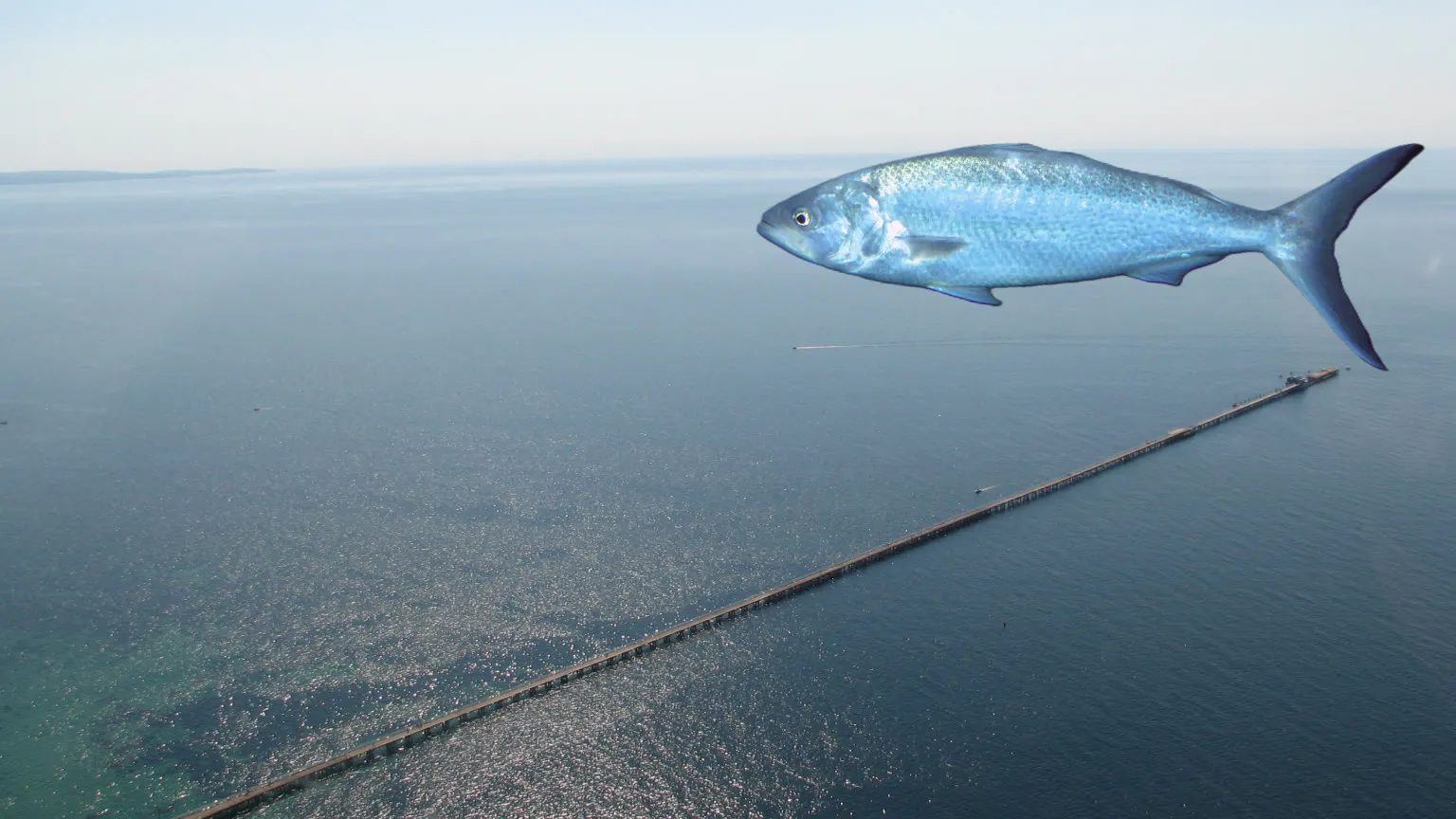
Target Species
Salmon
Salmon fishing at Busselton Jetty is one of the premier land-based angling experiences in Western Australia, offering direct access to massive schools of migrating sportfish without the need for a boat. Standing as the longest timber-piled jetty in the Southern Hemisphere, this iconic structure allows you to walk 1.8 kilometres out into the deep, fertile waters of Geographe Bay to intercept hard-fighting Australian salmon.
Every autumn, the quiet waters of Geographe Bay transform into a high-octane highway for migrating Australian salmon (Arripis truttaceus). As these powerful pelagic predators round Cape Naturaliste, they enter the sheltered bay, using the massive timber structure of Busselton Jetty as a primary hunting ground. For land-based anglers, this creates a sensational opportunity to hook into fish that regularly exceed 5 to 8 kilograms, renowned for their blistering runs, head-shaking leaps, and sheer determination.
What makes this location so special is the sheer scale of the structure. The jetty extends far beyond the surf zone, cutting through various depth profiles and marine habitats. Whether you are a seasoned sportfisher casting metal lures into the wind or a family looking to experience the thrill of the annual salmon run, the jetty provides a stable, accessible, and incredibly productive platform.
In this guide, you will learn the exact seasonal movements of these fish, the structural hot spots along the jetty, and the specific tackle, rigging, and bait presentation methods needed to turn chases into solid hookups.
Getting There
Salmon
Arripis truttaceus
Always check current NSW DPI regulations before fishing. Bag and size limits may change.
What Makes Busselton Jetty a Top Salmon Spot?
The best place to target salmon on Busselton Jetty is along the outer third of the structure, specifically from the 1,200-metre mark out to the platform just before the Underwater Observatory. In this deeper blue water, the depth drops to around 8 metres, allowing large schools of migrating salmon to patrol the pylons and herd baitfish against the timber.
To consistently catch salmon here, you must understand how this massive structure interacts with the underwater topography of Geographe Bay. The bay itself is a relatively shallow, sandy basin protected from the heavy swells of the Indian Ocean by Cape Naturaliste. Because the surrounding sea floor is mostly flat sand and seagrass, Busselton Jetty acts as a giant artificial reef. The thousands of wooden and concrete piles are encrusted with soft corals, sponges, and algae, creating a thriving ecosystem that supports over 300 marine species.
For migrating salmon, the jetty is a physical barrier and a primary feeding station. As schools of salmon travel along the coast, they use the jetty to corner baitfish like bluebait, pilchards, yellowtail scad, and sandy sprats.
The depth profile of the jetty changes gradually from the shoreline to the end:
The Shallow Zone (0 to 500 metres)
The water depth here ranges from knee-deep to about 3 metres. While this area is highly productive for yellowfin whiting, herring, and silver trevally (skippy), salmon rarely hold here for long. However, during peak migration periods in April and May, large schools will occasionally herd baitfish right into the shallows, creating chaotic, visual feeding frenzies in water less than two metres deep.
The Mid-Jetty Zone (500 to 1,200 metres)
Here, the depth settles between 4 and 6 metres. This is a highly underrated patrol zone. Salmon schools often cruise parallel to the jetty in this section, moving between the pylons to surprise baitfish. Look for areas where the light changes or where the shadow of the jetty falls on the water, as salmon use these contrast lines to ambush their prey.
The Deep Outer Zone (1,200 to 1,841 metres)
This is the premier salmon territory. The water depth reaches its maximum of approximately 8 metres. The currents are much stronger out here, bringing clean, oceanic water and massive schools of bait. The salmon use the strong structural flow around the pylons to rest and ambush passing baitfish. Note that fishing is strictly prohibited directly around the Underwater Observatory at the very end of the jetty, but the platforms leading up to this exclusion zone are prime real estate.
Location Essentials
The wind plays a massive role in how fish behave around the structure. A strong southerly wind blows from behind you as you look down the jetty, making casting easy but sometimes pushing the baitfish further out into the bay. Conversely, a moderate northerly or north-westerly wind pushes water and bait directly against the jetty structure, often triggering intense feeding spells. When the water gets slightly chopped up and discoloured by wind action, the salmon become much less cautious, making them far easier to fool with lures and baits.
When Is the Best Time to Fish for Salmon at Busselton Jetty?
The best time to fish for Salmon at Busselton Jetty is during the autumn months from March to June, specifically during dawn and dusk sessions on a rising high tide. These low-light periods trigger intense feeding behaviour, drawing large schools of migratory salmon close to the jetty structure.
Timing your session is the single most important factor when targeting Australian salmon along the Geographe Bay coastline. While these powerful sportfish can be caught throughout the day when a school is actively patrolling, dawn and dusk remain the premier windows. During these transitional light phases, salmon use the structure of the jetty to ambush baitfish like hardyheads and bluebait.
Tidal movement plays a massive role in how salmon behave around this 1.8-kilometre timber structure. A strong run-in tide is highly preferred, as it pushes fresh, oxygen-rich ocean water and baitfish schools into Geographe Bay. When this incoming tide coincides with sunrise or sunset, you have the absolute peak fishing window. During low tide, salmon tend to hold further out in deeper water near the end of the jetty, whereas high tide allows them to patrol the shallower sections closer to shore.
Night fishing at Busselton Jetty is highly productive, though salmon behaviour changes after dark. While they are primarily visual, daytime hunters, the powerful lights installed along the jetty attract massive clouds of baitfish and squid. Salmon will frequently patrol the edges of these light pockets, launching high-speed raids on the concentrated bait.
Weather patterns also dictate your success. Strong south-westerly winds, which are common along the Western Australian coast, often push baitfish close to the shore, with large schools of salmon following directly behind them. Do not be deterred by overcast, choppy, or slightly stormy days, as these conditions reduce light penetration in the water, making salmon feel secure and far more willing to strike lures and baits.
Salmon Seasonal Calendar
Tide Times
Optimal Tide
A strong run-in high tide coinciding with dawn or dusk
Tide movement is critical for fish activity. Most species feed actively during tide changes, especially the run-in (incoming) tide.
Detailed hourly tide charts
Official tide predictions
7-day tide calendar
Tide Guide
Best for most species. Fish move in to feed as water rises.
Good for ambush predators. Baitfish get swept out.
Slower bite. Fish less active during slack water.
New/full moon. Bigger tidal range, more fish movement.
Moon Phase & Solunar
Moon phases influence fish feeding behavior. New and full moons create spring tides with stronger currents and increased fish activity.
Best Phases
- New Moon: Peak feeding activity, spring tides, excellent fishing
- Full Moon: Strong tides, night feeding, great for nocturnal species
- 3 Days Either Side: Extended peak period for maximum results
Major/Minor Periods
- Major Periods: Moon overhead/underfoot (2-3 hours)
- Minor Periods: Moon rise/set (1-2 hours)
- Best Times: Major period + dawn/dusk = explosive action
Weather Conditions
Check current conditions before heading out. Wind, swell, and barometric pressure significantly affect fish behavior.
Official forecasts, warnings & radar
Hourly wind speed & direction
Swell height, period & direction
The Barometer Factor
Keep a close eye on the barometric pressure before heading out. Australian salmon are highly sensitive to pressure changes. A rising barometer, or a steady high-pressure system above 1015 hPa, often triggers aggressive feeding frenzies, making them far more likely to smash surface lures.
What Tackle Do You Need for Salmon at Busselton Jetty?
To fish for Salmon at Busselton Jetty, you need a 9 to 10-foot medium-heavy spinning rod rated at 6 to 10 kilograms, paired with a 3000 to 4000 size spinning reel. This setup provides the casting distance required to reach passing schools and the power to steer strong fish away from the wooden pylons.
Fishing from a high structure like Busselton Jetty presents unique challenges that require specialised tackle. Unlike beach fishing where you can wash a fish onto the sand, jetty fishing requires you to control a powerful fish from several metres above the water line. For more tackle basics, see our tackle essentials guide to understand how different gear configurations work.
Your choice of rod is critical. A rod that is too short will limit your casting distance and make it difficult to guide your line around the jetty pylons during a fight. A 9 to 10-foot rod strikes the perfect balance, offering excellent casting use for heavy metal lures while remaining manageable when landing fish. Pair this with a high-quality spinning reel featuring a smooth, sealed carbon drag system. Salmon make long, blistering runs, and a sticky drag will quickly result in a busted line.
Your main line should consist of 20 to 30-pound braided line. Braid is essential because its thin diameter allows for maximum casting distance, and its lack of stretch gives you direct contact with your lure or bait, allowing for instant hooksets. Always use a high-quality fluorocarbon leader of at least 20 to 30-pound breaking strain. The waters of Geographe Bay are often crystal clear, and fluorocarbon is virtually invisible underwater while providing crucial abrasion resistance against the rough timber pylons and mussel shells.
Complete Tackle Specifications for Busselton Jetty Salmon
| Component | Specification |
|---|---|
| Rod | 9-10ft medium-heavy spin rod, 6-10kg rating, fast action |
| Reel | 3000-4000 size spinning reel with minimum 7kg drag capacity |
| Main Line | 20-30lb high-quality PE braided line |
| Leader | 20-30lb fluorocarbon leader, approximately 1.5m in length |
| Hooks | 3/0 to 5/0 ganged hooks (3-hook series) or 4/0 inline singles |
| Sinker | 1-3oz star or spoon sinker, depending on wind and current |
| Swivels | Size 4-6 heavy-duty crane or rolling swivels |
| Lures | 40-60g metal slugs, heavy stickbaits, or 5-inch soft plastics |
How Do You Rig for Salmon?
The most effective rig for targeting salmon at Busselton Jetty is a ganged hook rig or a heavy-duty Paternoster rig. These rigs present whole baits naturally in the water column while ensuring the hooks remain secure during long casts and hard strikes.
When rigging up for salmon, simplicity and strength are your best friends. These fish have hard, bony mouths, meaning your knots must be tied perfectly to ensure a solid hookset. For a complete breakdown of alternative setups, check out our guide on fishing rigs to expand your options.
The ganged hook rig is the traditional choice for presenting whole baits like mulies (pilchards). By linking three hooks together, you ensure that no matter where the salmon grabs the bait, they will find a hook point. This setup is highly effective when cast out and slowly retrieved through the water column. Alternatively, if you want to fish a stationary bait, a Paternoster rig keeps your bait suspended off the seabed, away from hungry crabs and rays, while allowing the scent to drift naturally in the current.
Building the Perfect Ganged Mulie Rig
- 1
Select Leader Material
Cut a 1.5-metre length of 30-pound fluorocarbon leader material. This length provides plenty of abrasion resistance if a fish runs near the jetty pylons.
- 2
Tie the Swivel
Attach a heavy-duty size 4 rolling swivel to one end of the leader using a Uni knot or a Palomar knot. Moisten the line before pulling it tight to prevent friction damage.
- 3
Prepare the Ganged Hooks
Select a pre-made set of three 4/0 ganged hooks, or link your own by inserting the point of one hook through the eye of another and closing the eye slightly with pliers.
- 4
Attach Hooks to Leader
Tie the top hook of the ganged series to the free end of your fluorocarbon leader using a secure Uni knot, leaving about 1.2 metres of leader between the swivel and the hooks.
- 5
Rig the Bait
Insert the top hook through the eye of a whole mulie, the middle hook through the body, and the bottom hook near the tail. Ensure the bait sits straight on the hooks to prevent spinning during retrieval.
- 6
Add Optional Weight
If fishing in strong winds or currents, slide a small ball sinker directly onto the leader above the hooks to help with casting distance and to keep the bait down.
- 7
Double-Check Connections
Give the entire rig a firm pull-test to ensure all knots are seated correctly and the hooks are aligned perfectly along the spine of the bait.
What Bait Works Best for Salmon?
The best bait for Salmon at Busselton Jetty is a whole fresh mulie (pilchard), followed closely by live yellowtail scad (yakkas) or fresh squid strips. These baits release a strong scent trail that draws salmon from a distance, prompting aggressive strikes.
While lures are highly popular, bait fishing remains incredibly effective, especially when the water is slightly discoloured or when the salmon are holding deep. Salmon are highly predatory and rely heavily on their senses of sight and smell to locate prey. Using fresh, high-quality bait will always yield better results than frozen, freezer-burned alternatives. For more tips on selecting and preparing bait, check out our bait guide.
When bait fishing from Busselton Jetty, you must contend with small bait-stealers like blowfish and herring. This is why bait presentation and durability are so important. Using thread elastic is a fantastic way to keep your bait intact during long casts and to protect it from being picked apart by smaller fish before a salmon can find it.
Bait Performance Analysis for Busselton Salmon
| Whole Mulies | Fresh Squid Strips | Live Yellowtail Scad | |
|---|---|---|---|
| Effectiveness Rating | Excellent | Good | Excellent |
| Durability on Hook | Moderate | Very High | High |
| Scent Dispersion | Very High | Moderate | Low (Visual focus) |
| Availability | Excellent (All Tackle Shops) | High (Fresh or Frozen) | Must be caught fresh at jetty |
| Best Use Conditions | Low light, active feeding schools, slow retrieve | High presence of bait-stealers, rough conditions | Bright sunny days, targeting trophy-sized fish |
The Bait Buddy Secret
Always wrap your mulies with a dozen turns of bait elastic (often called Bait Buddy) before casting. This prevents the bait from breaking apart when hitting the water at high speed and stops small pickers from stripping your hooks bare within seconds.
How Do You Catch Salmon at Busselton Jetty?
To catch Salmon at Busselton Jetty, you must present your bait or lure naturally in the water column and quickly steer hookups away from the sharp, encrusted timber pylons. Success relies on a combination of long casts, active retrieve styles, and a reliable landing plan.
Casting Strategy and Bait Placement
When you arrive at your chosen spot on the jetty, look at the wind and water current before making your first cast. Salmon are visual, active hunters that prefer to ambush prey moving with the water flow. Cast your lures or unweighted baits up-wind or up-current, allowing them to drift naturally back toward the jetty structure.
If you are using metal slugs or hard-body lures, cast out at a 45-degree angle from the jetty to cover the maximum amount of water. Retrieve the lure parallel to the structure, keeping it just outside the shadow line cast by the deck. Salmon often patrol these shadow lines, waiting to intercept schools of baitfish. If you are bait fishing with a classic unweighted mulie on gang hooks, cast it far out into the clear water and let it sink slowly through the water column. Slowly retrieve the bait with occasional sweeps of the rod tip to mimic a dying blue pilchard.
Bite Detection and Hookset
Salmon strikes are rarely subtle. When a migrating salmon decides to take your bait or lure, the hit is fast, aggressive, and unmistakable.
If you are casting lures, you will feel a sudden, heavy weight on the line, often accompanied by a violent shake of the fish’s head. When this happens, keep a firm grip on your rod and wind quickly to set the hooks. There is no need for a massive, overhead hookset, as the speed of the fish combined with your retrieve is usually enough to drive the hooks home.
If you are bait fishing with circle hooks on a dropper rig, resist the urge to strike immediately. When you feel the initial taps or a steady pull, let the fish run for two to three seconds while keeping your line taut. The circle hook will naturally slide to the corner of the mouth, setting itself as the fish turns away. For more information on hook selection and rigging, check out our guide on fishing knots to ensure your connections hold up under pressure.
Fighting and Landing Strategies
Fighting a large salmon from a high platform like Busselton Jetty requires patience and a clear plan. The moment you hook up, the salmon will likely make a long, powerful run toward the open ocean or dive directly toward the timber pylons.
Keep your rod tip held high to absorb the shock of the fish’s head shakes and jumps. If the fish runs toward the pylons, apply firm side pressure on your rod in the opposite direction to steer it into open water. Do not lock your drag completely, as the sudden lunges of a big salmon will easily snap 20-pound leader material. Instead, set your drag to a smooth, medium setting that allows the fish to tire itself out.
Landing a fish from the jetty is the most challenging part of the process. Because of the height of the deck above the water, you cannot simply lift a five-kilogram salmon up by the line. Doing so will break your rod tip or snap your leader. You must use a specialized drop net, which is a circular net on a long rope. Guide the tired salmon over the lowered net, then carefully pull the rope upward to lift your catch safely onto the deck. For more tips on mastering these landing skills, read our fishing techniques guide.
What Are the Rules for Fishing at Busselton Jetty?
Fishing at Busselton Jetty is governed by Western Australian recreational fishing rules, which mandate a daily bag limit of 4 Western Australian Salmon per fisher and a minimum legal length of 300 mm. Anglers must also respect local exclusion zones, particularly around the Underwater Observatory at the end of the structure.
The limits quoted here were verified on 15 August 2026 against the DPIRD Recreational Fishing Rules. Jetty-specific closures also apply around the Underwater Observatory, so read the signage and the Busselton Jetty visitor information alongside the DPIRD site before you fish.
Before you head out, always check the latest updates on the fishing regulations page to ensure you are operating within the law. The Department of Primary Industries and Regional Development (DPIRD) actively monitors the jetty, and heavy fines apply for non-compliance.
Critical Safety Considerations
Busselton Jetty is a long, exposed structure that presents unique hazards for anglers. Keep these safety points in mind:
- High Drop Hazard: The deck sits several metres above the water. Never attempt to climb down the pylons or jump into the water to retrieve gear or fish.
- Overhead Casting: The jetty is a popular tourist destination. Always look behind you before casting to avoid hooking pedestrians, tram passengers, or other anglers.
- Slippery Timber: The wooden planks can become incredibly slippery when wet from rain, sea spray, or fish slime. Wear footwear with excellent grip.
- Emergency Contacts: In case of an emergency, contact Sea Rescue Busselton or dial 000. Life rings are located at regular intervals along the length of the jetty.
Conservation Practices
Practising sustainable fishing ensures that future generations of West Australian anglers can enjoy the thrill of the autumn salmon run.
- Use Circle Hooks: When bait fishing, swap traditional J-hooks for circle hooks. These are designed to hook the fish in the corner of the mouth, making catch and release much safer for the fish.
- Wet Your Hands: If you plan to release your salmon, always wet your hands or use a wet cloth before handling the fish. This protects their delicate slime coating, which prevents infections.
- Support the Weight: Never hold a heavy salmon vertically by the gills or jaw if you intend to release it. Support its belly horizontally to prevent damaging its internal organs.
- Disposal of Waste: Keep the jetty clean by disposing of all bait bags, tangled line, and plastic waste in the bins provided. Discarded line is a major hazard for local seabirds and marine life. For general safety advice on coastal structures, see our fishing safety guide.
Your Questions About Salmon Fishing at Busselton Jetty
What is the best time to fish at Busselton Jetty?
The best time to fish for Salmon at Busselton Jetty is during the autumn months, specifically from March to May, during the low-light hours of dawn and dusk.
These peak fishing hours coincide with the annual salmon migration, when massive schools move along the coast. Fishing during an incoming tide at these times will significantly increase your chances, as the moving water pushes baitfish closer to the jetty structure.
Is Busselton Jetty suitable for beginners?
Yes, Busselton Jetty is an excellent, beginner friendly location because it offers easy walking access, flat timber decking, and protective railings.
It is one of the most accessible easy fishing spots in the South West, allowing new anglers to target large pelagic species without needing a boat or navigating rough surf beaches.
Do I need a boat to fish at Busselton Jetty?
No, you do not need a boat because the jetty extends 1.8 kilometres into Geographe Bay, providing direct walking access to deep water.
This makes it a premier destination for land-based fishing, allowing shore fishing enthusiasts to reach species that are normally only accessible by boat.
Where are the best specific spots at Busselton Jetty?
The best specific spots on Busselton Jetty are located along the final third of the structure, particularly around the platform areas just before the exclusion zone.
These hot spots provide access to deeper water and stronger currents, which salmon use to travel. Anglers also find good fishing marks around the mid-section platforms during high tides.
What size Salmon can I expect?
You can expect to catch Western Australian Salmon averaging between 3 and 6 kilograms, measuring anywhere from 60 to 80 centimetres in length.
While the average catch size is highly respectable, lucky anglers occasionally hook into genuine trophy fish weighing over 8 kilograms, which will test your tackle to its absolute limits.
Is there parking available at Busselton Jetty?
Yes, there is ample parking available at the Busselton Foreshore car parks located directly at the foot of the jetty.
To plan your access, note that some parking areas have time limits during peak tourist seasons, so look for the long-term bays if you plan on spending the entire day on the water.
Can I fish at night at Busselton Jetty?
Yes, fishing at night is permitted on Busselton Jetty and can be highly productive for various species, including squid and mulloway.
For the best night fishing tips, bring a high-quality headlamp to help you rig your gear after dark, and focus your efforts around the illuminated sections of the jetty where baitfish gather.
Where can I buy bait near Busselton Jetty?
You can buy high-quality bait at several local tackle stores and service stations located within a five-minute drive of the foreshore.
Visiting these local bait shops and tackle stores nearby is also a great way to get up-to-the-minute advice on where the salmon schools are currently biting along the coast.
What are the current bag and size limits?
The current regulations for Western Australian Salmon state a minimum legal length of 300 mm and a daily bag limit of 4 fish per person.
These legal limits are strictly enforced by fisheries officers to protect the sustainability of the fishery, so make sure you carry a valid measuring tape in your tackle box.
Is Busselton Jetty family-friendly for fishing?
Yes, the jetty is highly family-friendly, featuring wide timber walkways, safety railings, public toilets, and bench seats along its length.
It is one of the safest kids fishing spots in the region, though parents should always supervise young children closely due to the deep water surrounding the structure.
What should I bring for a fishing session?
Your essential fishing checklist should include a long rod, a drop net, warm clothing, sun protection, a bucket, and plenty of fresh bait or lures.
Having the correct essential gear is vital, especially a long-handled gaff or drop net, as landing a heavy fish from the high deck is impossible without one.
How crowded does Busselton Jetty get?
During the peak of the autumn salmon run, the jetty can become very crowded, especially on weekends and public holidays.
To find quiet fishing times and the best times to avoid crowds, try planning your sessions for mid-week mornings or during overcast, slightly windy days when casual tourists stay indoors.
What Are the Best Nearby Fishing Spots?
Busselton Jetty is the calm-water option in Geographe Bay, and the cape beaches are a short drive west when the schools move on:
- Eagle Bay salmon: Clear-water sight casting off the sand, 35 minutes west.
- Bunker Bay salmon: Deep gutters close to shore at the tip of the cape.
- Castle Rock salmon: Rock-ledge access to deeper water for bigger fish.
- Cape Naturaliste salmon: How the autumn run tracks around the whole headland.
- Margaret River mullet: A lighter estuary session for the non-fishing half of the trip.
Latest Fishing Reports
Stay updated with the latest catches, conditions, and hot tips from Busselton Jetty. Check these sources for recent reports filtered by location and species.
Fishraider
Community fishing reports and catch logs
Fishing World
Professional fishing reports and news
Tackle World
Local tackle shop reports and tips
NSW DPI
Official recreational fishing reports
Fishingmonthly
Monthly fishing magazine and reports
Hooked Up
Video fishing reports and tips
Pro Tip: Filter Reports
When browsing reports, search for "Busselton Jetty" or nearby landmarks. Look for reports from the last 7-14 days for the most relevant information. Pay attention to tide times, weather conditions, and successful techniques mentioned.
Share Your Catch
Caught something at Busselton Jetty? Share your success with the community! Upload your catch photos and reports to help other anglers.
Disclaimer: Fishing regulations, bag limits, and access rules can change without notice. Always verify current local restrictions with the Western Australian Department of Primary Industries and Regional Development before heading out on the water.
Explore more fishing spots in the area, learn about other species at this location, or brush up on your gear setup with our tackle basics guide.
Quick Info
- Location
- Busselton Jetty
- Coordinates
- -33.6403, 115.3415
- Difficulty
- intermediate
- Target Species
- Salmon
Conditions
Check local weather and tide conditions before heading out.