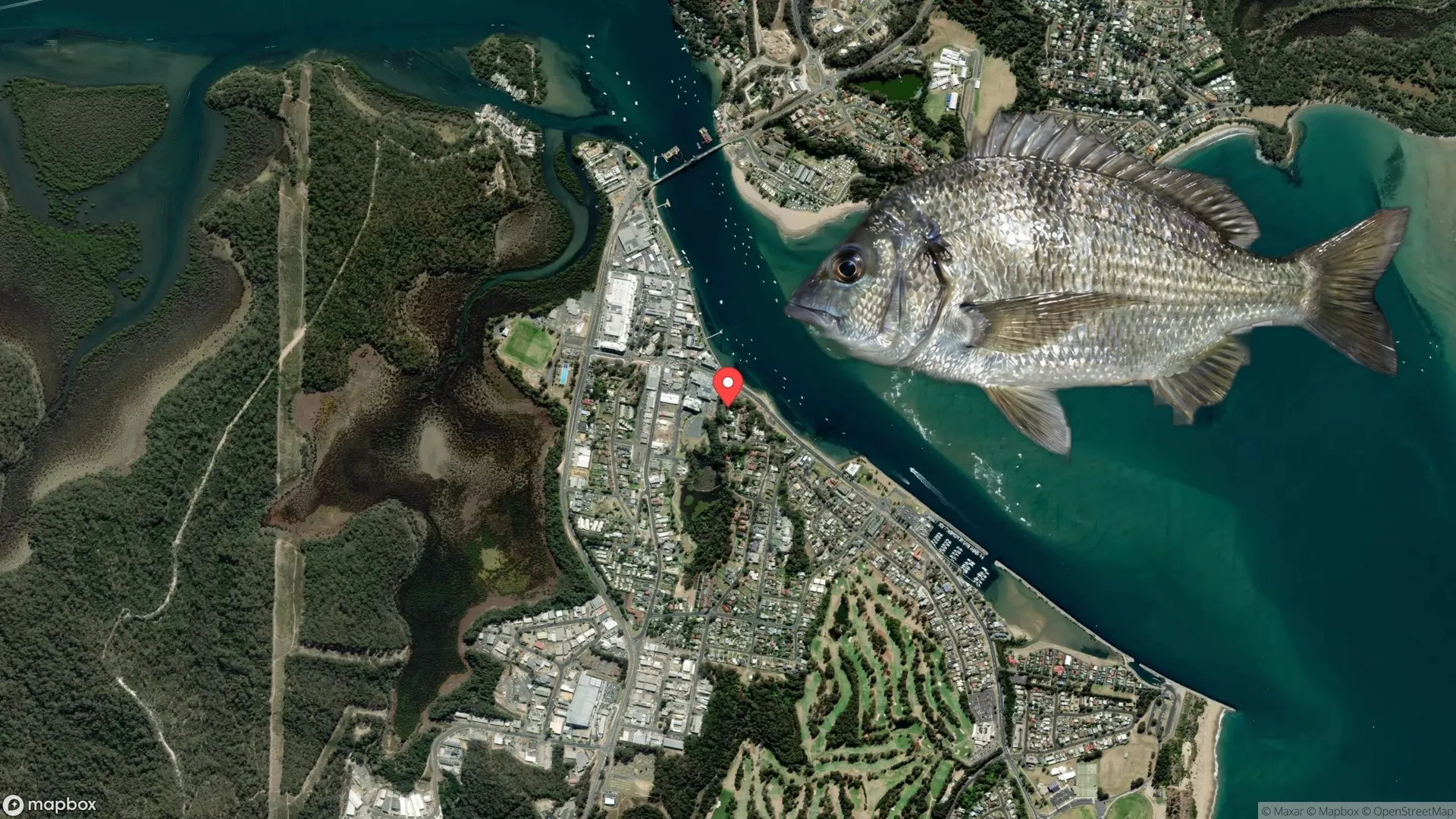
Target Species
Black Bream
Clyde River Estuary is one of the top spots for Black Bream fishing in NSW, offering deep structural holding points and thriving mussel beds that attract trophy-sized “blue-nose” bream. The system is known for its challenging structure fishing and reliable seasonal runs, making it a go-to destination for lure and bait anglers alike.
If you’re after the elusive “blue-nose” Black Bream in New South Wales, the Clyde River Estuary presents a real test that separates the weekend tinkerers from the serious finesse anglers. Sitting at a prime latitude for temperate estuary species, this system is famous for producing thick-shouldered fish that know exactly how to snap you off in the snags. Unlike the smaller, feistier bream found in open coastal washes, the locals here are crafty, structure-hugging, and strongly influenced by tidal salinity shifts.
Fishing this estuary isn’t just about tossing a prawn in the water; it means reading the subtle balance between tidal flow, barometric pressure, and cover. Whether you’re flipping unweighted plastics under overhanging paperbarks or drifting a river prawn along a drop-off, success here comes down to finesse. This guide breaks down the exact quirks of the Clyde River Estuary, helping you crack the local patterns that turn a quiet day on the water into a session to remember.
While there are plenty of solid fishing spots in NSW, few demand the same level of skill—or deliver the same thrill—as this system. From the shallow flats that heat up in spring to the deep holes where winter fish stack up, we’ll cover everything you need to land your best bream here.
Black Bream
Acanthopagrus butcheri
Always check current NSW DPI regulations before fishing. Bag and size limits may change.
Understanding Clyde River Estuary: Location Intelligence
The Clyde River Estuary features a mix of limestone rock bars, deep river bends with fallen timber, and wide shallow sand flats that drop into 4-metre channels. Knowing these transition zones is key, as Black Bream move along the edges where structure meets current.
To catch fish consistently here, you need to look past the surface and picture what’s happening below. The Clyde River Estuary works like many classic NSW estuaries, acting as a salt-wedge estuary. That means in winter, fresh rainwater sits on top of denser saltwater. Black Bream, while adaptable, prefer certain salinity levels and often hang right at the boundary between these layers (the halocline), or stay deep in saltier water during heavy rain.
Location Essentials
The Topography
The estuary splits into three distinct zones, each needing a different approach. The lower reaches, near the ocean mouth, have clear water, sandy bottoms, and man-made structures like jetties and pylons. Bream here are often spooky and need light fluorocarbon leaders (down to 3lb or 4lb) to get bites. The clarity allows sight casting, but staying quiet and low is a must.
As you move into the middle reaches, the river tightens and the banks fill with fallen timber and overhanging cover. This is prime “extraction” country. Depths change fast, with steep drop-offs on the outside of bends. These bends get scoured by current, carving deep holes and exposing limestone bars and clay banks. Big bream use these as ambush spots, holding just out of the main flow to save energy while waiting for food to drift past.
The upper reaches are brackish and packed with snags. This zone really fires up after rain pushes bait downstream, but before the water turns to chocolate milk. The cover here is thick—submerged logs, root balls, and dense reed lines. You’ll need heavier leader here; 3lb line won’t last long when a 40cm fish wraps you around a hidden branch in seconds.
The Salt Wedge Factor
One of the most important things to grasp about understanding water structure in this system is the salt wedge. In NSW estuaries, salinity changes dictate where fish sit. In summer and autumn, saltwater pushes far upstream, letting bream spread out. But after the first big winter rains, the freshwater flush forces fish downstream or drives them deep into holes where pockets of salty water stay trapped.
If you’re fishing after rain, don’t watch the surface. The top metre might be fresh and muddy, but three metres down, it could be clear and salty. Using a sounder to find these deep holding spots makes a big difference. If you’re on the bank, target the deepest pools within reach, or fish the incoming tide that slides clean saltwater under the dirty freshwater outflow.
Substrate and Food Sources
The bottom shifts from marine sand at the mouth to dark, organic mud upstream. The best areas are often where these meet—patches of shell grit or mussel beds over mud are absolute bream magnets. These fish are hunters; they spend their days crunching on mussels, crabs, and tube worms
found clinging to the structure. Spotting these food sources is often the fastest way to find fish. See a pylon covered in mussels or a bank full of crab holes? You can bet a school of bream isn’t far away.
When Is the Best Time to Fish for Black Bream at Clyde River Estuary?
The best time to target Black Bream at Clyde River Estuary is during the low-light periods of dawn and dusk, especially when they line up with a rising tide. The shift in light wakes up their hunting instinct, while the incoming tide brings clean, oxygen-rich water and baitfish across the shallow flats and rock bars.
Timing your session on the Clyde is less about watching the clock and more about reading the water. Black Bream are notoriously skittish, particularly in the clear stretches of the lower estuary. They use sight to hunt, but they also know they’re exposed to birds and bigger predators in bright light. That’s why the low-light windows are your best shot.
Dawn and Dusk: The “golden hour” isn’t just for photos—it’s when bream get bold. As the sun skims the horizon, light doesn’t cut so deep into the water. This lets bream leave their hideouts and move onto the flats to hunt prawns and worms with confidence. If a high tide lines up with sunrise or sunset, you’ve hit the “magic window.” That’s when the big blue-nose bream really start feeding.
Night Fishing: Don’t call it quits when dark falls. The Clyde River Estuary heats up after sunset, especially in the skinny water (0.5m to 1.5m). Under cover of night, bream will cruise in water so shallow it barely covers their backs. Try fishing unweighted baits or surface lures under moonlight—you might get slammed. But stay quiet; bang a hatch or stomp on the deck, and the whole school will vanish.
Tidal Influence: On this system, “no run, no fun” is the real deal. The tide runs the show.
- Incoming (Flood) Tide: Usually the best bet for flats and edges. Rising water lets fish reach spots that were dry or too skinny earlier. They follow the flow, hunting crabs and prawns that start moving.
- Outgoing (Ebb) Tide: As water drains, bait gets washed off the flats and into deeper channels and holes. This is the time to hit the drop-offs and main channel edges. Fish will sit in the deep, face the current, and wait for food to come to them.
- Slack Water: The pause at the top or bottom of the tide is usually dead time. Use it to re-rig, grab a bite, or shift spots. The bite kicks off again once the water starts moving.
Weather Patterns: Keep an eye on the barometer. Black Bream feel pressure changes. A rising reading or steady high (above 1015 hPa) often means active fish. A sudden drop usually makes them shut down and sulk on the bottom. But right before a front hits—when pressure just starts to fall—you might see a frantic “survival bite.”
For more detailed strategies on how tides affect fish behaviour, check out our tide fishing guide.
Black Bream Seasonal Calendar
Tide Times
Optimal Tide
Rising tide, 2 hours before High
Tide movement is critical for fish activity. Most species feed actively during tide changes, especially the run-in (incoming) tide.
Detailed hourly tide charts
Official tide predictions
7-day tide calendar
Tide Guide
Best for most species. Fish move in to feed as water rises.
Good for ambush predators. Baitfish get swept out.
Slower bite. Fish less active during slack water.
New/full moon. Bigger tidal range, more fish movement.
Moon Phase & Solunar
Moon phases influence fish feeding behavior. New and full moons create spring tides with stronger currents and increased fish activity.
Best Phases
- New Moon: Peak feeding activity, spring tides, excellent fishing
- Full Moon: Strong tides, night feeding, great for nocturnal species
- 3 Days Either Side: Extended peak period for maximum results
Major/Minor Periods
- Major Periods: Moon overhead/underfoot (2-3 hours)
- Minor Periods: Moon rise/set (1-2 hours)
- Best Times: Major period + dawn/dusk = explosive action
Weather Conditions
Check current conditions before heading out. Wind, swell, and barometric pressure significantly affect fish behavior.
Official forecasts, warnings & radar
Hourly wind speed & direction
Swell height, period & direction
The Wind Advantage
Don’t shy away from a bit of wind. A “glass out” looks peaceful, but it makes fish jumpy. A light chop breaks up the surface and hides your movements, helping bream feel safer to feed. If it’s breezy, cast with the wind to go further and work the windward banks where bait gets pushed.
What Tackle Do You Need for Black Bream at Clyde River Estuary?
The ideal tackle for Black Bream at Clyde River Estuary is a 2-4kg graphite spin rod paired with a 2000-2500 size reel. Spool up with 6-8lb high-quality braid and use a long rod-length of 3-6lb fluorocarbon leader to fool the wary fish in clear water.
Fishing for Black Bream is all about finesse. Heavy “meat gathering” gear will leave you with nothing. These fish spot thick line in a flash and feel the drag as it moves through the water. But you still need enough grunt to turn a fish before it dives into barnacle-covered rock. It’s a balance between stealth and stopping power.
The Rod: Go for a rod that’s light to hold but sharp in action. A 7-foot graphite spin rod rated 2-4kg or 1-3kg is the go-to. The length helps you cast further—key on the flats—and gives better line control. A “fast action” tip is ideal: stiff in the butt for power, soft and sensitive up front. That soft tip does two things: lets you flick light lures far, and stops the hook pulling free from a bream’s small mouth during a wild run.
The Reel: A 1000, 2000, or 2500 size spinning reel works perfectly. The key is a smooth drag system. Bream don’t give up easy—they’ll make sudden dashes for cover. If your drag snags or jerks, your light leader will snap. You need one that lets line slip out clean under pressure.
Main Line: Braided line (PE) beats monofilament for main line. It has no stretch, so you feel every tiny “tick” and “tap” when a bream noses your bait. 6lb to 8lb braid is the sweet spot. Thin enough to cast far, strong enough to handle a solid fish.
Leader Material: This is where you win or lose. You must use fluorocarbon leader. It bends light like water, making it nearly invisible. In the clear lower Clyde, drop to 3lb or 4lb leader. In snaggy upper stretches, bump it to 6lb or 8lb. Use at least one rod length (around 2 metres) so the visible braid stays well away from the bait.
For a deeper dive into setting up your gear, read our tackle essentials guide.
Complete Tackle Specifications
| Component | Specification |
|---|---|
| Rod | 7ft Graphite Spin, 2-4kg rating, Fast Action |
| Reel | 2000-2500 size spin reel, waterproof drag |
| Main Line | 6-8lb PE Braid (high vis helps detect bites) |
| Leader | 3-6lb Fluorocarbon (increase to 8-10lb in heavy structure) |
| Hooks | Size 4-6 Baitholder (bait) or Size 1/0 Circle (live bait) |
| Sinker | Size 00 to 1 Ball or Bean (keep it light!) |
| Swivels | Size 12-14 rolling swivels (black/matte finish) |
| Lure Clips | Size 00 snap clips (if swapping lures frequently) |
How Do You Rig for Black Bream?
The most effective rig for Black Bream in the Clyde River Estuary is a light running sinker rig. This setup lets the bait drift naturally with the current and allows the fish to take the bait without feeling the weight of the sinker, which is key for these cautious feeders.
For most of your fishing in the estuary, especially when using bait, the Running Sinker Rig is your go-to. It gives the most natural presentation while still letting you feel bites. The trick is simplicity—use the lightest sinker that will get you to the bottom.
In deeper water or when fishing vertically around pylons, a Paternoster Rig can help keep the bait just above the snaggy bottom, but for general bank and boat fishing, the running sinker is still king.
Building the Perfect Running Sinker Rig
- 1
Prepare Leader Material
Cut a 60-80cm length of 4lb to 6lb fluorocarbon leader. This material is abrasion-resistant and nearly invisible underwater.
- 2
Thread the Sinker
Slide a size 00 or 0 ball sinker directly onto your main line (braid) or the top of a longer leader section. Keep it light—you want the bait to drift, not plummet.
- 3
Add a Buffer
Thread a small lumo bead or rubber stopper below the sinker. This protects the knot from being damaged by the sliding lead.
- 4
Attach the Swivel
Tie a small size 12-14 barrel swivel to the end of the line using a Uni Knot or Clinch Knot. This acts as the stopper for the sinker.
- 5
Connect the Hook Length
Tie your 60-80cm fluorocarbon leader to the other end of the swivel. At the end of this leader, tie your hook (Size 4 or 6) using a Snell Knot for better hook-up rates.
- 6
Test the Rig
Pull tight on all knots to ensure they are seated correctly. The sinker should slide freely above the swivel.
- 7
Final Adjustments
If the current is strong, upsize the sinker slightly. If the water is dead calm, remove the sinker entirely and fish unweighted ('lining').
What Bait Works Best for Black Bream?
The best baits for Black Bream at Clyde River Estuary are fresh, locally sourced river prawns and bloodworms. These natural food sources match what’s in the water and are impossible for bream to ignore when presented on a light hook, though fresh mussel meat is also a top choice near bridge pylons.
While lures are popular, bait fishing remains a deadly way to catch bigger, smarter fish. The golden rule on the Clyde River Estuary is “match the hatch.” Bream will grab what’s around—if they’re feeding on prawns in the shallows, a strip of mullet might get looked over.
River Prawns: These are the number one bait. Live prawns work best, hooked lightly through the tail so they can kick and move. If you can’t get live ones, fresh (unfrozen) prawns are almost as good. Peel the tail but leave the head on for extra scent.
Bloodworms and Tube Worms: Super effective but delicate. These are like sweets to bream. They shine when fishing over mud or sand flats. Thread them carefully onto a long-shank hook so they stay on through the cast.
Mussels: When you’re near pylons or rocky edges, crushed mussel is gold. The trick is keeping the soft meat on the hook. Use a “bait thread” or elastic to hold it in place. This is often the best option for targeting the big, blue-nose bream that live around structure.
For more tips on choosing and using bait, check out our full bait guide.
Bait Performance Analysis
| River Prawns | Bloodworms | Blue Mussels | |
|---|---|---|---|
| Effectiveness Rating | 5/5 - Excellent | 5/5 - Excellent | 4/5 - Very Good |
| Durability on Hook | Moderate | Low (Fragile) | Low (Needs thread) |
| Scent Dispersion | High | High | Extreme |
| Availability | Seasonal/Tackle Shops | Dig your own/Specialist | Common on structure |
| Best Use Conditions | Shallow flats & edges | Muddy bottoms & channels | Vertical fishing structure |
The Berley Advantage
Don’t just cast and wait. Use a small amount of berley (chum) to fire the fish up. A mix of chicken pellets, tuna oil, and sand works a treat. Throw a handful upstream every 10-15 minutes. The scent trail will pull fish from downriver straight to your bait.
How Do You Catch Black Bream at Clyde River Estuary?
To catch Black Bream here, cast lightly weighted baits or lures tight against structure like fallen timber or rock walls, letting them sink naturally on a slack line. Watch for the line to “tick” or straighten, which signals a bite, then make a firm, smooth hookset to turn the fish away from snags fast.
Catching Black Bream in the Clyde River Estuary is all about angles and patience. The difference between a blank session and a live well full of fish often comes down to where you drop your cast and how you manage the drift.
Casting Strategy and Placement
Accuracy matters more than distance. Bream love shade and cover. They’ll sit deep in the branches of a fallen tree or right under the lip of a rock bar. You need to place your bait or lure as close to the structure as possible—literally within centimetres. If you’re not getting snagged now and then, you’re not fishing close enough.
When fishing the flats, look for “nervous water” (ripples from baitfish) or sand patches among the weed. Cast beyond the target and bring your bait through slowly to avoid spooking the fish with a splash.
When fishing structure, cast up-current of the snag. Let the tide carry your bait naturally into the strike zone. This mimics a stunned prawn or dislodged worm drifting with the flow. That natural movement often triggers a bite.
Bite Detection and Hookset
Bream bites can range from a hard smash to a faint weight on the line. On the Clyde, the bigger fish are usually the lightest biters.
- The “Tick”: Keep an eye on your line where it hits the water. Often, you’ll see it “tick” or jump sideways before feeling anything. That’s the fish sucking in the bait.
- The Dead Weight: Sometimes the fish just picks it up and stops. If you go to lift the rod and it feels heavier or “spongy,” strike!
- The Run: Smaller fish often grab and bolt. Wait for the line to come tight before setting the hook.
For bait fishing with circle hooks, don’t strike hard. Just lift the rod firmly and start winding. The hook will roll into the corner of the jaw. For lures or J-hooks, use a quick, sharp flick of the wrist to set the hook.
Fighting and Landing Strategies
Once hooked, a Clyde River Black Bream has one aim: back to the snags. They know exactly where the sharpest barnacles and thickest roots are.
- The Initial Power Play: The first 5 seconds are crucial. You must apply strong pressure to turn the fish’s head away from cover. This is why a solid leader and reliable knots matter. Rod tip high, wind fast.
- The Mid-Fight: Once the fish is in open water, ease up a little. Bream have small mouths, and too much pull can tear the hook out. Let the drag handle runs.
- Landing: Always use a net. Lifting a heavy bream by the line puts huge strain on the knot and the fish’s jaw. Slide the net under head-first.
Mastering these details takes time, but you can speed things up by reading our guide on advanced fishing techniques.
What Are the Rules for Fishing at Clyde River Estuary?
Anglers must follow NSW Department of Primary Industries (DPI) rules: minimum size is 25cm for Black Bream with a combined bag limit of 10 bream (all species including Tarwhine). A recreational fishing licence is required for all anglers 18 and over in NSW.
Sustainability is vital to keeping the Clyde River Estuary a top fishery. The Black Bream here grow slowly; a 40cm fish might be over 20 years old. Taking too many big breeders can hurt the population.
Key Regulations (NSW)
- Recreational Fishing Licence: Required for all fishing in NSW for anglers 18 and over. Can be purchased online or at tackle shops.
- Size Limits: The minimum legal size for Black Bream in NSW is 25cm.
- Bag Limits: The daily bag limit for Bream (all species combined, including Tarwhine) is 10 fish per person.
- Possession Limits: The possession limit is twice the daily bag limit (20 bream). Make sure you don’t exceed this on multi-day trips.
Note: Rules change often. Always check the latest info at the state fisheries website or the official NSW DPI website before you head out.
Conservation Practices
- Catch and Release: We strongly recommend releasing bream over 35cm. These are the best breeders.
- Wet Hands: Always wet your hands before touching fish to protect their slime coat, which guards against infection.
- Use Circle Hooks: These lower the chance of gut-hooking, giving released fish a better chance to survive.
- Take Your Rubbish: Lost fishing line can kill birds and dolphins. Pack out what you bring in.
Critical Safety Considerations
- Slippery Rocks: The limestone rock bars and mossy jetties in the Clyde can be like ice. Wear footwear with solid grip (cleats or felt soles).
- Tidal Currents: Strong tidal flows can sweep anglers off rocks. Always check tide times and avoid fishing alone during big tides.
- Sun Exposure: The estuary offers little shade. Wear sun protection and stay hydrated.
Quick Info
- Location
- Clyde River Estuary
- Coordinates
- -35.7100, 150.1800
- Difficulty
- beginner
- Target Species
- Black Bream
Conditions
Check local weather and tide conditions before heading out.