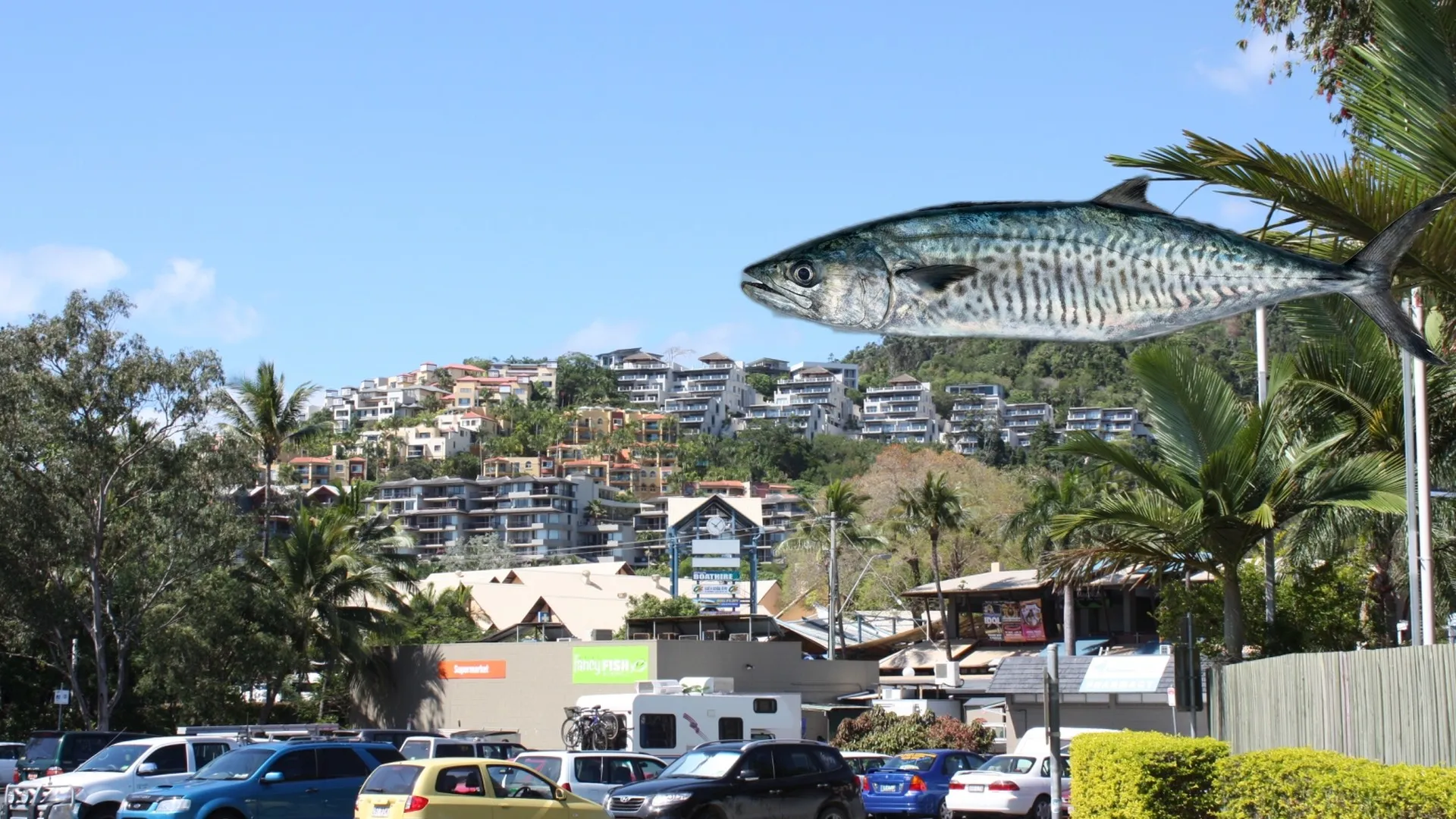
Target Species
Spanish Mackerel
Airlie Beach Area is one of the top spots for Spanish Mackerel fishing in QLD, offering direct access to the nutrient-rich currents of the Whitsunday Passage and solid action on “Spaniards” through the winter months.
For many anglers, the Airlie Beach Area is the gateway to the Great Barrier Reef, but you don’t need to run hours offshore to find top-tier pelagic action. The waters around Airlie Beach, Shute Harbour, and the inner Whitsunday islands are a highway for Spanish Mackerel (Scomberomorus commerson). These apex predators cruise the deep channels, current lines, and reef edges that define this beautiful part of Queensland, giving sport fishers a shot at fish that often top 20kg.
What makes this spot special is the range of accessible water. Whether you’re launching a trailer boat for the “Paddock” or casting from the rockwalls near the marina, Spanish Mackerel are always in the mix, especially in the cooler months. The layout of the islands funnels tidal flow, creating hotspots where baitfish bunch up. And where the bait goes, the Spaniards follow.
In this guide, we’ll break down how to target these speedsters in the Whitsundays. You’ll learn why the local saying “no run, no fun” matters so much, which trolling depths work when the surface bite dies, and how to rig your baits to handle the razor-sharp teeth of a metre-long mackerel. Whether you’re a local fine-tuning your approach or a visitor chasing the winter run, knowing the ins and outs of the Airlie Beach Area is key to filling your esky.
Getting There
Spanish Mackerel
Scomberomorus commerson
Always check current NSW DPI regulations before fishing. Bag and size limits may change.
Understanding Airlie Beach Area: Location Intelligence
The best spots for Spanish Mackerel include the deep channels of Mackerel Bay, the structure around Minstrel Rocks, and the current lines off Pinnacle Point, where water depths of 20 to 40 metres hold big schools of bait.
To consistently catch Spanish Mackerel in the Airlie Beach Area, you need to understand the unique hydrodynamics of the Whitsunday Passage. This isn’t flat water; it’s a high-flow zone where huge volumes of water move between islands with every tide change. That flow drives fish behaviour. Locals will tell you the run-in tide often brings in cooler, clearer water from the outer reef, sparking off hot feeding spells, especially along the eastern sides of islands and the outer edges of mainland points.
The underwater layout here is varied. You’re not just fishing open sand; you’re working fringing coral reefs, deep gravel patches, and lone “bommies” (bomboras). Spanish Mackerel use these as ambush points. They’ll often sit on the “pressure side” of a reef—the face the current hits—waiting for fusiliers, herring, and garfish to get swept into disarray.
Location Essentials
Key Zones and Structure
The area known as “Mackerel Bay” near Shute Harbour is a classic example of prime habitat. It’s got deep water close to shore, letting anglers reach fish without going far offshore. Here, the bottom drops fast, and current rips through, creating a steady flow of food. Another hotspot is “The Paddock,” open water that looks blank on the surface but holds bait schools that draw in roaming mackerel packs.
When checking your sounder, watch for tight bait balls. Spanish Mackerel often show up as large, single arches or streaks around the edges of these schools. If you see the bait rising or scattering, it’s a sure sign predators are on the move below.
For land-based anglers, options are tighter but still worth a go. The rockwalls and jetties around Airlie Beach and Shute Harbour can produce fish, especially on early morning high tides. But boat anglers have the edge, being able to hit the deeper 30-40 metre drop-offs where the big females like to cruise.
The Influence of Depth
While surface action is exciting, plenty of Spanish Mackerel in the Airlie Beach Area stay deeper, especially when the sun’s high or there’s heavy boat traffic. The 20 to 30-metre zone is the sweet spot. That’s where the thermocline usually sits and where bait feels safe. Trolling deep diving minnows or using downriggers to get baits down there can be the difference between a blank session and a full box.
For those keen to explore further, the nearby Spanish Mackerel at Hayman Island offers a similar but different fishery, often holding bigger solitary fish on deeper ledges. It’s worth a look if the inner spots are busy.
When Is the Best Time to Fish for Spanish Mackerel at Airlie Beach Area?
The peak season for Spanish Mackerel runs from late May through September, with the winter months of June to August delivering the most reliable action thanks to cooler water temperatures and settled weather patterns.
Timing is everything when chasing pelagics. While you can technically hook a resident Spanish Mackerel year-round in the Whitsundays, the fishery really heats up during the cooler months. As the water drops below 26°C, the big migratory schools move into inshore waters, bringing the aggressive feeding behaviour that sport fishermen love.
Seasonal Breakdown
The winter run (June to August) is widely seen as prime time. During this stretch, the southeast trade winds can hang around, but the calm days between fronts offer top fishing. The fish are often found closer to the surface, making topwater lures and shallow trolling especially effective.
Spring (September to November) brings a shift. The water starts to warm, and the fish tend to go a bit deeper. This is when the “spotties” (Spotted Mackerel) show up in numbers, often mixed in with the Spaniards. If you’re landing smaller mackerel, try dropping your lure or bait deeper to find the larger Spanish Mackerel that frequently sit under the school.
Spanish Mackerel Seasonal Calendar
Tides and Moon Phases
The local saying “no run, no fun” is spot on here. Spanish Mackerel are ambush predators that rely on current to bunch up their prey. The best fishing nearly always lines up with the bigger tidal shifts around the new and full moons. In particular, the lead-up to the full moon is famous for turning up big fish.
Tide Times
Optimal Tide
Incoming tide, specifically the first 2 hours of the run-in
Tide movement is critical for fish activity. Most species feed actively during tide changes, especially the run-in (incoming) tide.
Detailed hourly tide charts
Official tide predictions
7-day tide calendar
Tide Guide
Best for most species. Fish move in to feed as water rises.
Good for ambush predators. Baitfish get swept out.
Slower bite. Fish less active during slack water.
New/full moon. Bigger tidal range, more fish movement.
Moon Phase & Solunar
Moon phases influence fish feeding behavior. New and full moons create spring tides with stronger currents and increased fish activity.
Best Phases
- New Moon: Peak feeding activity, spring tides, excellent fishing
- Full Moon: Strong tides, night feeding, great for nocturnal species
- 3 Days Either Side: Extended peak period for maximum results
Major/Minor Periods
- Major Periods: Moon overhead/underfoot (2-3 hours)
- Minor Periods: Moon rise/set (1-2 hours)
- Best Times: Major period + dawn/dusk = explosive action
The “change of light” is another key factor. Dawn and dusk are golden hours. The hour before sunrise is especially productive for casting poppers or shallow runners over reef flats. Once the sun climbs and cuts through the water, the fish drop back to the edges of drop-offs, so you’ll need to switch to deep trolling or jigging.
Weather Conditions
Check current conditions before heading out. Wind, swell, and barometric pressure significantly affect fish behavior.
Official forecasts, warnings & radar
Hourly wind speed & direction
Swell height, period & direction
The Pressure Point Rule
Focus your efforts on the side of the reef or island where the current is hitting (the pressure side). Baitfish get pushed against this structure and become disoriented, making them easy targets for mackerel patrolling the edge. If the tide turns, move to the opposite side of the structure.
What Tackle Do You Need for Spanish Mackerel at Airlie Beach Area?
A 9-10ft medium-heavy spin rod paired with a 4000-6000 size high-speed reel is ideal for casting, while an overhead setup with a smooth drag works best for trolling deep diving lures.
When gearing up for Airlie Beach Spaniards, you need gear that can handle blistering first runs and the head-shaking fight that follows. The tackle must be strong enough to stop a 15kg fish from making the reef, yet light enough to cast lures all day if you’re spinning.
For more tackle basics, see our tackle essentials guide.
The Trolling Setup
For trolling, the go-to method in the Whitsundays, an overhead reel is often preferred for its line capacity and cranking power. A reel like a Shimano TLD 20 or similar lever drag loaded with 30-50lb braid or monofilament is standard. The rod should be a 15-24kg overhead stick with a bit of tip action to soak up the shock of a strike at 6-8 knots.
The Casting Setup
If you’re casting stickbaits or poppers, a high-speed spin reel is essential. You need a gear ratio of at least 6.2:1 to pull the lure fast enough to trigger a strike. A 5000 to 8000 size reel (like a Saragosa or Stradic) matched with a 7-8ft rod rated PE 3-5 is perfect. This setup lets you make long casts into the wind and rip the lure across the surface.
Complete Tackle Specifications
| Component | Specification |
|---|---|
| Trolling Rod | 1.7m Overhead, 15-24kg rating |
| Casting Rod | 7-8ft Spin, PE 3-5 rating, fast action |
| Trolling Reel | Overhead lever drag, size 20-30 |
| Casting Reel | 6000-10000 Spin, High Gear (HG/XG) |
| Main Line | 30-50lb Braid (Colour coded helps for depth) |
| Leader | 60-80lb Fluorocarbon or 40-60lb Single Strand Wire |
| Hooks | 4/0-6/0 Trebles (4x Strong) or Inline Singles |
| Lures | 160-190mm Deep Divers, 40-80g Metal Spoons |
The Wire Debate
One of the most common questions is: “Do I need wire?” In the Airlie Beach Area, the answer is usually yes if you’re trolling, and maybe if you’re casting.
- Trolling: Use a short section (30cm) of single-strand wire (44-69lb). At trolling speeds, the fish rarely spook at the wire, and it stops bite-offs from the mackerel’s razor teeth.
- Casting: Many anglers go for heavy fluorocarbon (80-100lb) when casting lures, as it draws more strikes. You might lose the odd lure, but the extra bites usually make up for it. If the bite’s hot and you’re losing too much gear, switch to a very short (10cm) wire bite leader.
How Do You Rig for Spanish Mackerel?
The most effective rig for wolf herring uses a gang of 3-4 hooks (sizes 7/0 to 10/0) tied with swivels, often adding a chin weight or “wog head” to keep the bait swimming upright and tracking straight at trolling speeds.
Rigging right is the difference between a fish in the boat and a story about “the one that got away.” Spanish Mackerel are notorious for slashing at baits, often missing the hook if it’s not placed just right.
The Trolling Rig (Dead Bait)
Trolling dead baits like Wolf Herring, Garfish, or large Pilchards is a deadly technique in the Whitsundays. The key is the “swimming action.” The bait must look alive.
Building the Chin-Weighted Gang Rig
- 1
Select Your Hooks
Use 3 to 4 high-quality 7/0 or 8/0 hooks. Gang them together using high-strength swivels rather than just the hook eyes for better flexibility.
- 2
Attach the Chin Weight
Slide a specialized chin weight (pink or glow colours work well) onto the front of the gang. This weight acts as a keel to stop the bait spinning.
- 3
Measure the Bait
Lay the rig alongside your Wolf Herring or Garfish. The top hook should line up with the eye/nose, and the bottom hook should sit near the anal fin.
- 4
Insert the Hooks
Start from the tail hook and work forward. Make sure the bait stays straight. A crooked bait will spin like a propeller and twist your line.
- 5
Secure the Head
Use copper wire or a bait spring to tightly secure the head of the bait to the chin weight. This is the most important step for keeping it together.
- 6
Test the Swim
Before letting it out, drag the bait alongside the boat. It should swim with a natural shimmy. If it spins, tweak the hook placement or head binding.
- 7
Add the Wire Trace
Connect the rig to 30-60cm of single-strand wire using a haywire twist.
For more details on connecting terminal tackle, check our guide on fishing knots.
What Bait Works Best for Spanish Mackerel?
Wolf Herring is widely seen as the top choice for big Spanish Mackerel because of its size and flash, with Garfish and large Pilchards close behind for schooling fish.
In the Airlie Beach area, matching what’s on the menu matters. The mackerel are chasing specific baitfish around the reef systems.
Bait Performance Analysis
| Wolf Herring | Garfish | Live Fusilier | |
|---|---|---|---|
| Effectiveness Rating | 5/5 (Excellent) | 4/5 (Very Good) | 5/5 (Elite) |
| Durability on Hook | High (if rigged well) | Medium | Low (fragile) |
| Trolling Speed | Slow (2-4 knots) | Medium (4-6 knots) | Drift or Slow Troll |
| Availability | Specialist tackle shops | Common | Catch on site |
| Best Use Conditions | Targeting trophy fish | General trolling | Fussy fish/Calm days |
The Live Bait Advantage
If the trolling bite is slow, switch to live bait. Catching fresh fusiliers or herring on the bait grounds and slow-trolling them behind the boat is often the only way to get a reaction from wary fish. Use a single hook through the nose or a stinger rig with a treble in the back.
For a deeper dive into bait selection, visit our bait guide.
How Do You Catch Spanish Mackerel at Airlie Beach Area?
Trolling deep-diving hardbody lures at 6–8 knots along reef edges is the most consistent method, though casting stickbaits into surface feeding frenzies delivers the most thrilling action.
Catching Spanish Mackerel in the Whitsundays means adjusting your approach to the day’s conditions. These fish are fierce hunters, but they can be picky, especially in clear water or busy spots like the “Paddock” or near the islands. Success boils down to speed, depth control, and how you present the bait.
Trolling Strategy: The Bread and Butter
Trolling is the go-to way to find fish across the wide waters around Airlie Beach. It lets you cover ground and put lures at different depths all at once.
The Speed Factor Speed triggers strikes. Many anglers troll too slow, but Spanish Mackerel are built for pace.
- Standard Troll: 6–8 knots is ideal for bibbed minnows like the Halco Laser Pro or Rapala X-Rap Magnum. This speed gives off strong vibrations that draw fish in from afar.
- High-Speed Troll: If the bite’s flat, try cranking it up to 10–12 knots using high-speed skirted lures or heavy heads. This can spark a reaction bite from fish ignoring slower rigs.
- The Zig-Zag: Avoid long straight runs. Gently weaving in an ‘S’ pattern speeds up the outside lure and slows the inside one. Strikes often come when the lure shifts pace.
The Spread Run a spread that covers the water column. A standard three-rod setup for a trailer boat looks like this:
- Short Corner (15-20m back): A deep diver (running 5-7m deep). This sits in the prop wash and targets fish drawn to the boat’s noise.
- Long Corner (30-40m back): A medium diver (running 3-5m deep). This is often the “shotgun” spot for the biggest fish.
- Shotgun/Centre (50m+ back): A surface lure, skirt, or shallow runner. This grabs fish feeding up high and often gets hit first if they’re cautious.
Watch the Sounder
Spanish Mackerel often hang just above the drop-off or on the pressure edge of a bommie. If you mark fish at 20 metres but your lures are only at 5 metres, you’re missing them. Use a downrigger or heavy trolling sinker to get the bait right in front of them.
Casting: The Adrenaline Rush
When the surface blows up with baitfish, grab the spin gear. This usually happens when mackerel push schools of fusiliers or herring to the top.
Approach with Stealth Don’t motor straight into the school. Come in from upwind and kill the engine 50 metres out, drifting into range.
- Lure Selection: Stickbaits (150-180mm) and metal slugs (40-80g) work best. Match the lure size to the baitfish. If they’re chasing tiny hardyheads, a 200mm stickbait might get ignored.
- The Retrieve: Wind fast. You can’t wind faster than a Spanish Mackerel swims. For metal slugs, use a “burn and kill” retrieve—wind flat out for ten turns, then pause for a second. That pause mimics a hurt baitfish and often draws the strike.
Fighting the Fish
A big “Spaniard” hits like a freight train. The first run can burn off 100 metres of line in seconds.
- Don’t Strike: If you’re trolling, the fish hooks itself. Striking can pull the hooks free.
- Let Him Run: Don’t crank up the drag during the first dash. Let the fish tire itself out against steady pressure. These fish have small lungs for their size; they burn out fast after the sprint.
- The Death Circle: As the fish comes close, it’ll usually start circling deep. This is the danger zone. Don’t high-stick the rod (lift past 90 degrees). Keep the tip low and apply steady pressure. If the fish dives under the boat, dunk the rod tip in the water to stop the line snagging the hull or prop.
- The Gaff Shot: Never use a net on a decent Spanish Mackerel; their teeth will cut the mesh and treble hooks make a mess. Use a sharp gaff. Aim for the shoulder or head. Once gaffed, lift the fish straight into the esky or onto a kill mat. Don’t bring a thrashing fish onto a cluttered deck—their teeth can seriously injure your legs.
Advanced Technique: High-Speed Jigging
When the surface bite dies, often around midday, the fish drop to bottom structure in 30–40 metres. That’s when high-speed jigging shines.
- The Lure: Use a 60g to 100g knife jig or metal spoon.
- The Action: Drop it to the bottom, crank three times, pause, then rip it up as fast as you can for ten metres, then drop again. The strike usually comes on the drop or first crank.
- Why it works: It sparks a reaction from fish lying low on the bottom that are ignoring trolled baits.
For more on handling pelagics, check out our fishing techniques page.
What Are the Rules for Fishing at Airlie Beach Area?
In Queensland, Spanish Mackerel have a minimum legal size of 75cm and a possession limit of 3 per person.
Fishing in the Great Barrier Reef Marine Park and the Whitsundays means following zoning and fisheries rules closely. The Airlie Beach Area mixes General Use (Light Blue), Habitat Protection (Dark Blue), and Marine National Park (Green) zones.
Critical Regulations
- Size Limit: Spanish Mackerel must be at least 75cm in total length.
- Bag Limit: You can keep a maximum of 3 fish per person.
- Boat Limit: There’s a boat limit of 6 fish (if two or more people are on board).
- Seasonal Closures: Watch for coral reef fin fish closures (usually Oct/Nov), which target reef species but can affect where you can fish. There are also specific Spanish Mackerel closures in northern QLD waters—always check the latest Department of Agriculture and Fisheries (DAF) updates.
Critical Safety Considerations
Ciguatera Poisoning: Spanish Mackerel in the Whitsundays/Airlie Beach area can carry Ciguatera toxin, especially big fish (over 10-15kg). The toxin builds up in the food chain and can make people very sick. Many locals choose to release fish over 12-15kg and only keep the smaller, “cleaner” ones.
The “Tax Man”: Shark depredation is a real problem in the Whitsundays. If you hook a fish, fight it hard and get it to the boat fast. If a shark takes it, move ground straight away. Staying in the same spot teaches sharks to link boats with food.
Stinger Season: From October to May, dangerous marine stingers (Box Jellyfish and Irukandji) are around. While this mainly affects swimmers, anglers handling wet lines or landing fish should watch for tentacles stuck to gear.
Conservation and Ethics
Spanish Mackerel numbers are under pressure. Smart anglers in Airlie Beach follow these practices:
- Limit Your Catch: Just because you can take 3 doesn’t mean you should. These fish don’t freeze as well as reef species—fresh tastes best.
- Bleed Immediately: For top table quality, brain spike (iki jime) the fish right away, cut the gills or throat to bleed it, then put it straight into an ice slurry. This makes a big difference to the meat.
- Handle with Care: If releasing a big breeder, support its body level. Never hang a heavy fish by the jaw for a photo if you plan to let it go—this can hurt its insides and spine.
Check current rules at state fisheries.
Your Questions About Spanish Mackerel Fishing at Airlie Beach Area
When is the absolute best time of year to fish for Spanish Mackerel here?
The absolute peak season is winter, specifically from June through August, when water temperatures drop and large schools migrate into the inshore channels. While you can catch stragglers year-round, the winter months (June–August) offer the most consistent action. During this time, the "southeast trade winds" are the main weather factor. The best fishing often happens in the calm windows between these wind events. September and October can also be excellent for big fish, but the "schoolies" (smaller fish) tend to thin out as the water warms up.
Is Airlie Beach Area suitable for beginners targeting Spanish Mackerel?
Yes, it is suitable for beginners, particularly those booking a charter, as the fish are accessible relatively close to shore without needing extreme offshore capabilities. For a complete novice, the power of a Spanish Mackerel can be overwhelming. However, because the fish are found in relatively sheltered waters (like the Whitsunday Passage) rather than just the outer shelf, it is physically accessible. Beginners are strongly advised to hire a local guide or charter for their first trip. The local knowledge about tides and specific "bommies" is invaluable and will shorten the learning curve by years.
Do I need a large boat to fish for them at Airlie Beach?
You do not need a massive vessel; a reliable 4.5m to 5m aluminium boat is sufficient to fish the inshore islands and bays like Mackerel Bay and Shute Harbour on calm days. Unlike southern bluefin tuna fishing which requires running 50km offshore, Airlie Beach Spaniards patrol the inshore islands. Places like Pioneer Bay, Grimston Point, and the Molle Group are all within reach of a standard "tinny" in good weather. However, the Whitsunday Passage can whip up steep chop quickly against the tide. Always check the forecast and make sure your safety gear is rated for open waters if venturing beyond the headlands.
Where are the best specific spots to start looking?
Start your search at Mackerel Bay (south of Shute Harbour), the Double Cone Islands, and the current lines around Gumbrell Island. "Mackerel Bay" isn't named by accident; it is a consistent producer. Other reliable marks include the "Woodpile" on the east side of Hook Island (for larger boats), and the drop-offs around Daydream Island. Look for pressure points where the current hits a rocky headland. If you see bait schools on your sounder in 20-30m of water in these areas, the mackerel won't be far away.
What size Spanish Mackerel can I expect to catch?
The average school fish weighs between 6kg and 10kg, but trophy fish exceeding 20kg are regularly caught, especially during the winter run. The class of fish in the Whitsundays is world-class. While the "schoolies" (6-10kg) provide great sport and excellent eating, the area is famous for "monsters" that can reach 30kg+. These larger fish are often solitary or travel in pairs and are usually hooked on larger baits trolled deeper and slower than the standard spread.
Is there parking available for boat trailers?
Excellent trailer parking is available at the Port of Airlie boat ramp (paid) and the VMR ramp in Cannonvale (paid/donation), both of which handle large volumes of traffic. The infrastructure for anglers in Airlie Beach is excellent. The VMR (Volunteer Marine Rescue) ramp in Cannonvale is the most popular, featuring multiple lanes and a floating pontoon, making launching and retrieving safe and easy even at low tide. Port of Airlie also offers high-quality facilities. During peak season (school holidays and calm winter weekends), these car parks fill up by 5:00 AM, so arrive early.
Can I fish for Spanish Mackerel at night?
While possible, night fishing is generally less effective than dawn or dusk; however, fishing under the full moon can produce strikes on surface lures. Spanish Mackerel are primarily visual hunters. While they will feed at night, particularly under a bright full moon, the most productive windows are the "change of light." If you're fishing at night, try using dark silhouettes (black lures) against the moonlight or luminous/glow lures. However, navigating the reef zones at night requires extreme caution and local know-how.
Where can I buy bait and tackle near Airlie Beach?
Top-tier bait and tackle can be found at local specialists like Whitsunday Fishing World in Cannonvale and the various service stations that stock high-quality frozen baits. You won't struggle to find gear here. The local tackle shops are staffed by experienced anglers who can give you up-to-the-minute advice on what colours are working. They stock the specific high-speed trolling lures and pre-rigged wolf herring that are standard for the area. Buying your bait locally ensures it is the right species (like Wolf Herring or Garfish) that the local mackerel are actually feeding on.
Is Airlie Beach Area family-friendly for fishing?
Yes, the sheltered waters behind the islands often provide calm conditions suitable for families, provided the weather is stable. Because you don't always have to go to the outer reef, you can often find a lee shore (protected side of an island) to troll for mackerel without the boat rocking violently. This makes it much more enjoyable for children or partners who might be prone to seasickness. Additionally, if the mackerel aren't biting, you can easily switch to bottom bashing for coral trout in the same areas, keeping the action going for the kids.
What essential gear should I bring on the boat?
Beyond standard safety gear, you absolutely need a sharp gaff, long-nose pliers for unhooking, heavy-duty wire cutters, and an ice slurry to preserve the catch. Do not leave the dock without long-nose pliers and wire cutters. If a hook ends up in a finger or a fish swallows a lure deep, you need the right tools. A "priest" or "donger" (a heavy club) is also essential for subduing a thrashing mackerel immediately upon landing it. Trying to unhook a live, 15kg mackerel with razor teeth on a slippery deck is a recipe for a hospital visit.
How crowded does the Airlie Beach Area get?
Popular spots like Mackerel Bay can get busy on calm weekends and school holidays, but the vast amount of structure in the Whitsundays means you can usually find a quiet patch. The "parking lot" effect does happen at the most famous GPS marks when the weather is perfect. However, the beauty of the Whitsundays is the sheer number of islands. If one point has five boats on it, simply move two miles to the next headland. Often, the fish are just as thick at the less pressured spots. Fishing mid-week is the best way to make sure you have the reef to yourself.
What is the Ciguatera risk for Spanish Mackerel here?
Yes, there is a risk of Ciguatera poisoning in Spanish Mackerel caught in the Whitsundays, particularly in fish weighing over 10-15kg. This is a serious consideration. Ciguatera is a foodborne illness caused by eating reef fish whose flesh is contaminated with a toxin found in algae. The toxin accumulates up the food chain, meaning large predators like Spanish Mackerel are higher risk. There is no way to tell by looking at the fish if it is toxic. The general local rule is to release the giant fish (which are the breeders anyway) and keep the mid-sized "schoolies" (6-10kg) for the table.
Latest Fishing Reports
Stay updated with the latest catches, conditions, and hot tips from Airlie Beach Area. Check these sources for recent reports filtered by location and species.
Fishraider
Community fishing reports and catch logs
Fishing World
Professional fishing reports and news
Tackle World
Local tackle shop reports and tips
NSW DPI
Official recreational fishing reports
Fishingmonthly
Monthly fishing magazine and reports
Hooked Up
Video fishing reports and tips
Pro Tip: Filter Reports
When browsing reports, search for "Airlie Beach Area" or nearby landmarks. Look for reports from the last 7-14 days for the most relevant information. Pay attention to tide times, weather conditions, and successful techniques mentioned.
Share Your Catch
Caught something at Airlie Beach Area? Share your success with the community! Upload your catch photos and reports to help other anglers.
Disclaimer: Fishing regulations, zoning, and bag limits can change frequently. Always verify the current rules with the Queensland Department of Agriculture and Fisheries (DAF) and the Great Barrier Reef Marine Park Authority (GBRMPA) before heading out. The information provided here is for guidance only.
The Airlie Beach Area offers some of the finest pelagic sportfishing in Australia. Whether you are trolling the deep channels of the Whitsunday Passage or casting poppers at dawn near the islands, the rush of a Spanish Mackerel strike is an experience hard to beat. Remember to respect the ocean, watch the weather, and only take what you need for a fresh feed.
Explore more fishing spots in the area, learn about other species like the iconic Coral Trout, or brush up on your skills with our fishing basics guide. Tight lines!
Quick Info
- Location
- Airlie Beach Area
- Coordinates
- -20.2600, 148.7100
- Difficulty
- intermediate
- Target Species
- Spanish Mackerel
Conditions
Check local weather and tide conditions before heading out.